Japanese Entryway Organization Ideas for Small Apartments
Plan a small entryway with the trays, shelves, and storage you already own. Test the door swing, fit shoes to your shelves, and check rental rules before buying more.

If your keys land on the nearest table and shoes pile up where the door needs to open, start by changing where things go. The Japanese entryway photos below offer specific arrangements to examine: a tray on an existing surface, shoes along an edge, and bags stored beyond the entrance. Use them to plan with what you own before shopping.
Your apartment may have a flat floor, no built-in shoe cabinet, and a door that cannot take magnetic storage. You can still give everyday belongings a place to return. First test the route through the doorway, then the order in which you set things down, and finally whether everyone can put them back.
Borrow the placement ideas, then test your own entry
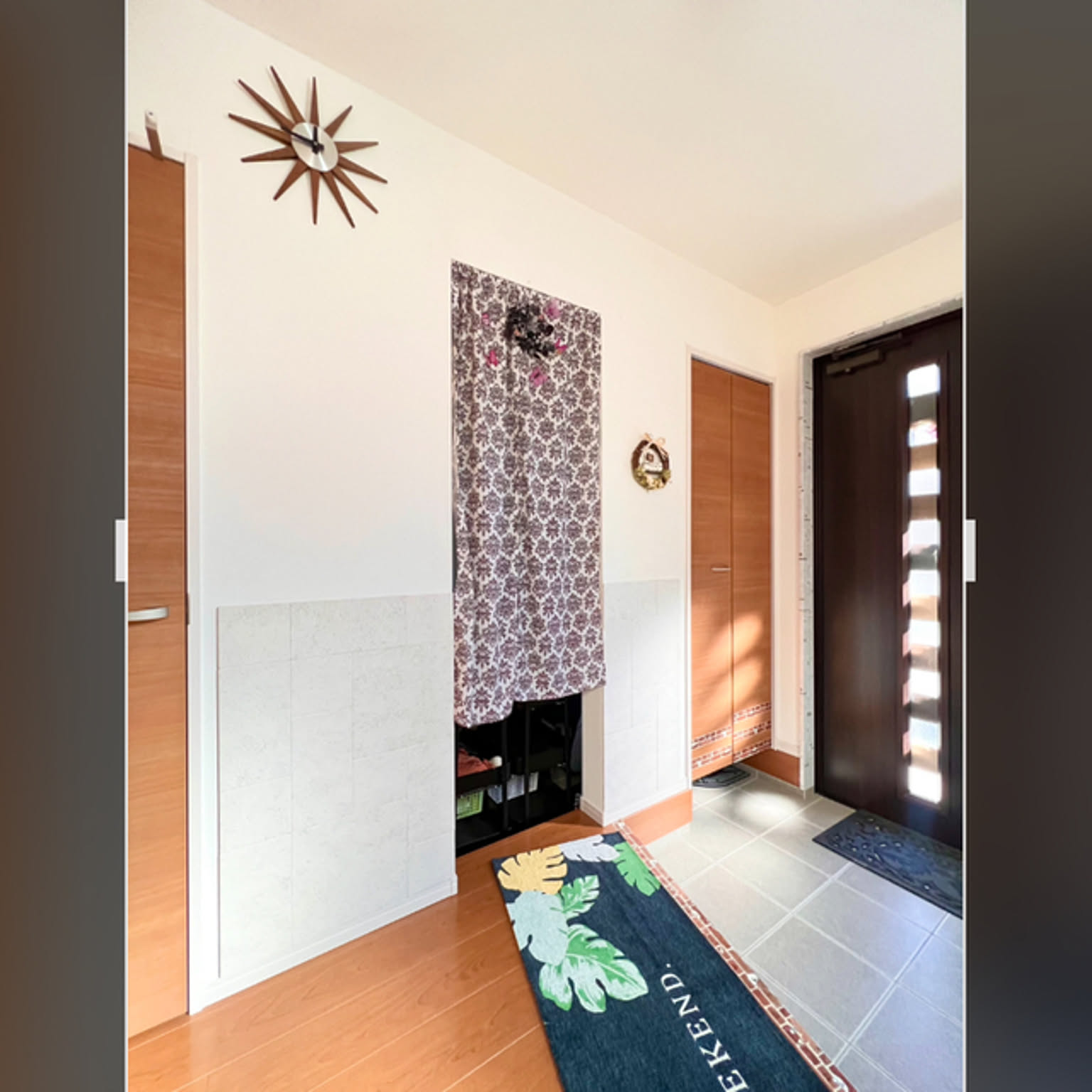
These RoomClip homes solve different problems. One uses tall shelves; another has built-in cabinets and a recessed area. Neither photo tells us how much floor space your entry needs or which furniture you should buy. Look at what each arrangement separates, then identify an equivalent spot you already have.
Two different homes separate shoes and small belongings with the storage available to them.


Make a quick list of what actually comes through your door: the keys you carry, shoes worn this week, a work bag, and wet items when it rains. Include other household members. Packages and spare shoes may pass through the entry without needing a permanent place there.
1. Open the door and walk through with your usual bags
Before moving storage, open the front door fully. Check the handle, lock, and anything already behind the door. Walk in carrying the bags you normally bring home, close the door, and turn toward the rest of the apartment. Then walk out again. A spot that looks empty in a photo may be where your shoulder bag swings or where you stand to unlock the door.
Repeat with existing cabinet doors and drawers open. Take a pair of shoes out and put it back. Include shoes projecting beyond a shelf, umbrella handles, hanging bag straps, and the space you need to crouch or reach. Do not judge fit by the closed furniture outline alone.
Open doors and shoes extending past a rack change how much space storage uses.


If you have to squeeze past, move the existing piece or reduce what stays there. If neither works, try storage in the next room. Leave shared corridors and required access clear; this walkthrough is a practical placement check, not a substitute for building requirements.
2. Give your hands somewhere to unload
Come in once with your normal load and notice what you need to set down first. That may be a grocery bag before keys, or an umbrella before you take off your shoes. Place a tray, small box, or basket you own on an existing reachable surface, away from the door’s moving parts. Try reaching it while holding your bag rather than choosing its position while empty-handed.
Keep keys in a place you can use on the way out
A defined container can keep keys from spreading across a shelf. Use one that fits the keys or key case you actually carry; test taking them out without moving other objects. Keep mail separate if it buries the keys. The tray in the photo is a placement example, so you can try an ordinary container before buying a dedicated key holder.
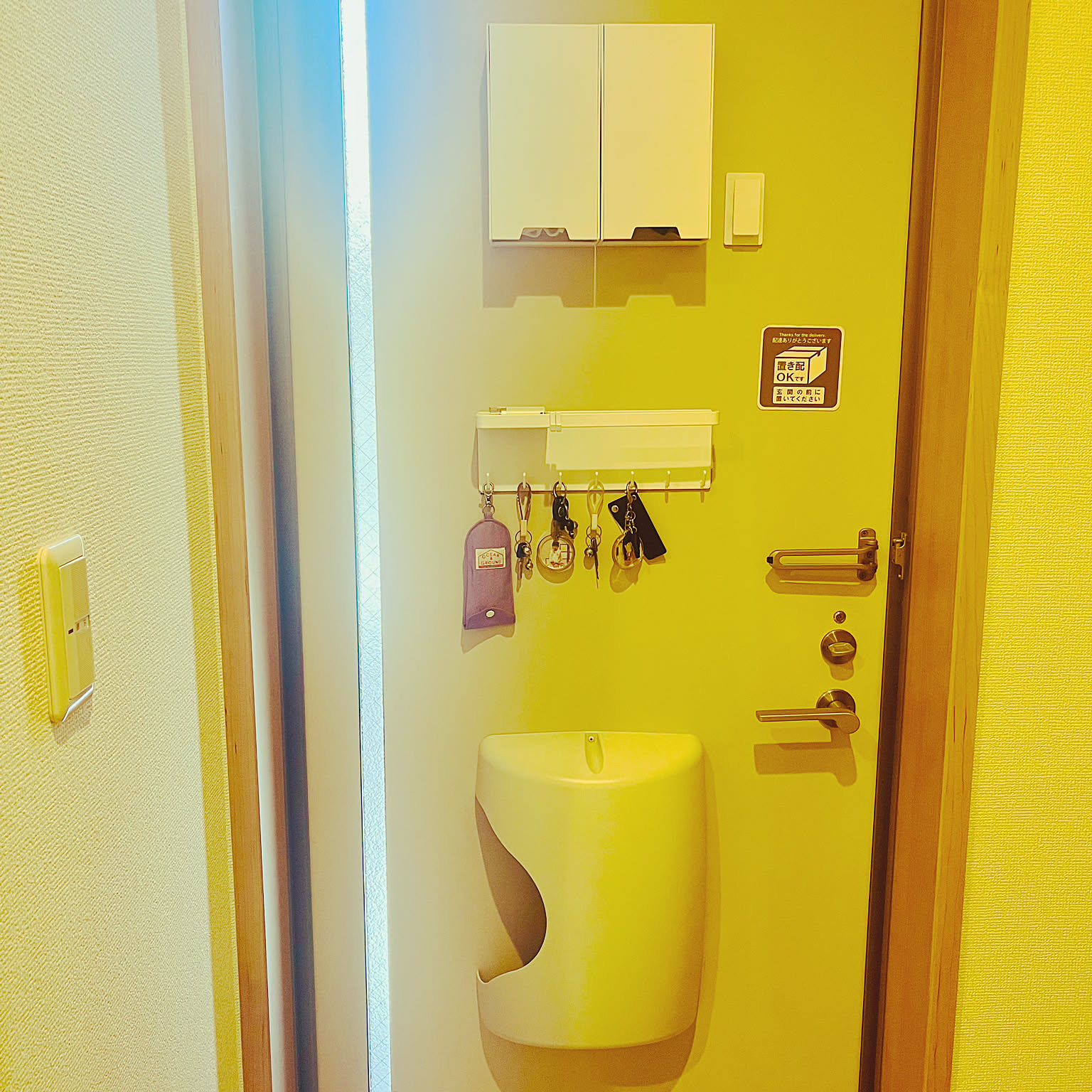
An existing surface and a door-mounted holder offer different locations for small items.


A door-mounted holder is useful only if the exact mounting method, surface, and opening clearance work. If your door is nonmagnetic or you cannot attach hardware, keep the surface option. If mounting is still the unresolved question, work through the renter checks below before choosing hardware.
3. Return shoes, wet items, and bags without blocking the route
Choose the shoe location around the pairs in use
Start with your existing shelf, cabinet, or closet. Try returning the shoes you wore today, then taking out the ones you need tomorrow. Keep enough pairs for your actual routine rather than imposing one pair per person. Shoes you rarely wear can move farther inside the apartment if they are crowding the entrance.
If the location works but the shoes will not fit, measure before adding a rack. Put your longest pair, widest pair, and tallest boots beside a tape measure and use their outside dimensions, not the size printed inside. Then measure the space they would occupy, including hinges, shelf supports, and the closed door.
| Spec | Your shoes | Usable shelf |
|---|---|---|
| Width | Pair side by side | Clear space between obstructions |
| Depth | Heel to toe, including overhang | Back of shelf to the closed door |
| Height | Sole to highest point | Shelf surface to the shelf above |
| Access | Room to lift out one pair | Door opening and hand clearance |
Trial-fit the largest pair first, close the cabinet door, and take the shoes out again. If the shelves adjust, set one opening for sneakers or flats and a taller one for boots. A shelf divider can add a level only if both new openings still let you remove the shoes; check its shelf-thickness fit and load limit before buying one.
A shelf divider and a tall-boot compartment in two shoe cabinets.
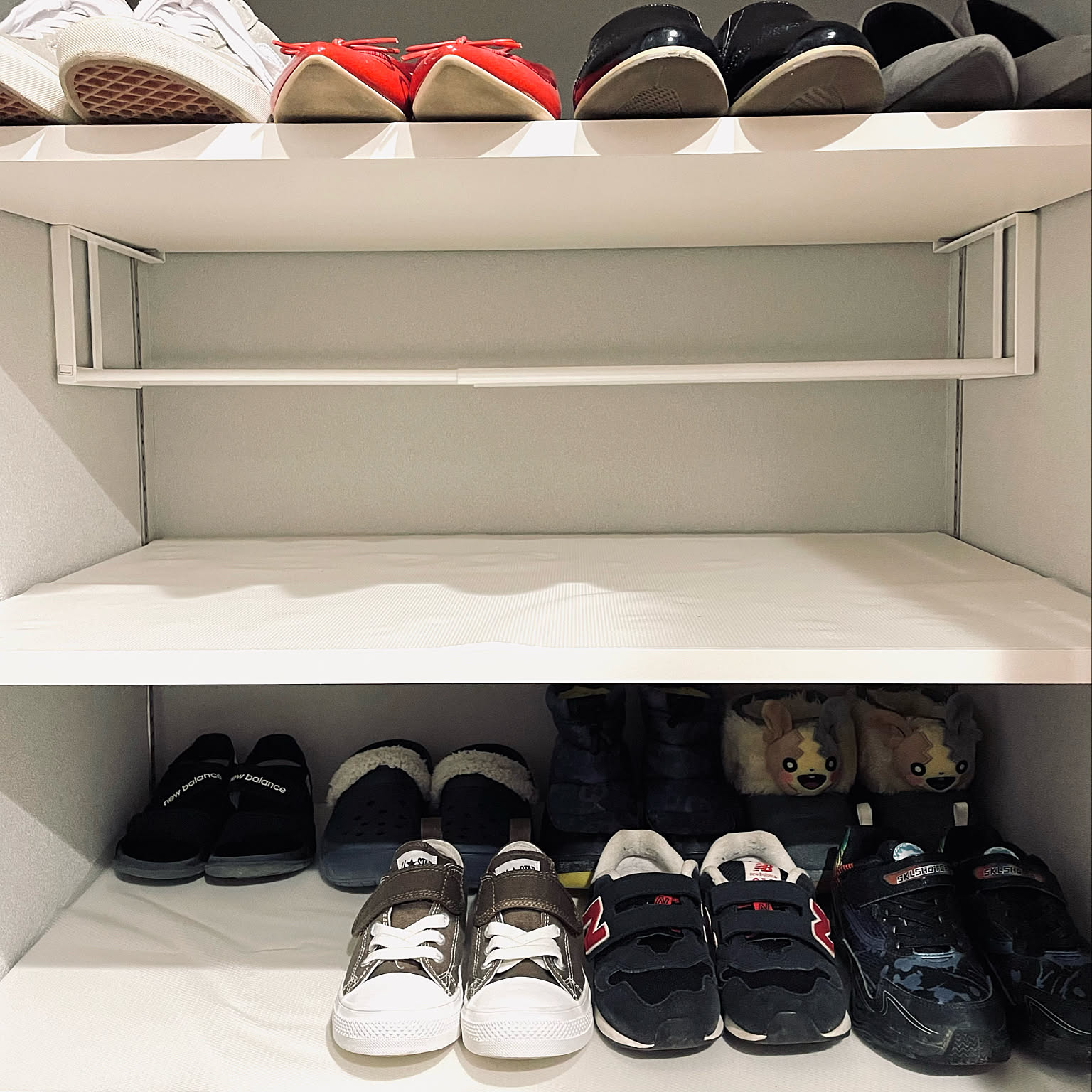

If children put away their own shoes, test the shelf from their height: they should be able to return a pair without climbing, lifting a bin, or moving other shoes. Move out-of-season and occasional pairs to another closet before deciding that you need a bigger rack.
Plan a temporary place for wet items
Try the umbrella stand or water-catching container you already use at an edge that passes the door and walking tests. Put the actual umbrella in it and check whether its handle projects into the route. A wet umbrella needs a place where drips can be contained and water can be emptied; avoid letting a saturated item sit against a surface that could be damaged. Move it to its usual storage after it dries.
Long and folding umbrellas may need different spots. A magnetic umbrella holder needs a suitable door surface and clearance; a floor stand needs room to lift the longest umbrella out and a way to contain water. Wet shoes need their own drying place, away from the shelf for dry pairs; follow the care instructions for each pair.
If there is no suitable spot beside the entrance, take wet items to a designated place farther inside where water can be managed. Carrying them there is more practical than leaving them in the middle of a cramped entry. Check the wet-weather arrangement even if you are planning on a dry day.
An umbrella stays by the entrance in one home, while children’s bags return to a closet in another.


Let bags return somewhere else when the entry is full
A daily bag can go in an existing closet or on a suitable shelf along your route into the home. Try the bag fully packed, with straps included. If it is too heavy or awkward to put back, change the location or support rather than expecting everyone to follow a difficult routine. The backpack photo comes from a family closet; it shows that the return spot can be outside the entry.
Give deliveries and occasional gear a temporary boundary, such as a container you already own, and decide when to move them onward. A package that will be unpacked tonight does not need another permanent storage piece by the door.
Renting? Check the door and floor before mounting anything
Door hooks, magnetic racks, and floor carts each fail in different ways, and none is automatically right for a rental. Check your lease and building rules for the location and mounting method, and ask your property manager if permission is unclear. No-drill does not mean permitted, and a product that fits is not guaranteed to leave the surface unchanged.
- Magnetic storage: needs a suitable magnetic surface. A wood-look or painted door may have no steel underneath. A small magnet can rule a spot out, but it cannot confirm the holder's load capacity.
- Over-door hooks: measure the top edge of the door, then check the gap between the door and frame. A door within the listed thickness may still not close with the bracket in place. If the door rubs or the latch does not catch, remove the hanger.
- Hanging items: weigh the bag or coat with its usual contents, and allow for straps and fabric when the door opens and you walk past.
- Floor storage: mark the loaded footprint, open the entry and closet doors fully, and walk through carrying your usual bag.
Hanging items and loaded shelves take more space than the storage itself.


If a method fails any of these checks, rule it out rather than adding adhesive or screws as a workaround. Use an existing shelf, a closet rail, or a permitted spot in the next room instead.
4. Try the arrangement for a week before buying more
Use the layout on ordinary arrivals and departures. Include a grocery trip, a rushed morning, and rainy weather if it occurs. At the end of each day, notice which items are back on the floor or outside their container. Use that observation to change one thing at a time.
| Spec | Try first | What would justify another storage piece |
|---|---|---|
| The door or walking route is obstructed | Move the existing piece or belongings farther inside | Only a location that passes the opening and walking tests |
| Keys keep landing somewhere else | Move the tray to the surface you naturally reach | No suitable existing surface, with an approved mounting or floor location available |
| Shoes or bags overflow their place | Move seldom-used items elsewhere and test the remaining load | The everyday items still exceed usable capacity |
| Putting things back takes several steps | Remove obstacles or change the return spot | A different support solves the specific access problem |
| The door, route, and returns all work | Keep the arrangement | Nothing: continue using what you own |
Judge your own layout with daily belongings in place, rather than by the number of organizers in a photo.
If the test identifies a specific shortage, such as keys that need a holder or mixed daily gear that needs support, compare only that kind of storage. Bring the tested location, your actual belongings, and the measured space to that decision. If the arrangement already works, you have no reason to add another organizer.
If one gap remains: three US-listed options
Each of these Yamazaki pieces solves a different problem. Keep only the ones that pass your door, surface, and floor checks, then choose the one that holds the items you actually need near the door. They are alternatives, not a set.
| Spec | RIN key rack | Over-door hooks | Tower entryway cart |
|---|---|---|---|
| Best for | Key rings and outgoing mail | Light bags, hats, and coats | Mixed daily gear by the door |
| Mounting | Magnet on a suitable surface, or screws | Over a door up to 1.375 in thick | Floor-standing, on wheels |
| Size | 7.09 in wide | 21.26 in long | 29.33 W × 8.66 D × 29.33 H in |
| Listed load | 2 lb | 2.2 lb per hook | Basket 11 lb |
| Price | $32 | $19 | $148 |
| Avoid if | The surface or permission fails | The door rubs or will not latch | The loaded cart blocks the route |
| Try first | A tray on a shelf | A closet rail or existing hooks | A shelf or storage in another room |
Specifications and prices from Yamazaki Home US, checked October 21, 2026. Prices and stock can change.
Check the current details on the Magnetic Key Rack, Over-the-Door Vertical Hooks, and Entryway Storage Cart pages at Yamazaki Home US. Screw-mounting the key rack is a separate decision that needs permission and a suitable wall. If none of the three passes your checks, keep using what you own.
Your next step: set up one trial arrangement
Choose a return spot for keys, the shoes you use, wet items, and your daily bag using existing storage. Open the door, walk through carrying your belongings, and rehearse putting them down and taking them out again. Live with that arrangement for a week. Keep it if it works; change the location or amount of stored belongings before deciding that you need to buy more.
Frequently asked questions
Can I organize an entryway without a shoe cabinet?
What should I do if my apartment has almost no entryway space?
What if my rental door cannot take magnetic storage?
How many pairs of shoes should stay by the door?
Do everyday shoes need to stay visible?
How do I know when to stop adding entryway storage?
by Japanese Home Goods Editorial
RoomClip usage context, manufacturer specifications, and US-market availability are reviewed by the Japanese Home Goods editorial team. We do not claim hands-on testing unless an article explicitly says so.
Related Articles

Japanese Closet Organization for a Small Bedroom
Organize a small bedroom closet by matching hanging space, drawers, seasonal storage, and renter-friendly add-ons to the closet you actually have.

Japanese Bathroom Storage Ideas for Small Apartments
Make a small Japanese-style bathroom easier to clean with magnetic, hanging, tension-pole, and removable storage ideas that keep bottles and tools off the floor.

Japanese Kitchen Organization Ideas: Keep Small Counters Ready to Cook
Arrange the kitchen tools you already own around prep, cooking, washing, and putting things away. Test the layout first, then measure before adding a Tower dish rack or slim cart.