How Japanese Homes Really Use Yamazaki: A 38,000-Photo Data Study
We analyzed 38,038 item-tagged photos from RoomClip, Japan's largest home-photo community, to see where real Japanese homes actually put Yamazaki organizers — and which of those products make sense in a U.S. home.

If you have ever bought a black-and-white steel organizer from Yamazaki Home on Amazon, you have probably wondered how those products are used in the country they were designed for. Product listings show studio shots. They don't show the narrow rental kitchen in Osaka where the same rack has been working for three years.
We had a rare way to answer that. RoomClip, Japan's largest home-photo community, hosts more than six million photos of real Japanese homes, and users tag the exact products in their pictures. We pulled every photo with a tagged Yamazaki product — 38,038 photos from 8,184 households after removing sponsored posts — and counted where the products show up and which ones people actually photograph.
This is not a "best Yamazaki products" list. It is a count of what a very large sample of Japanese households does with one brand. Some of it translates directly to an American home. The #2 product does not — and that turns out to be the most useful lesson in the data.
Key findings
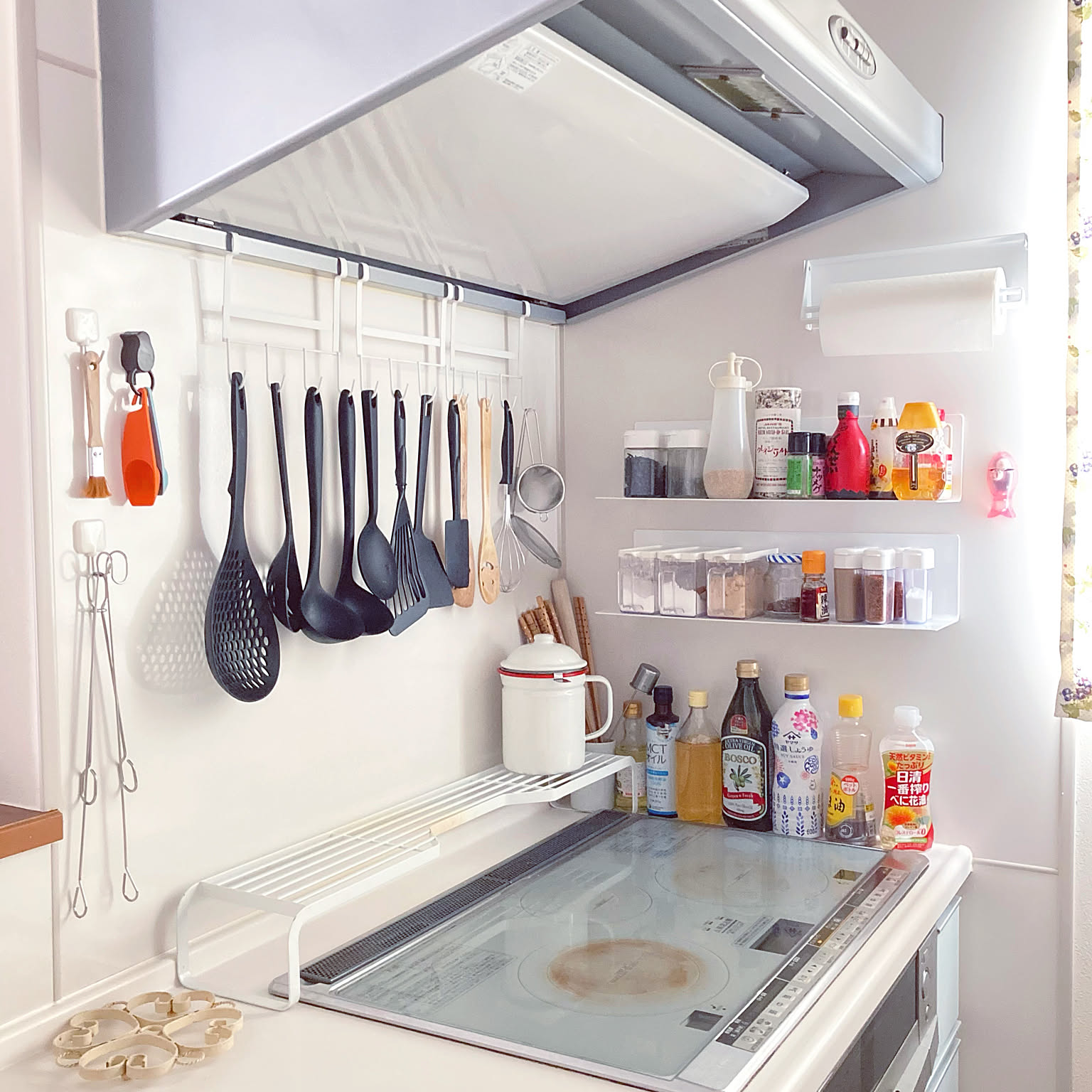
- The kitchen dominates: 45% of all 38,038 photos (16,941) carry the kitchen room tag — more than the next four rooms combined.
- Magnets are the real #1 product: magnetic storage appears in 7,564 photos — one photo in five, and the largest product group in the study.
- The #2 product doesn't exist in America: the stove exhaust vent cover (3,952 photos) fits a rear vent slot that most U.S. ranges simply don't have.
- The bathroom is the quiet second market: 6,567 photos — and 46% of them involve magnets, because Japanese bathroom wall panels are steel.
- Small beats big: tissue cases (2,607) and bread cases (1,926) outrank almost everything else. Japanese homes buy Yamazaki to tidy surfaces, not to furnish rooms.
Where Yamazaki products actually live
Every RoomClip photo can carry room tags, so we counted where the 38,038 Yamazaki photos were taken. The kitchen leads by a wide margin, but the runner-up surprised us — it isn't the living room.
- Kitchen
- 16,941 photos
- Bathroom & toilet
- 6,567 photos
- Living room
- 3,191 photos
- Entryway
- 2,616 photos
- Shelving & display
- 1,590 photos
- Desk
- 1,536 photos
- Walls & ceiling
- 1,055 photos
- Bedroom
- 760 photos
Photos can carry more than one room tag. Source: RoomClip item-tagged photos, sponsored posts excluded. Analysis: Japanese Home Goods, July 2026.
Nearly half of everything happens in the kitchen — no surprise for a brand famous for kitchen storage. The interesting story is the 17% happening in bathrooms, which we unpack below.
Magnets are the real #1
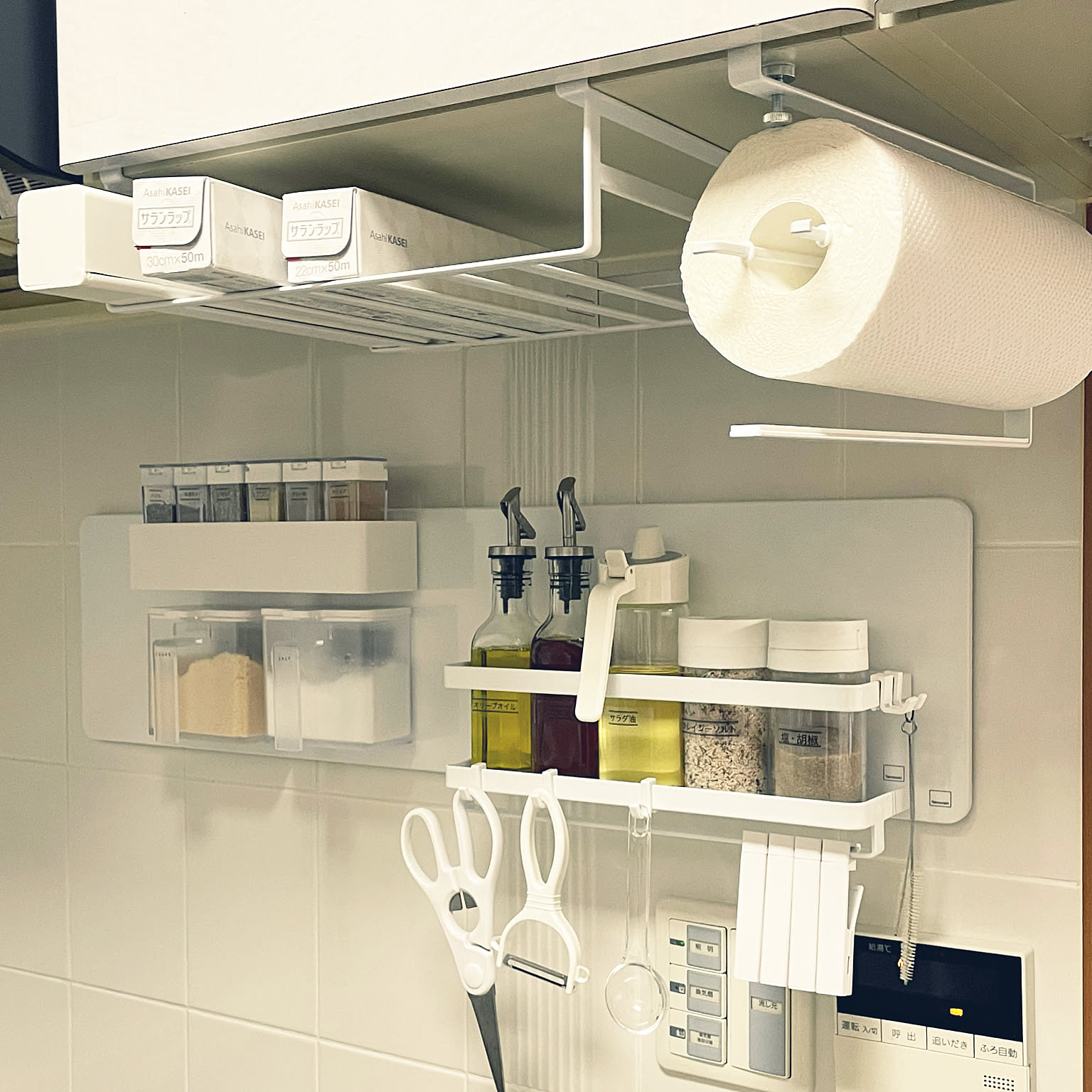
Group the photos by product type and the winner isn't a rack or a shelf. It's magnetic storage: 7,564 photos, or one photo in five across the entire study. Japanese homes stick storage to every steel surface they can find — refrigerator sides, range hoods, entry doors, washing machines, and bathroom walls.
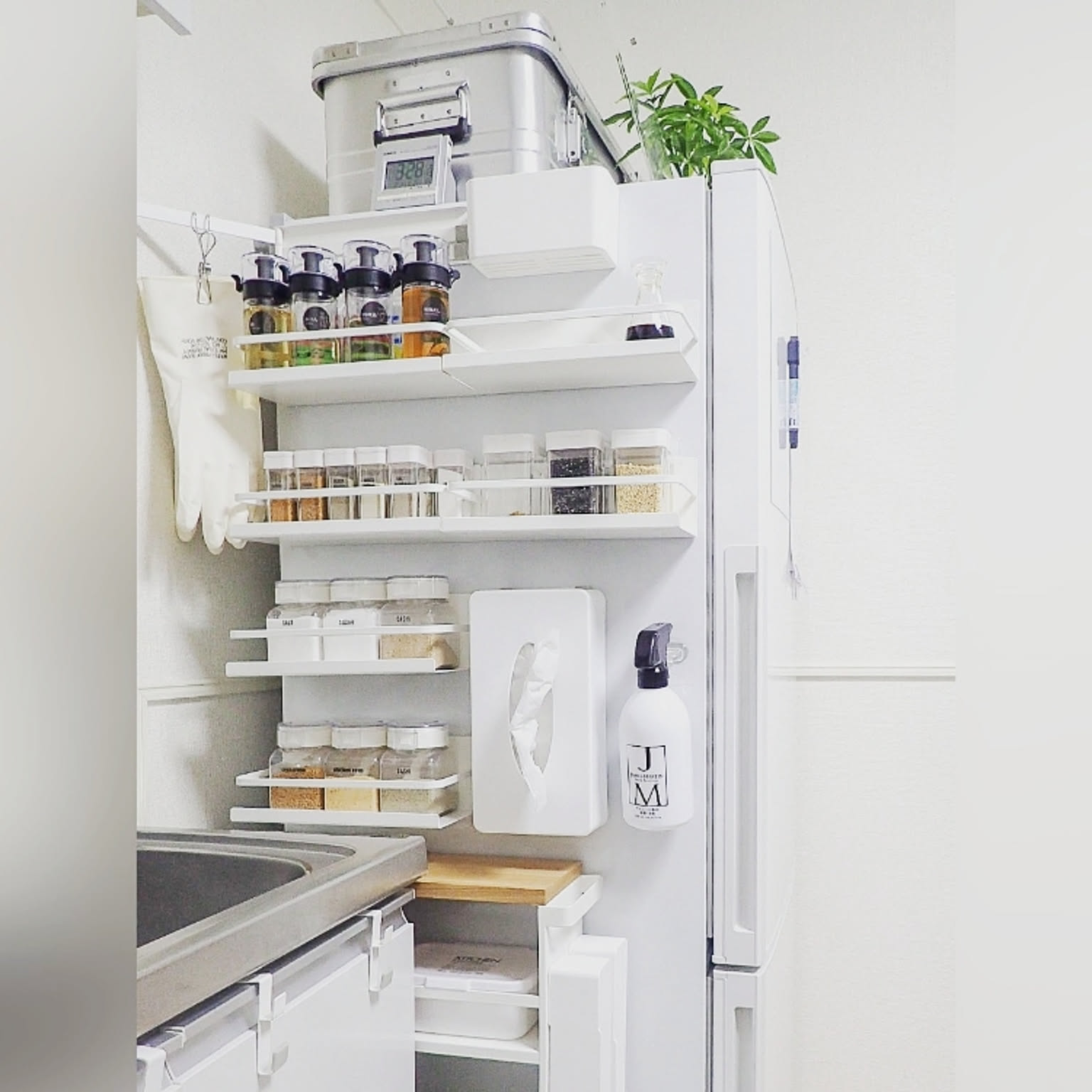
Two forces drive this. Most Japanese homes are rentals or compact condos where drilling holes costs you your deposit, and Japanese appliances leave their steel sides exposed. Yamazaki turned both constraints into a product category: attach, don't drill.
This is also the most transferable idea in the study. A U.S. refrigerator side holds a magnetic spice rack exactly as well as an Osaka one does.
The #2 product American kitchens can't use
The second-biggest product group — 3,952 photos — is something most Americans have never seen: a slim steel cover for the exhaust slot at the back of a Japanese gas range.
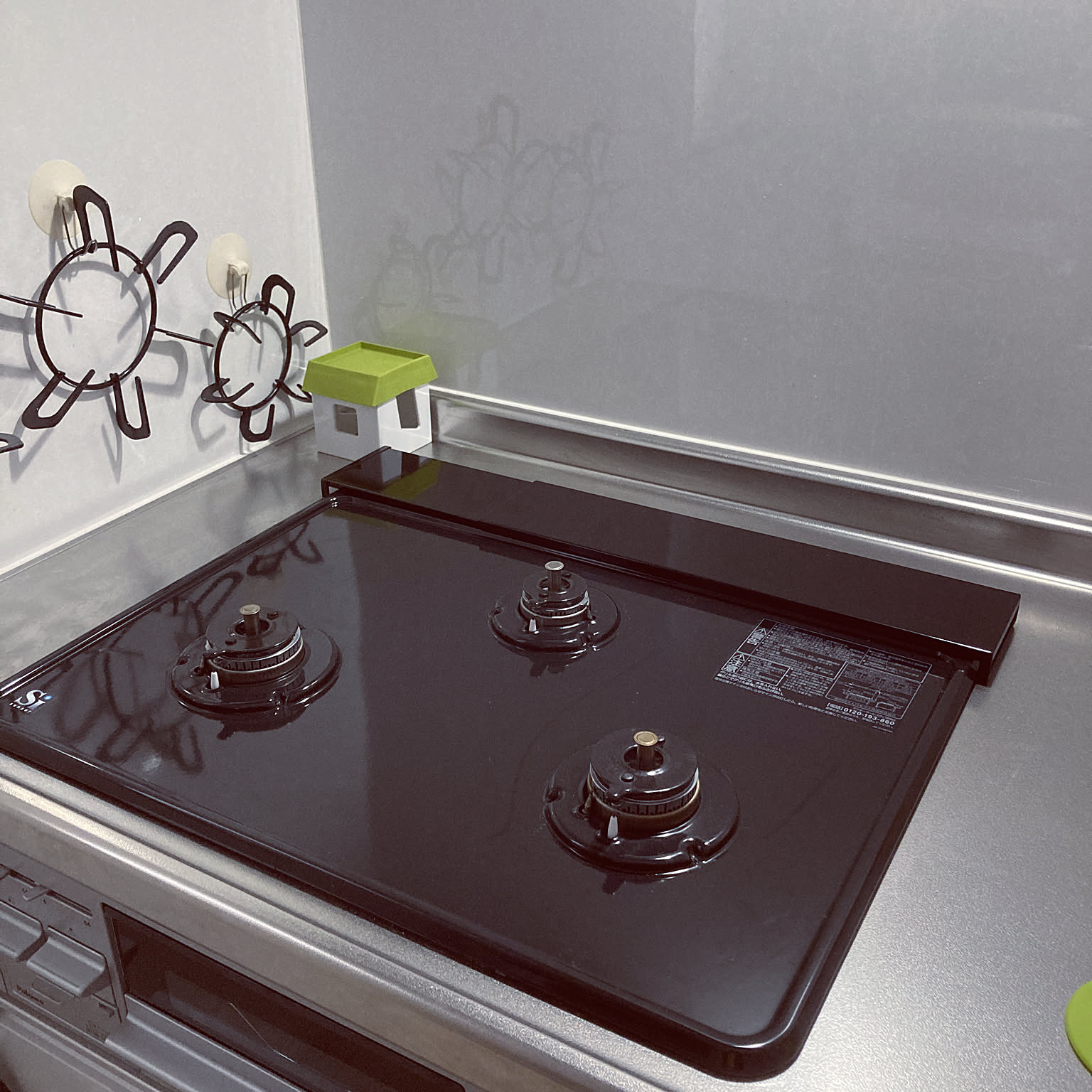
Why does this matter to a U.S. reader? Because the vent cover shows what the whole brand is really selling: it finds a flat dead zone a few centimeters deep and turns it into storage. The product doesn't translate. The instinct does — the back of your stove, the top of your fridge, and the strip behind your faucet are all the same kind of dead zone.
The 10 product groups Japanese homes photograph most
- Magnetic storage
- 7,564 photos
- Stove exhaust vent cover
- 3,952 photos
- Tissue case
- 2,607 photos
- Bread case
- 1,926 photos
- Coat & clothes racks
- 1,829 photos
- Dish drying rack
- 1,768 photos
- Trash can
- 1,303 photos
- Plastic bag holder
- 1,177 photos
- Microwave & toaster racks
- 716 photos
- Under-sink storage
- 643 photos
Groups are keyword-matched from Japanese product names (any item containing マグネット counts as magnetic storage, and so on); a photo with items from several groups counts once in each. Our named groups cover 64% of all photos; the rest is a long tail of smaller products. Source: RoomClip, sponsored posts excluded.
Look at what's missing: big furniture. The list is dominated by items under $100 that manage one small daily annoyance — where bread bags live, where the tissue box sits, where grocery bags wait to be reused. That is the brand's actual role in Japanese homes: not furnishing, but finishing.
What translates best to a U.S. kitchen
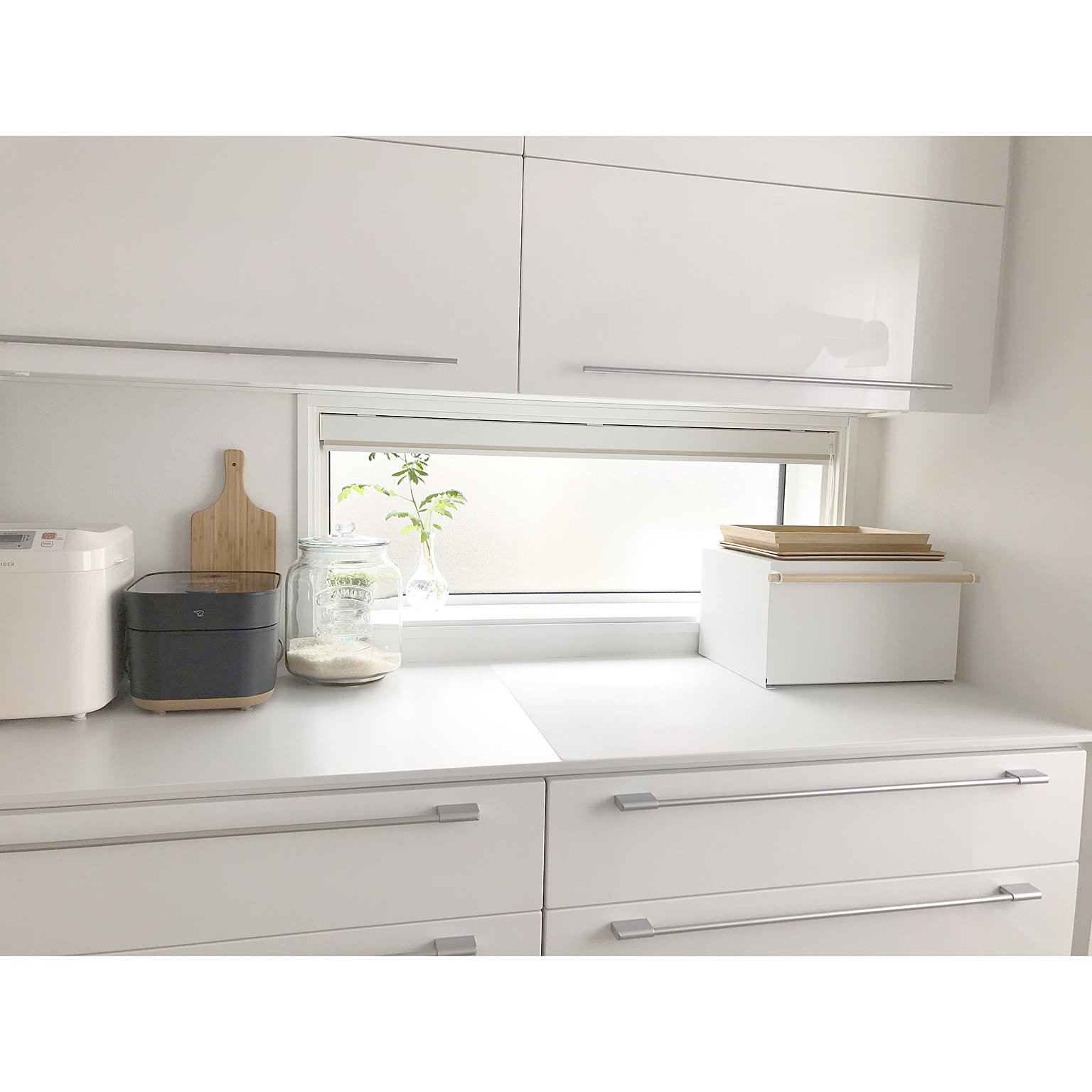
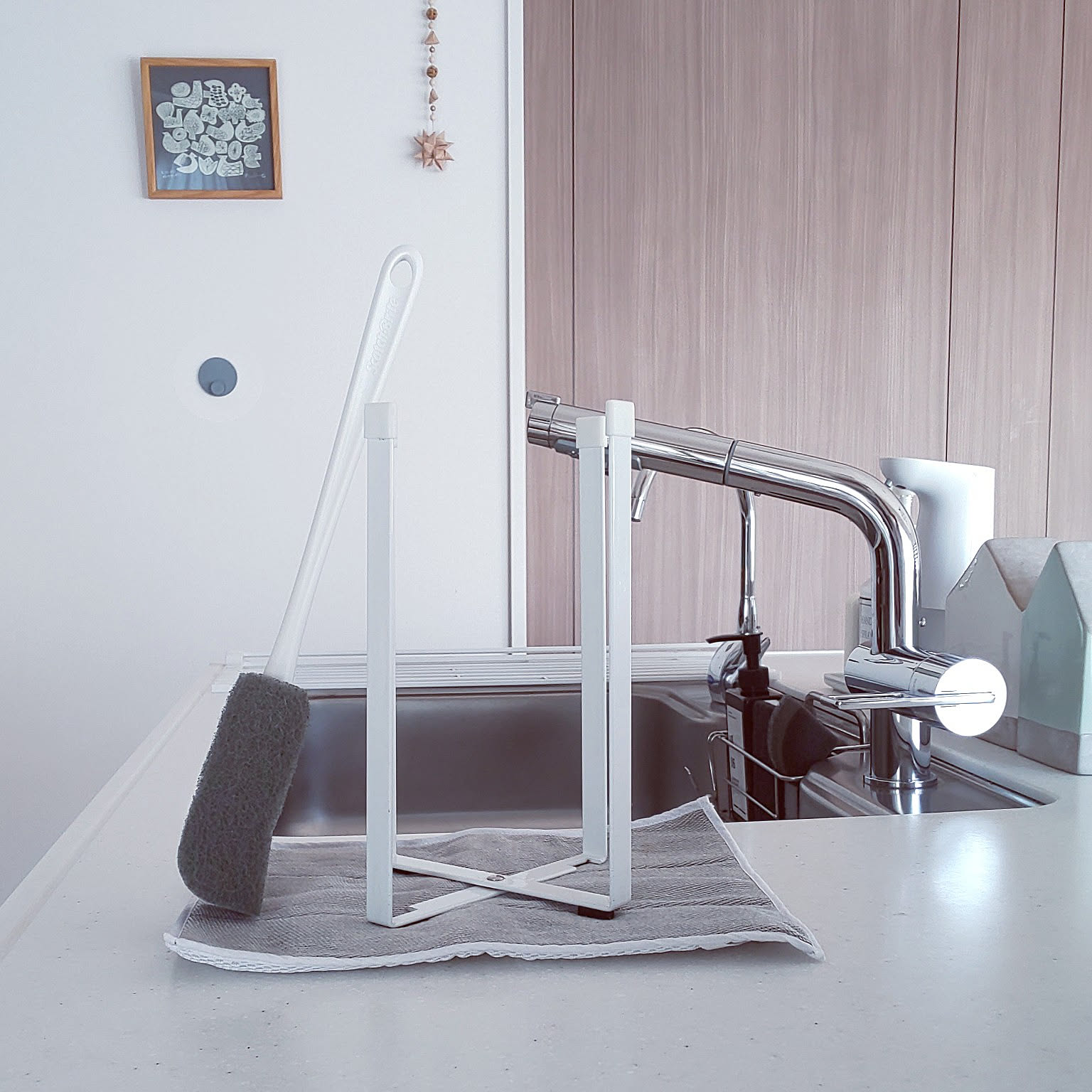
From the top ten, the strongest U.S. candidates are the magnetic racks, the bread case, the tissue case, and the plastic bag holder — sold in the U.S. as the Kitchen Eco Stand. Japanese users prize the eco stand because it folds flat and does two jobs: it holds a bag open for scraps while cooking, then dries bottles afterward.
The bathroom is the quiet second market
6,567 photos — 17% of the study — were taken in bathrooms and toilets. And within those, 46% involve magnetic products. The reason is structural: Japanese unit bathrooms are prefabricated with steel wall panels, so shelves, dispensers, hooks, and even bath stools attach directly to the walls.
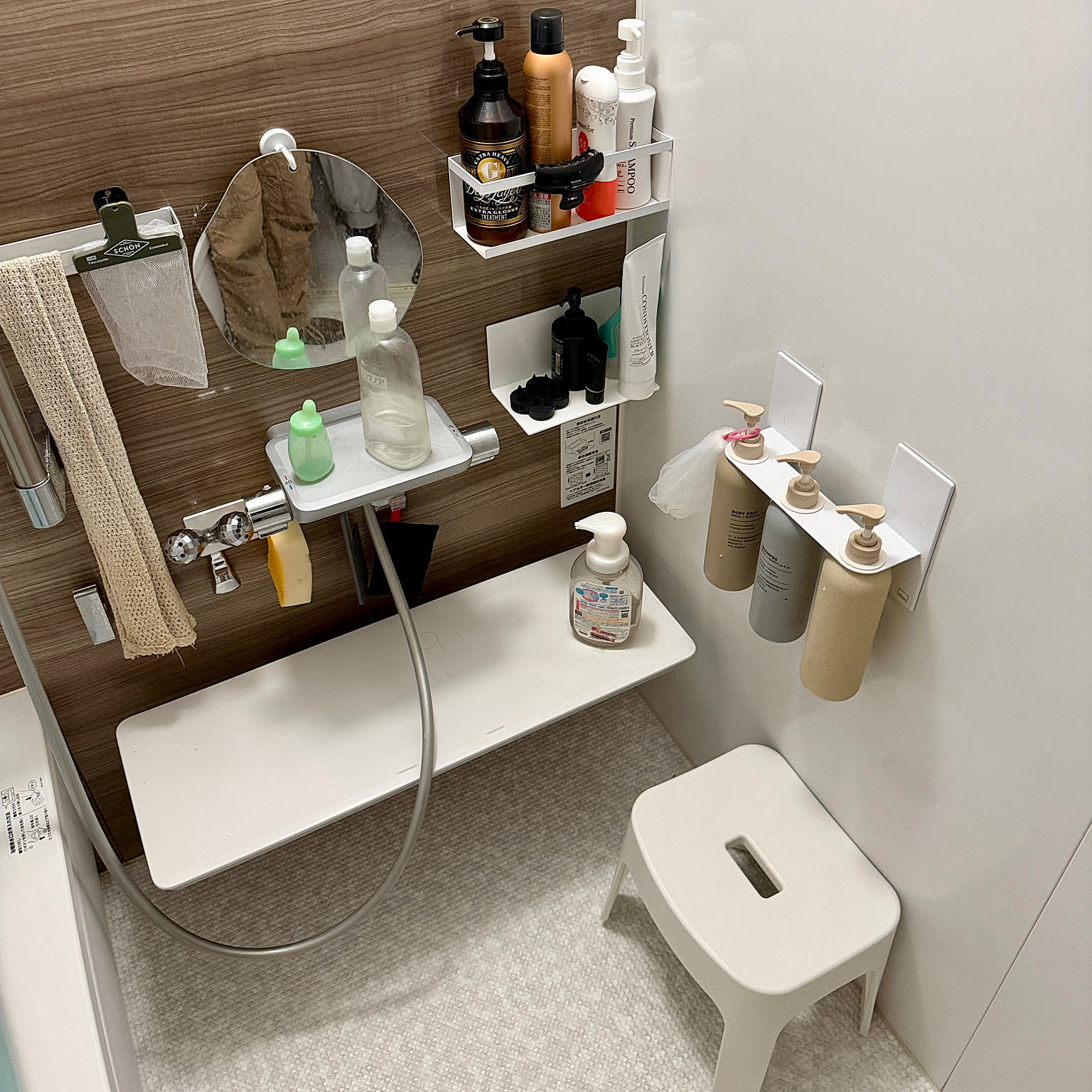
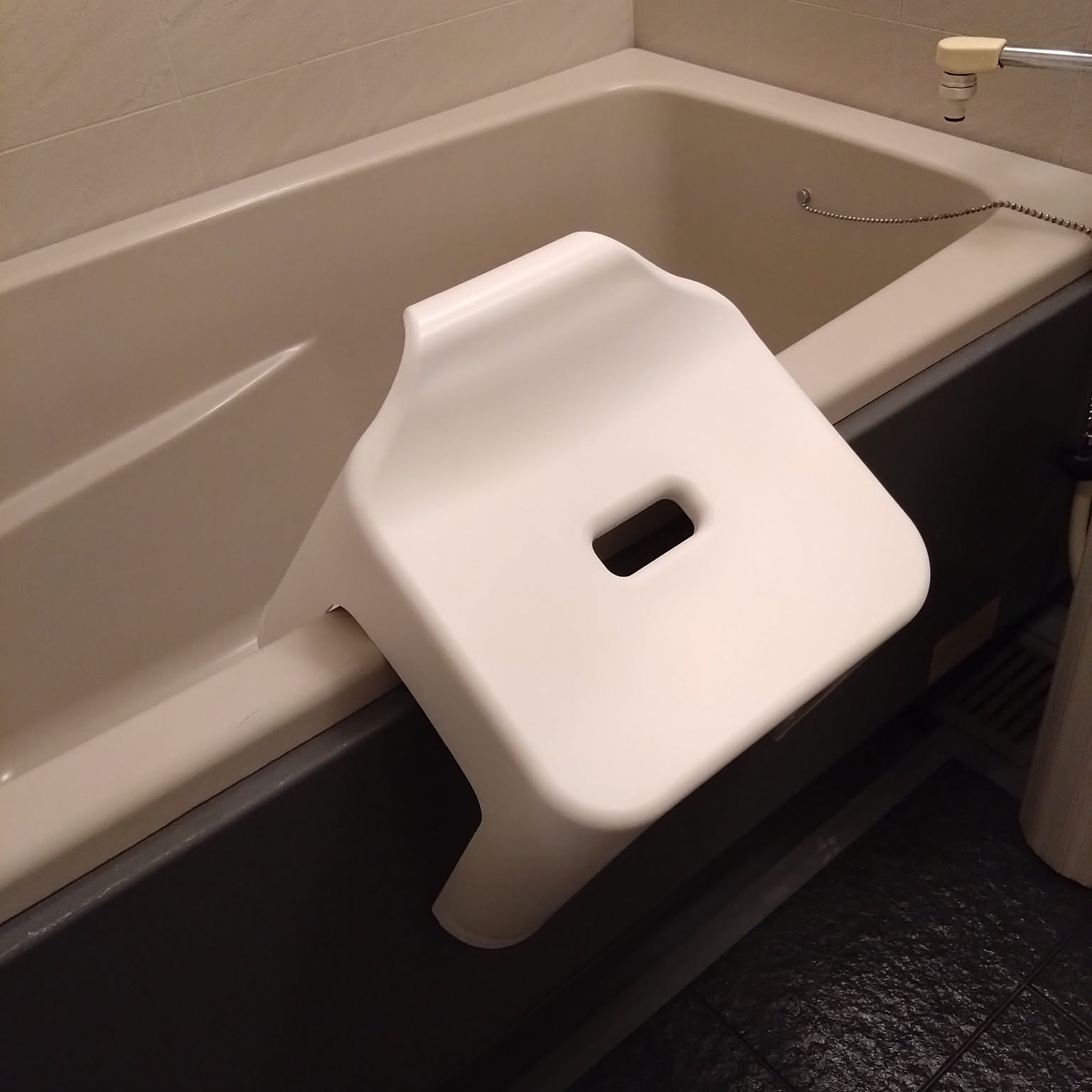
The goal you see in photo after photo: nothing touches the floor. Bottles hang, trays float, and the bath stool — a fixture of Japanese bathing culture — hooks over the tub edge to drip dry. Less standing water, less mold, less scrubbing.
Most U.S. bathroom walls are tile or drywall, so the magnets stay home. The principle travels anyway: get bottles and stools up off wet surfaces and the weekly clean gets dramatically shorter.
Entryways and living rooms
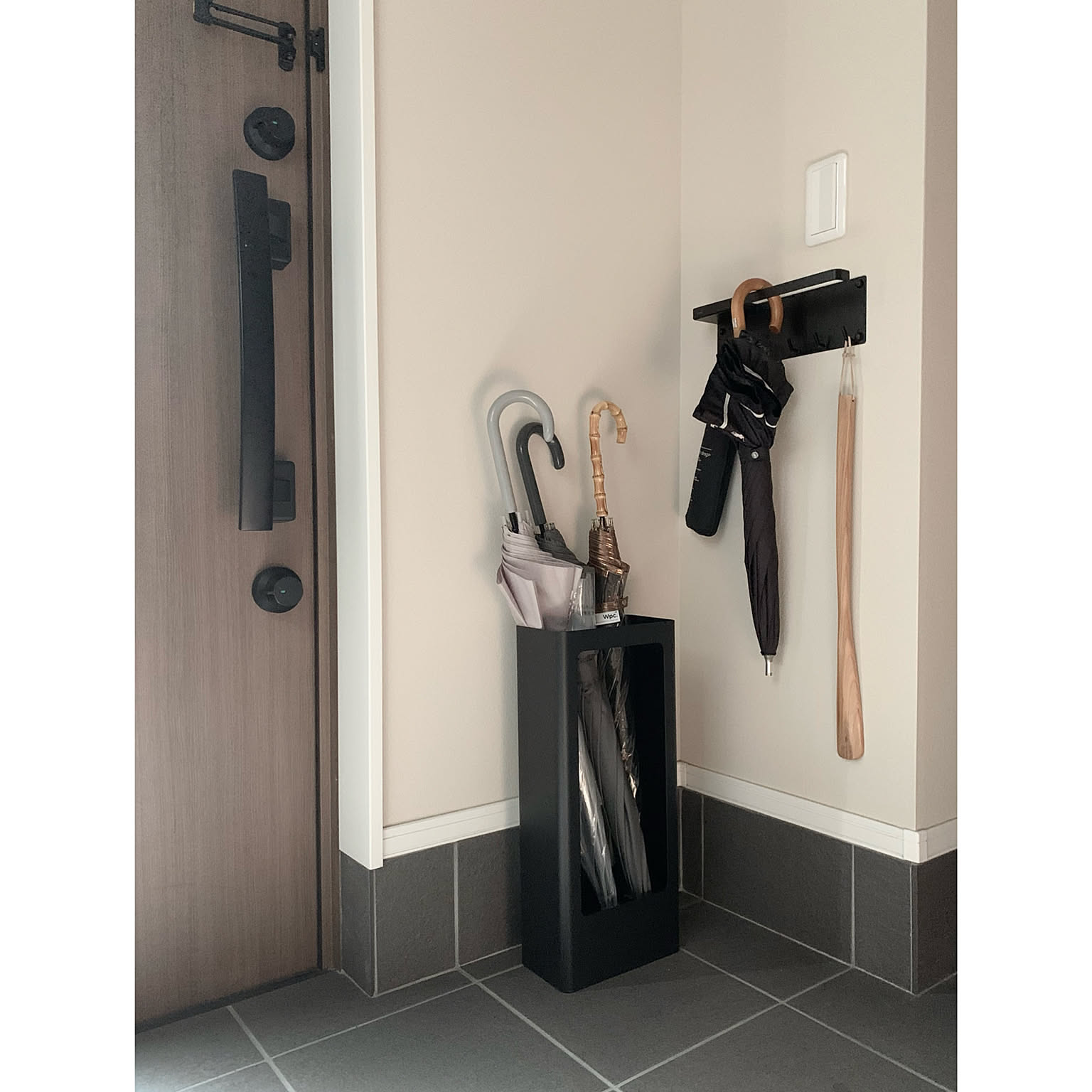
The entryway — the genkan, where shoes come off — accounts for 2,616 photos. The stars are slim umbrella stands, wall hooks, and slipper racks: products sized for a floor area smaller than a bath towel.
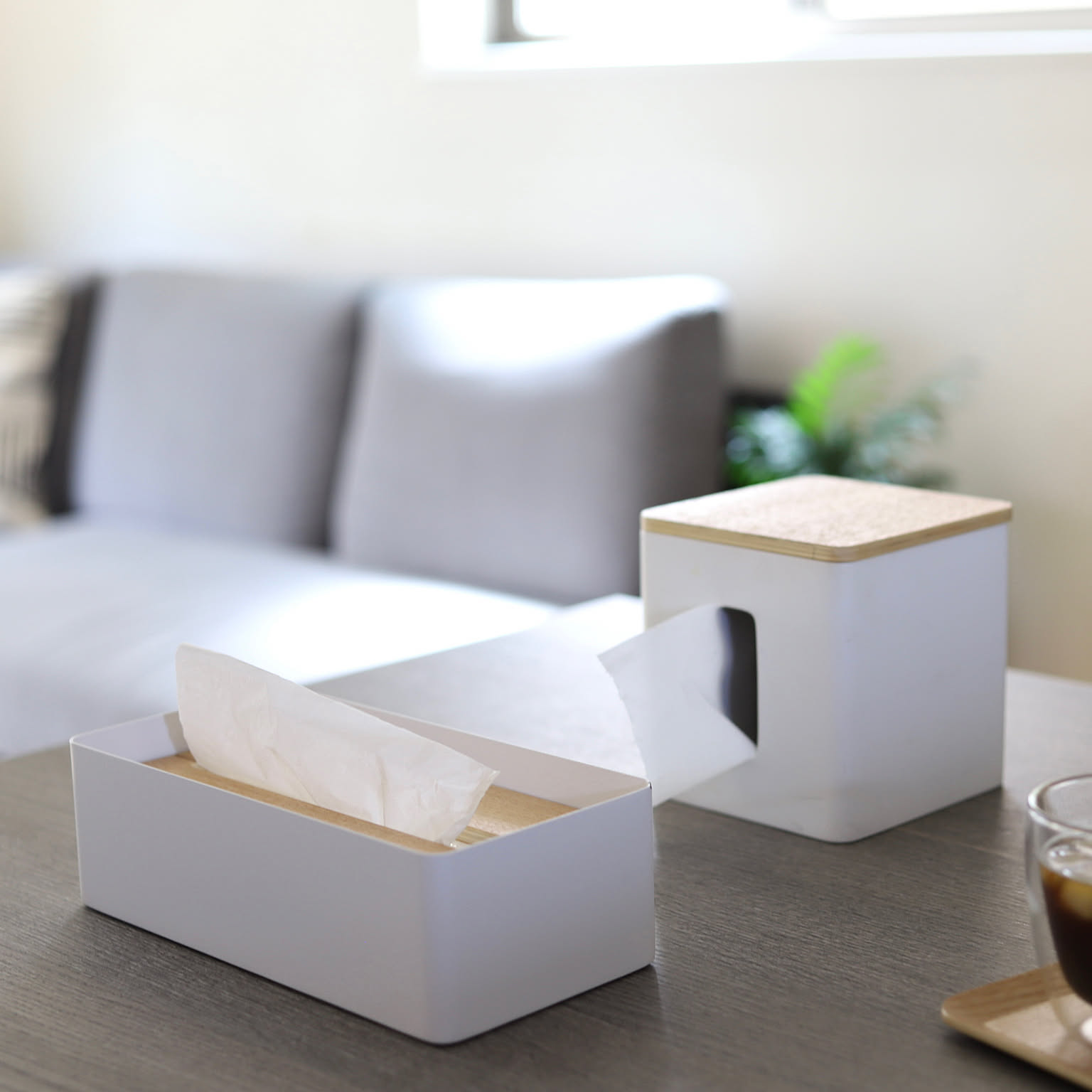
Living rooms add 3,191 photos, and one product explains most of them: the tissue case, the study's #3 group. Tissue boxes sit on nearly every Japanese living-room table, and a steel case with a wood lid is the difference between clutter and furniture.
Methodology
This study uses photo data from RoomClip, Japan's largest home-photo community, where members photograph their own homes and tag the products in the picture.
- We started from every photo with a tagged Yamazaki (山崎実業) product: 43,334 photos.
- We removed 5,204 photos posted through sponsored campaigns (12%) and all posts by shop or showroom accounts, leaving 38,038 photos from 8,184 unique households.
- Room counts use RoomClip's room tags, and a photo can carry more than one — a photo tagged both kitchen and living room counts toward both, so the room chart intentionally adds up to more than 38,038.
- Product groups were built by keyword-matching Japanese product names: any item name containing マグネット (magnet) counts as magnetic storage, 排気口カバー as vent cover, and so on. A photo with tagged items from several groups counts once in each group.
- The seventeen groups we defined cover 64% of the photos (24,372 of 38,038). The remaining 36% is a long tail across Yamazaki's several-thousand-item catalog, with no hidden bestsellers — the largest single product outside our groups appears in only about 200 photos.
- Limits: people photograph what they are proud of, and item tagging is voluntary — so these counts skew toward well-kept homes and undercount total ownership. Treat them as a popularity signal, not a sales ranking.
Data was pulled in July 2026.
Frequently asked questions
Where does the data in this study come from?
Is 'tower' the same brand as Yamazaki Home?
Do the magnetic organizers work in U.S. homes?
Ready to buy? Start where the data points
Four of the study's top product groups are sold in the U.S. under the Yamazaki Home name. If you want to test the brand the way Japanese households actually use it, start here.
by Japanese Home Goods Editorial
RoomClip usage context, manufacturer specifications, and US-market availability are reviewed by the Japanese Home Goods editorial team. We do not claim hands-on testing unless an article explicitly says so.
Related Articles

Japanese Kitchen Organization Ideas: Keep Small Counters Ready to Cook
Arrange the kitchen tools you already own around prep, cooking, washing, and putting things away. Test the layout first, then measure before adding a Tower dish rack or slim cart.

Japanese Entryway Organization Ideas for Small Apartments
Plan a small entryway with the trays, shelves, and storage you already own. Test the door swing, fit shoes to your shelves, and check rental rules before buying more.