Small Kitchen Coffee Station Ideas: Arrange the Tools You Own
Choose what stays on the counter, what comes down from a shelf, and where wet tools go after brewing. These Japanese home examples help you arrange a small coffee station with the gear you already own, and measure before you buy more.

Start with the tools you already own
If your coffee tools already work but keep taking over the kitchen, start by changing where they live. Gather what you use for one ordinary brew: your brewer, kettle or coffee machine, cup or server, filters, and any grinder or scale you actually use. Put alternate brewers and backup supplies aside.
Check that this group covers a complete brew: filters that match the brewer, a mug or server it sits on securely, and a kettle you can pour from comfortably. If it does, the problem is placement, not equipment. Keep suitable tools rather than replacing them so everything matches.
The Japanese homes shown here offer two useful ideas: keep a few tools together on the counter, or store them on nearby shelves and bring them down to use. These are individual examples, not proof that one layout is typical or faster. Use them to test a layout in your own kitchen before buying organizers.
Choose what stays out and what moves
Choose by the space available while you are brewing, not just by how neatly everything fits when stored. A kettle spout, server handle, and the room to lift a dripper can extend beyond the group you see on the shelf.
| Spec | Counter setup | Shelf storage |
|---|---|---|
| Best for | Frequent use; spare counter | Shared counter; reachable shelf |
| Before brewing | Clear the working area | Bring dry tools down |
| After washing | Dry, then return to the counter | Dry, then return to the shelf |
| Main tradeoff | Uses counter space all day | More lifting each time |
| Avoid if | It crowds food prep | The shelf is high or awkward |
Layout options to try with your own tools; the photographs do not establish dimensions or measured time savings.
Keep a few tools on the counter


In these examples, the brewer and kettle stay near each other while jars sit above them. Copy the grouping only if you can still set down a cup, pour comfortably, and prepare food without shifting the whole station. A fixed coffee machine may need to stay out; follow its placement and clearance instructions.
If you already use a tray, it can mark the storage area for dry, cooled tools. Take pieces off it to brew when the tray limits movement or is not a suitable work surface. You do not need to buy a tray to establish a boundary.
Keep the shared work surface clear
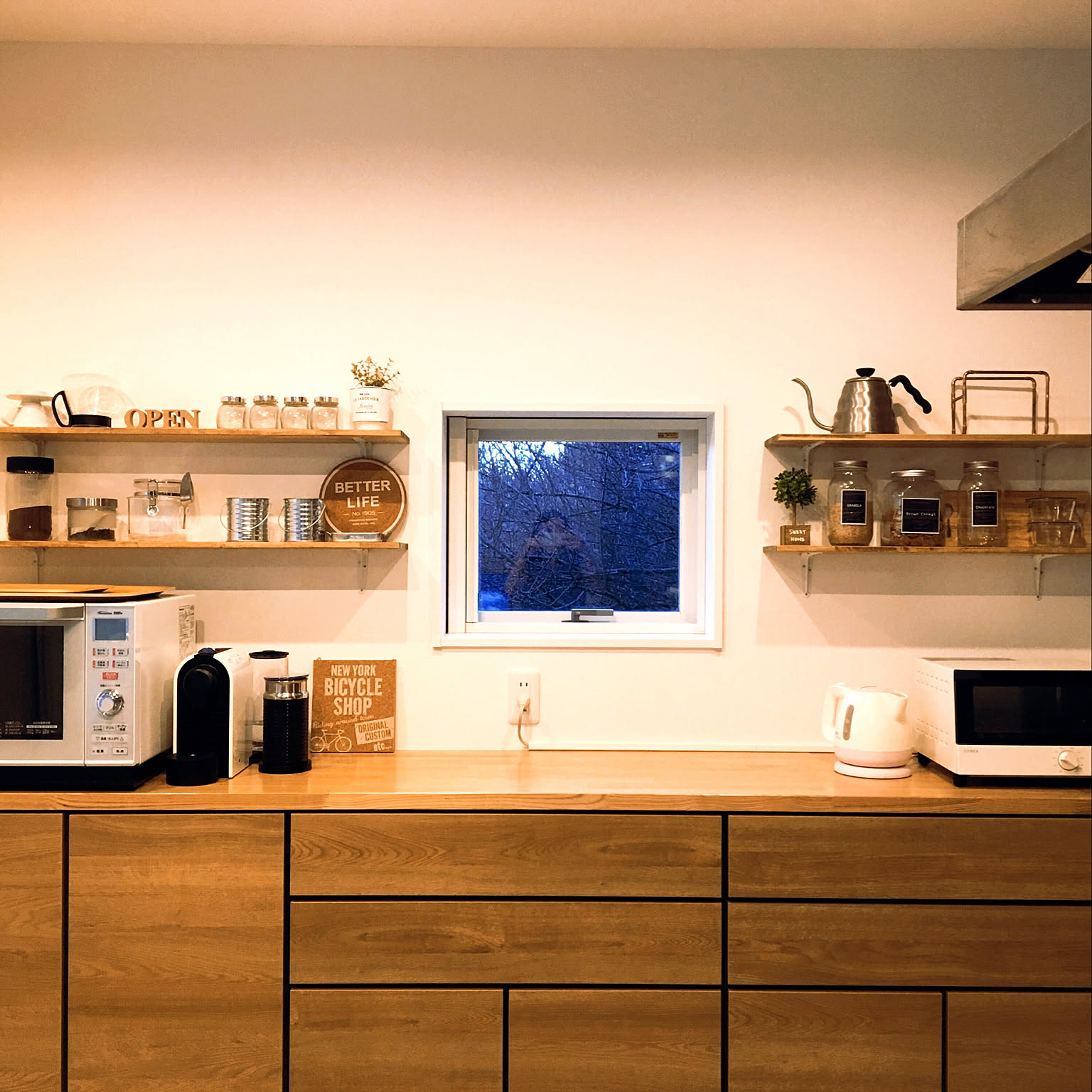
Here, shelves on either side leave the center of the counter open. If coffee and cooking share one surface, use a reachable shelf or cabinet for dry tools, then bring only what you need down before brewing. The shelf is the storage spot; it does not have to be where you pour hot water.
Keep heavier pieces where you can lift them comfortably. Use only storage that supports the load. If you rent, work with existing cabinets or shelves unless you have checked the lease and the mounting requirements; a photographed wall shelf does not establish a no-drill solution.
Use a cart for backup supplies
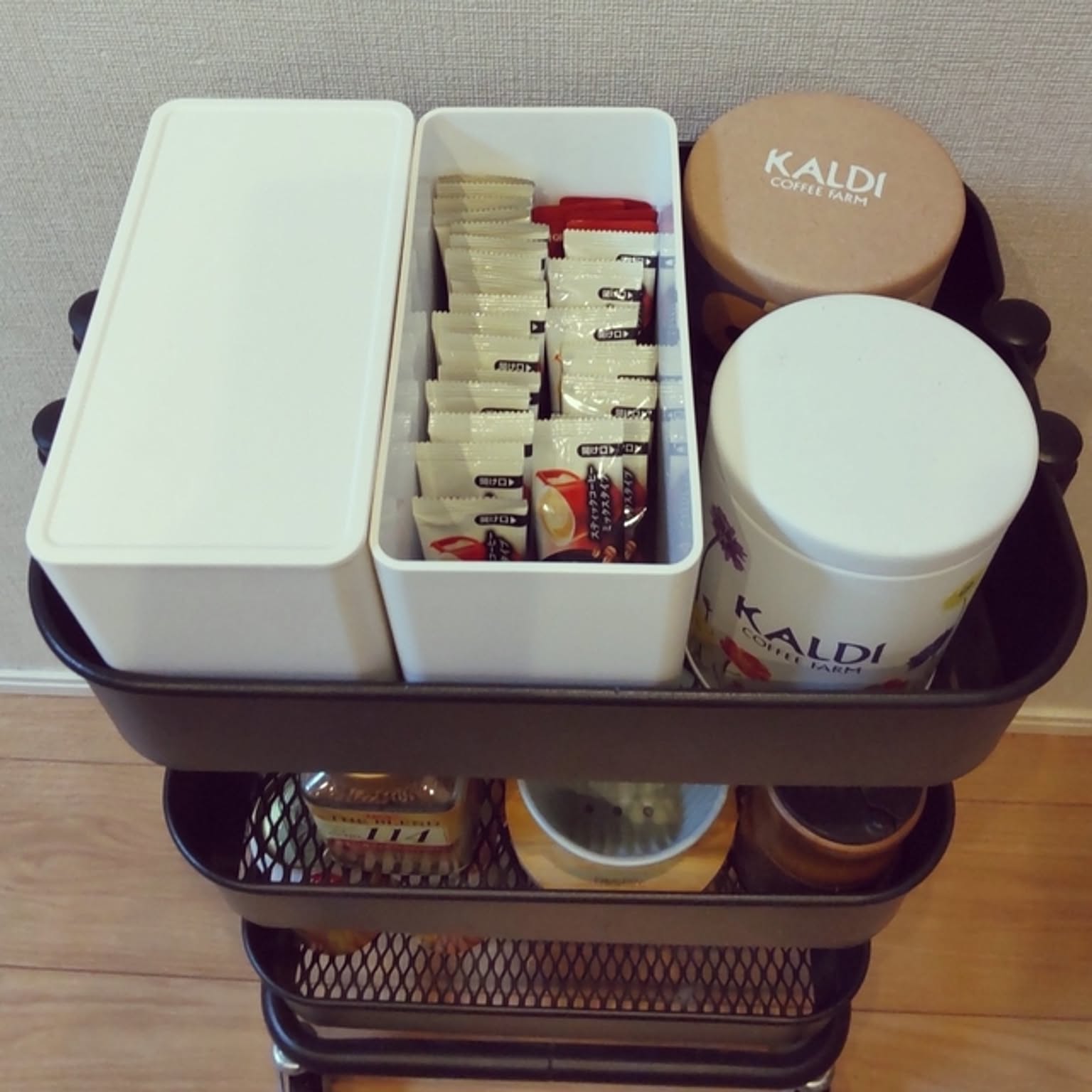
When cabinets are full, an existing cart can hold spare filters, unopened supplies, or dry tools. Keep frequently used pieces within easy reach and check that the cart does not block a doorway or drawer. Treat it as storage unless its construction and your equipment instructions support using it as a stable work surface. You can store supplies on a cart and still brew on the counter.
If a cabinet already holds the supplies, a new cart adds cost and floor clutter without filling a gap. Buy one only when you need the storage and have floor space that keeps doors and drawers usable.
Leave room to pour, serve, and set down wet tools
Before settling on a layout, place the tools on the counter without heating water. Run through the motions: reach for filters, set up the brewer, lift the empty kettle, remove the dripper, and pick up the cup or server. If you need to move unrelated kitchen items at every step, reduce what stays out or choose another work surface.
Give the dripper a storage spot
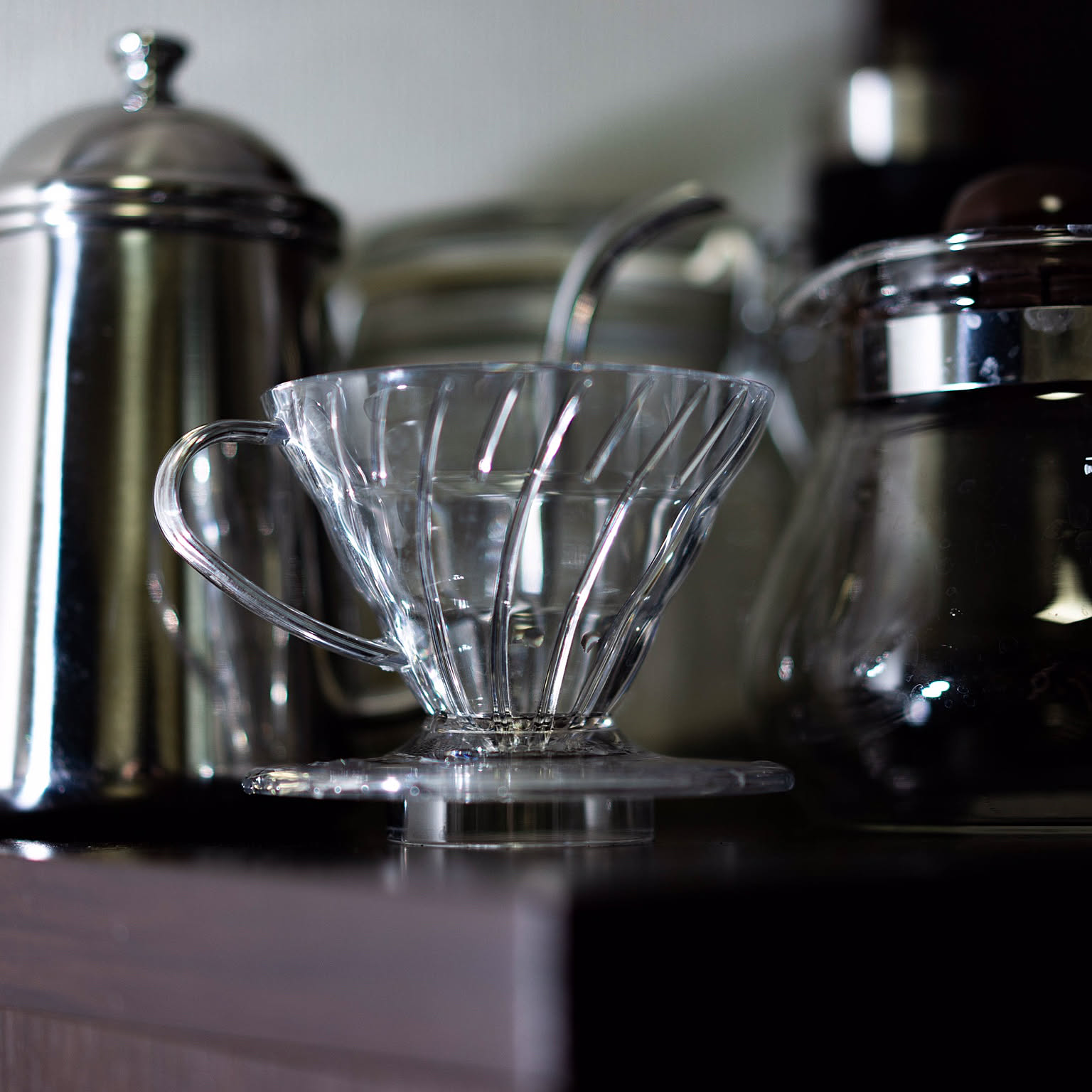
A dry dripper can have its own spot instead of remaining over a server all day. At brew time, use the mug or server your brewer is designed to fit. Leave room beside it for the used dripper so you can remove it before lifting the drink. If you already brew into a mug, there is no layout reason to keep an unused server out.
Choose a storage spot for the kettle
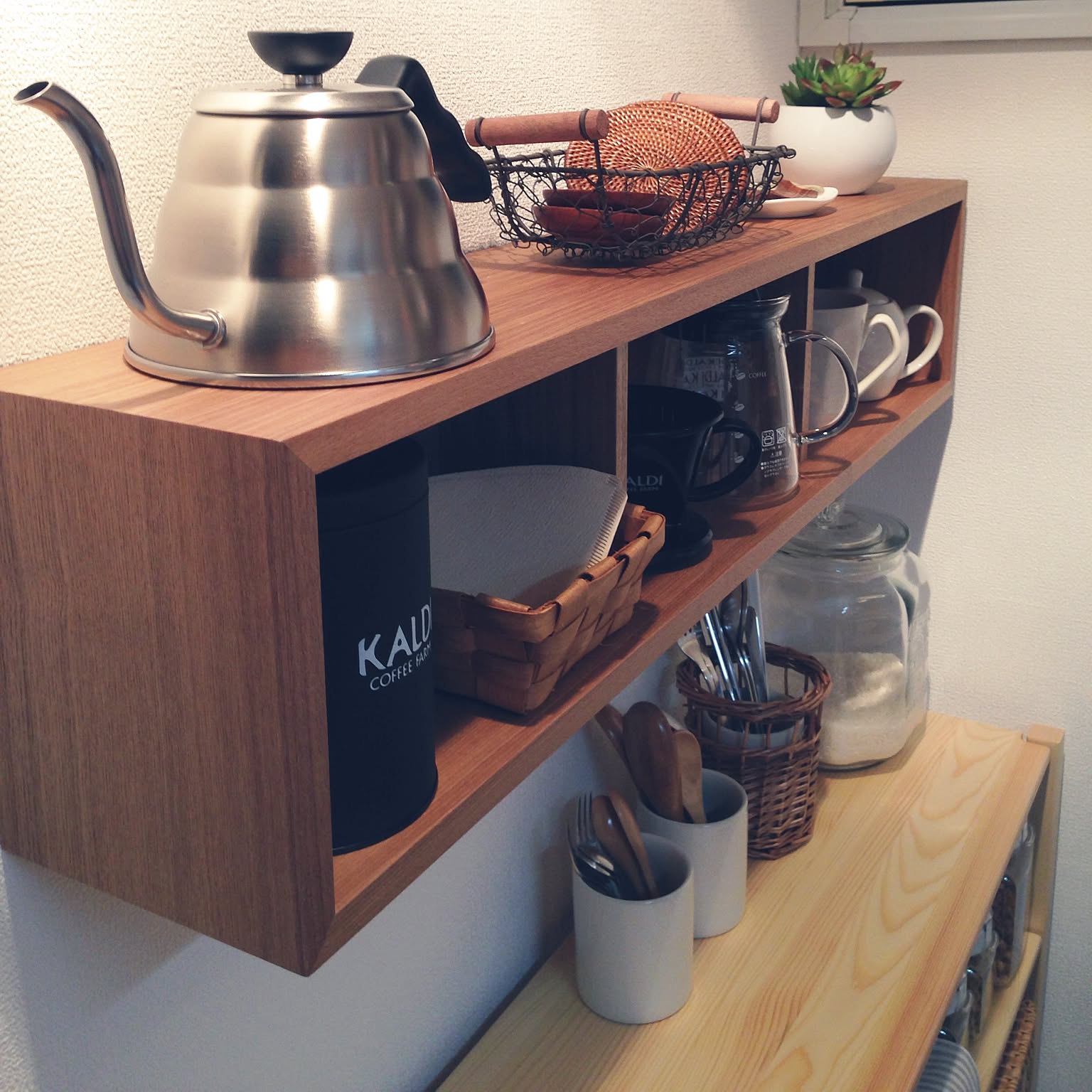
This shelf gives the kettle a defined storage spot beside cups and filters. Check your own kettle with its handle and spout included; do not measure just the round body. Keep heating and pouring on surfaces allowed by its instructions, and let it cool as required before returning it to storage.
For electrical equipment, keep the base and cord away from the sink and splashes, and keep cords clear of hot surfaces. The CPSC Home Electrical Safety Checklist covers these countertop-appliance risks. Follow your own appliance instructions for placement, cleaning, and unplugging; a Japanese home's photo does not establish electrical compatibility for a US model.
Allow room around the server
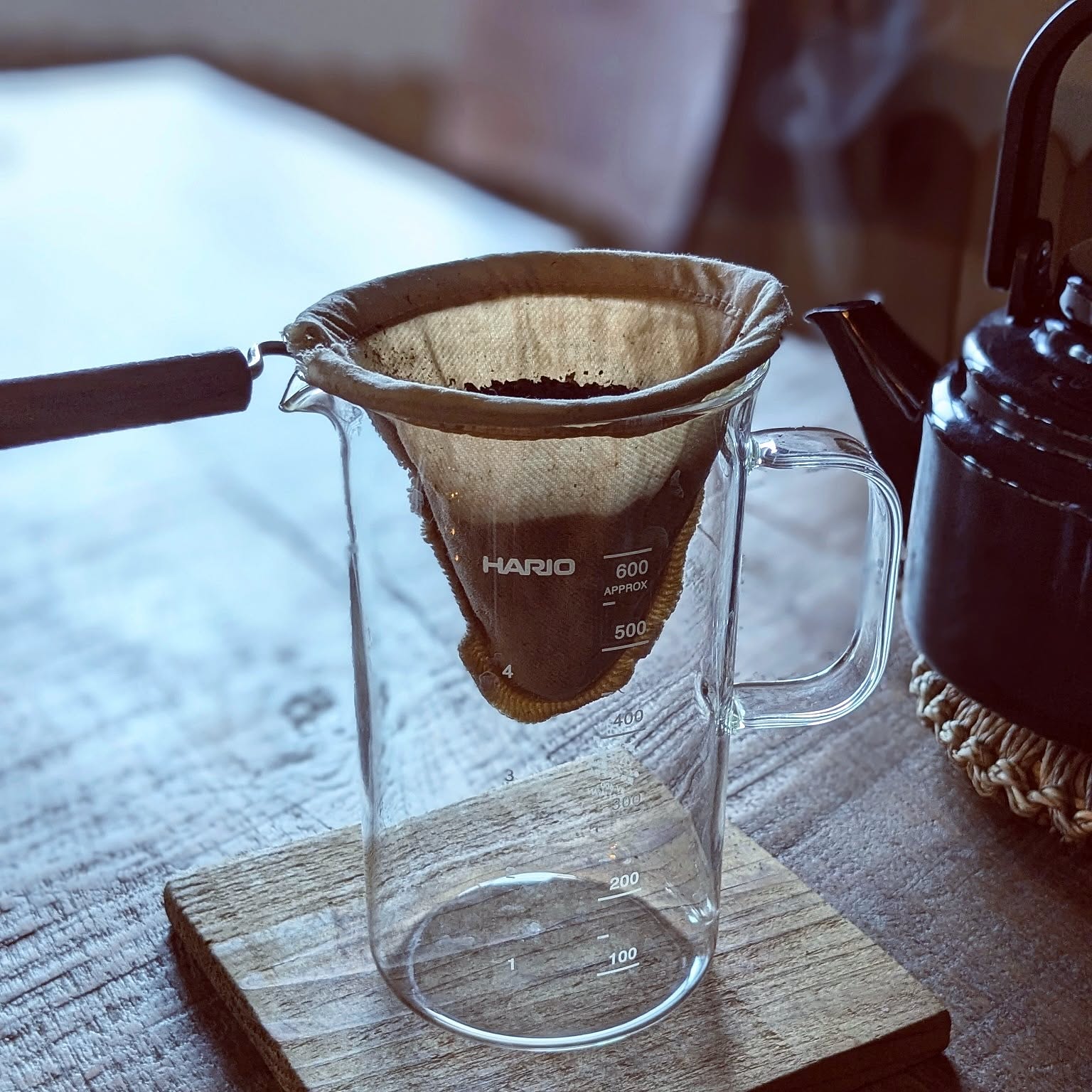
The glass body is only part of the space this setup needs: both the server handle and cloth-filter handle extend outward. Allow for your own handles, the pouring motion, and a place to set the brewer down. Keep paper filters and beans in dry storage, separate from the washing and draining area.
Leave room to lift tools from a stand
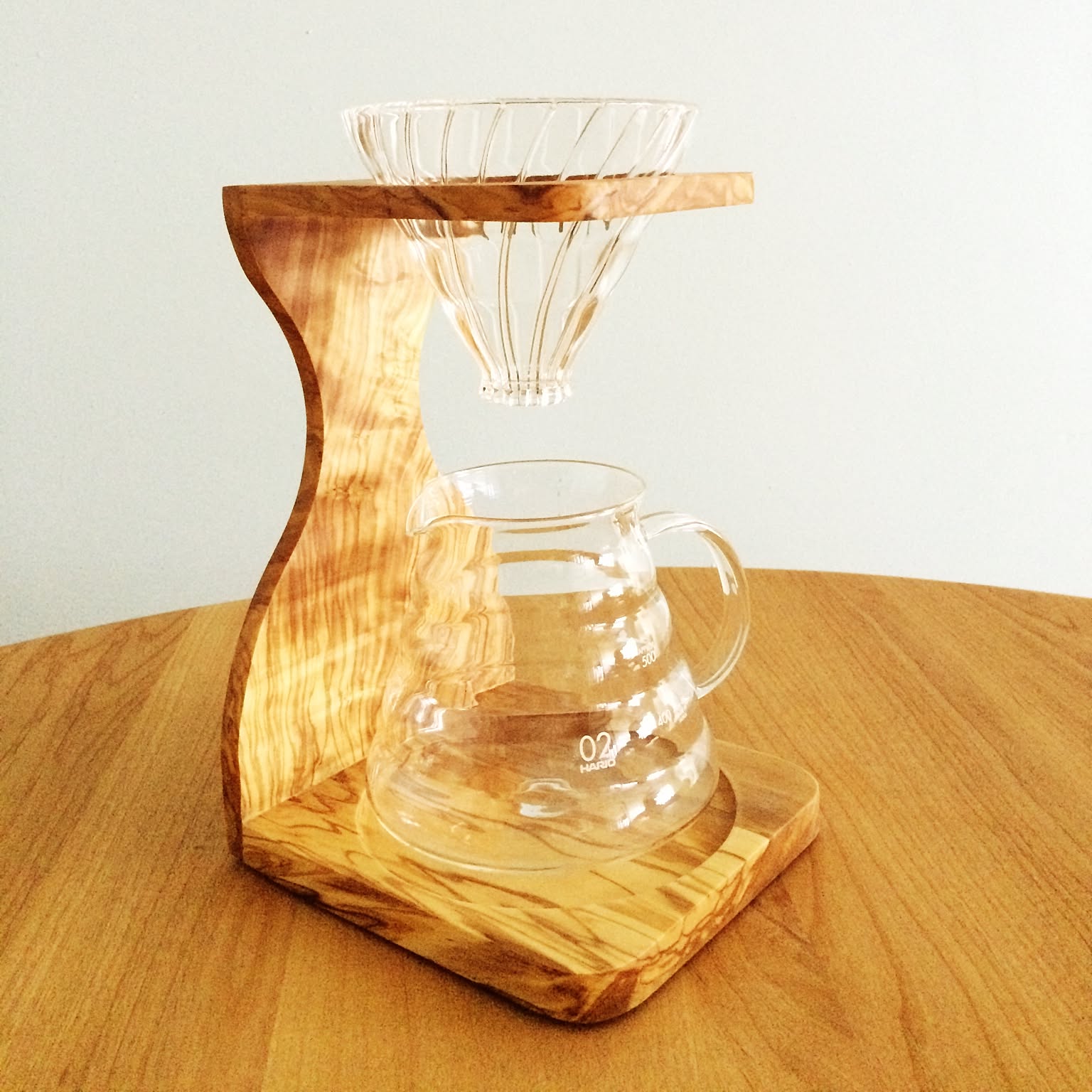
If you already own a stand, it can keep the dripper above the server in storage or during brewing when the pieces are compatible. Check that you can lift the dripper and remove the server without hitting a shelf above or the objects beside it. The compact appearance alone does not show the space needed to use it.
Plan the return trip after brewing
Try this sequence with your own equipment. It is a suggested routine, not a before-and-after result demonstrated by the photographs. Allow drying and cooling to finish even if the rest of the counter is ready for cooking.
- After serving: Move used washable pieces to the washing area according to their care instructions. Keep a separate temporary spot for a wet dripper while you finish serving.
- After washing: Let the dripper and server dry in your existing dish-drying area if they fit. Keep this wet area separate from filters, beans, and electrical bases.
- While tools dry: Wipe the cleared work surface. Put dry supplies back in their own spot rather than leaving them in the drying area.
- When ready to store: Return dry pieces to the counter, shelf, or cabinet. Move hot equipment only after it has cooled as required by its instructions.
If wet tools keep occupying the entire coffee counter, the missing piece may be a drying spot rather than another organizer. If reaching the shelf feels awkward, move the daily tools lower or keep fewer pieces there. If you still have to clear unrelated items to make coffee, choose a different brewing surface.
Measure before you add a piece
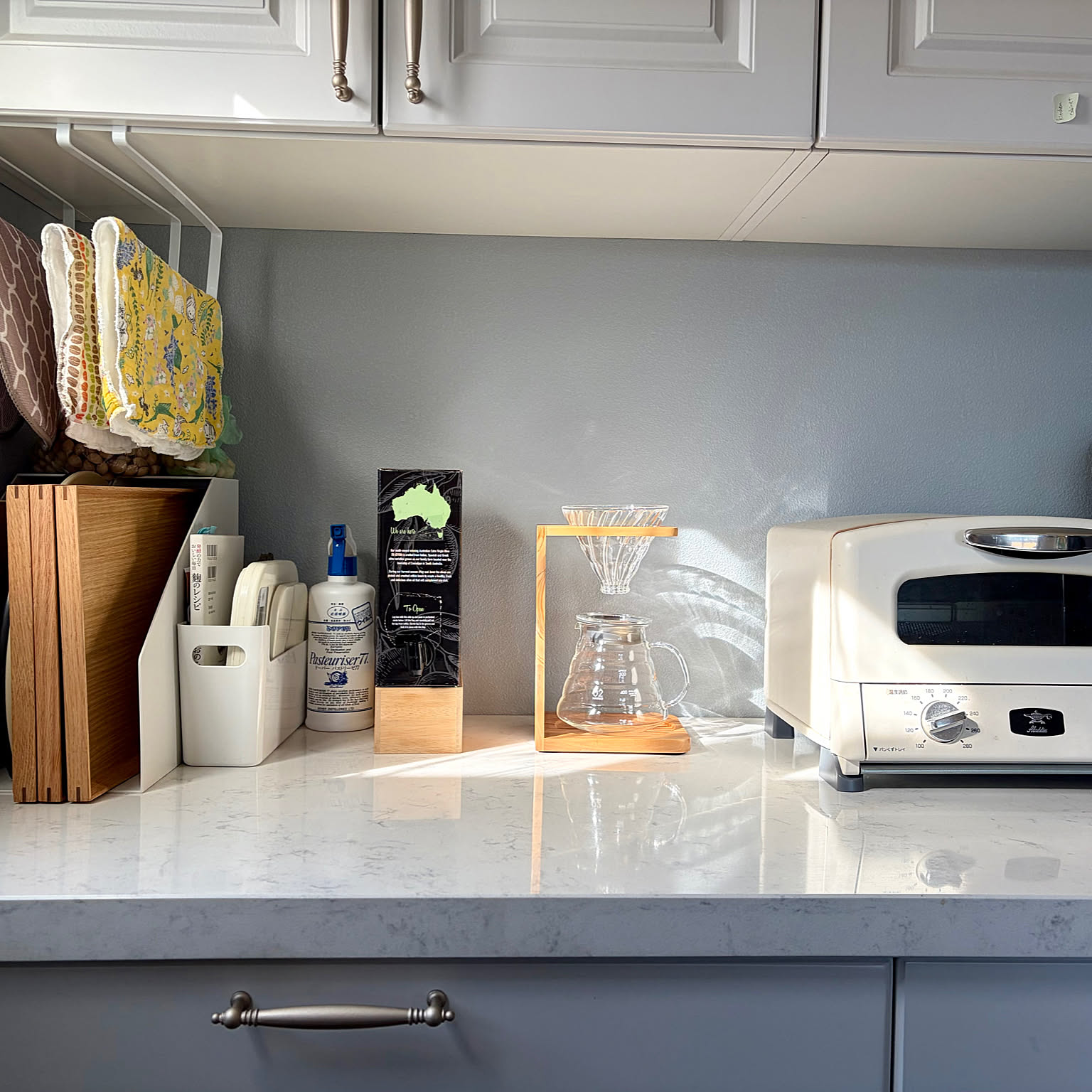
If the layout test shows a real gap, measure before you shop. Measure the available width, depth, and height with cabinet doors open, then compare those numbers with the exact product, including handles, spouts, and any electric base.
Then check the space needed to use it. Mark the product's outline on the counter and allow room to lift the dripper, take out the mug or server, pour water, and set down a used brewer. Listed dimensions do not include those movements. Follow each appliance's instructions for placement and clearance; there is no single safe size that fits every setup.
What you probably don't need to buy
A station in a photo often includes pieces that solve someone else's problem. Before adding any of these, name the specific problem it fixes in your kitchen.
A new kettle, if yours pours well
Keep your current kettle if it heats water and lets you pour where you intend. A gooseneck kettle changes pour control, not the layout, and it needs its own storage spot. If you do buy an electric kettle, choose a US-market model and follow its placement instructions.
A filter case, if filters already stay dry
Keep filters in the clean, dry storage you already use. A dedicated case earns its space only when it fixes a specific problem, such as bent filters or a loose stack. Check that it fits your filter shape and size and that there is room to open the lid.
A mounted holder, before you check the surface
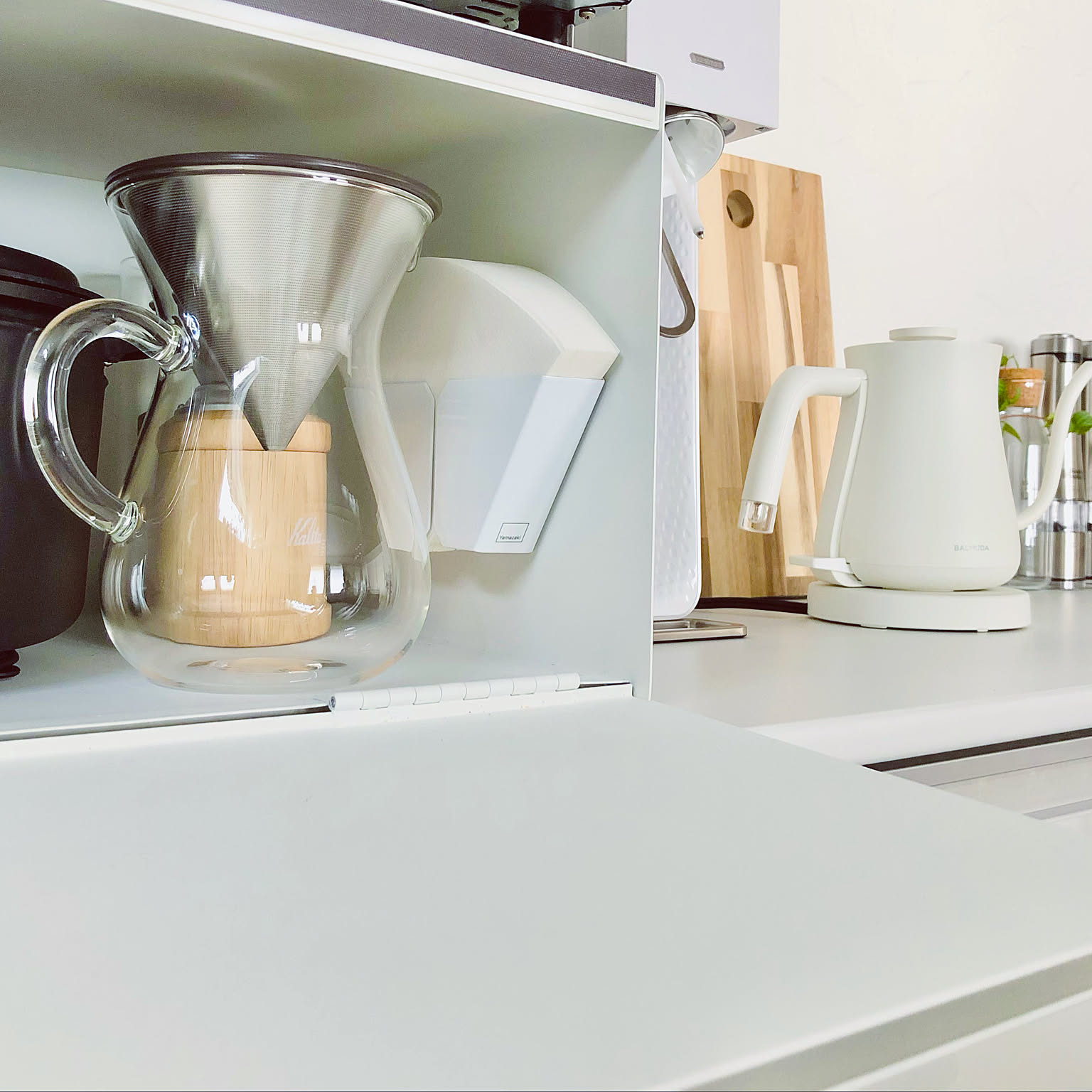
A holder may use a surface you already have, but confirm whether the exact product needs magnetic steel, adhesive, screws, or another attachment. Check the manufacturer's surface and load requirements, and your lease before altering a rental. A holder pictured in a Japanese cabinet does not show that it will attach to yours.
A second brewer, if the first one works
If your coffee machine or current manual brewer makes the coffee you want, another brewing method mainly adds tools to store. Add pour-over gear because you want to brew that way, not because a photographed kitchen has both. Likewise, keep a usable tray, grinder, or scale rather than buying another to match.
Try the layout before adding gear
Choose a home for your daily tools and one clear surface for brewing. Test the layout with what you already own, including where the wet dripper goes and where the washed server dries. Keep the counter setup if it leaves enough room for cooking; use shelf storage if bringing tools down is the easier tradeoff.
If you do find a missing piece, buy only that piece and check it against the space you measured. If the missing piece is a dripper, compare sizes in our V60 01 vs 02 guide. If the tools fit but you need help with the brew itself, follow the V60 beginner recipe.
Frequently asked questions
Do I need a cart or a dedicated cabinet for a coffee station?
Which coffee tools should stay on the counter?
What dimensions should I check before buying a coffee tool?
Where should the wet dripper and washed server go?
by Japanese Home Goods Editorial
RoomClip usage context, manufacturer specifications, and US-market availability are reviewed by the Japanese Home Goods editorial team. We do not claim hands-on testing unless an article explicitly says so.
Related Articles

V60 Beginner Guide: One Simple Recipe for Consistent Pour-Over Coffee
Everything a first-time V60 user needs in one place: what to buy and what you can keep, how to set grind, water, and ratio, and one repeatable recipe you can brew every morning.

Which Hario V60 to Buy: 01 vs 02, and Plastic, Ceramic, or Glass
Choose the Hario V60 01 for a repeatable 250 g water recipe and the 02 for larger or changing doses. For material, plastic is the practical default; ceramic and glass suit a dripper that stays out.