How to Choose a Small Japanese Rice Cooker for a US Kitchen
Compare the tiny cookers seen in Japanese homes with verified 120V 3-cup options for US kitchens. Choose by batch size, counter clearance, and the exact model label.

A small rice cooker should match the uncooked rice you make most often, the space where the lid opens, and the electrical rating on the exact model. The tiny cookers in these Japanese-home photos show useful storage ideas, but the photographed Panasonic, Toffy, and Iris Ohyama models are not our US purchase recommendations.
For a US kitchen, start with a manufacturer-listed 120V model if you want a plug-in appliance. A 3-cup cooker can still handle a small batch; both the Tiger JBS-A55U and Zojirushi NS-LGC05 list a 1/2-cup minimum. If a 3-cup body will not fit, use the photos here to measure the space before considering any smaller appliance.
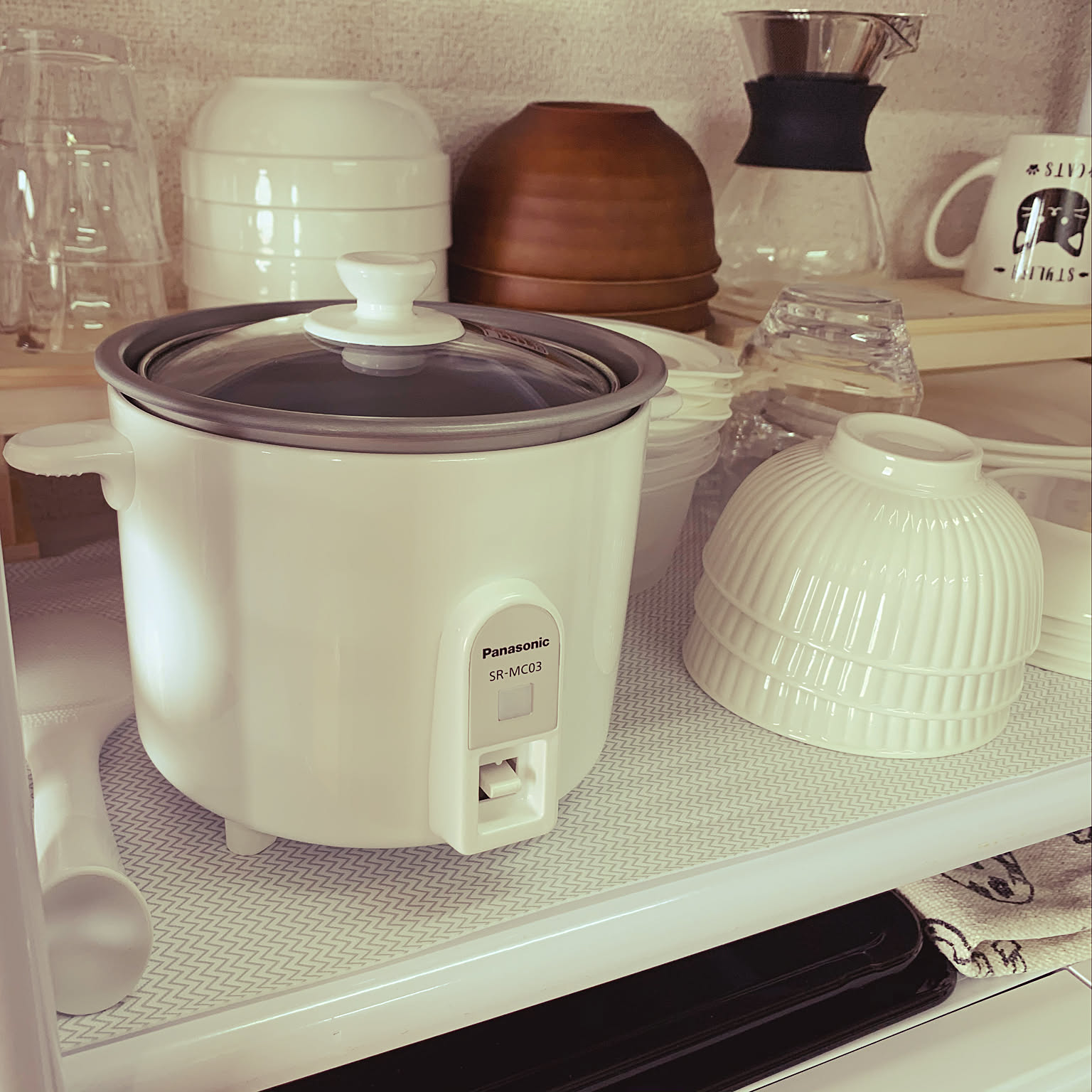
Start with your usual rice batch
Japanese rice-cooker cups are about 180 mL of uncooked rice, smaller than an 8-fl-oz US measuring cup. A 1.5-go cooker is a very small fresh-rice appliance. A 3-cup cooker gives you more room for two eaters, leftovers, or mixed rice, but check the model's minimum batch if you usually cook just one serving.
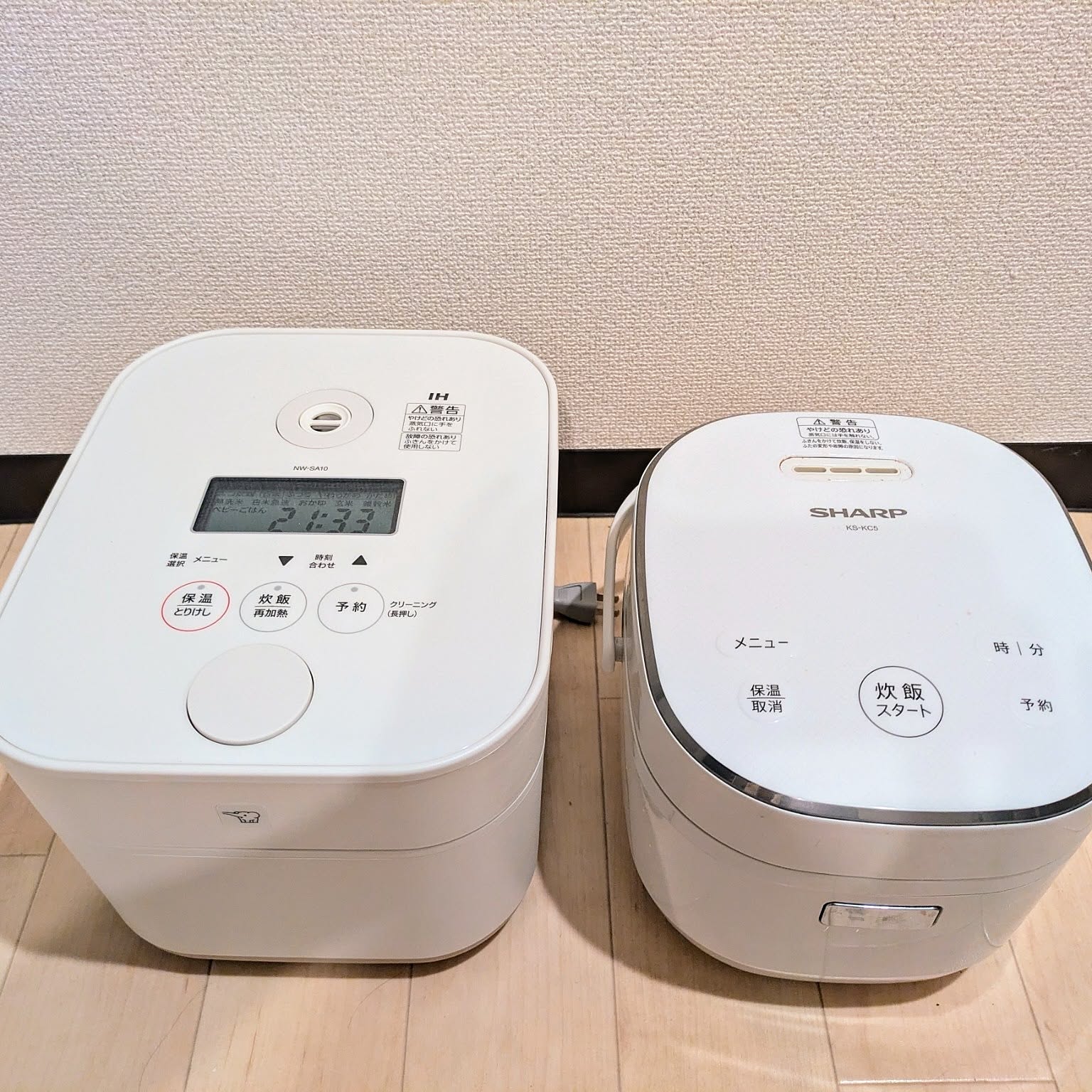
| Spec | Japan-market mini | US-market 3-cup |
|---|---|---|
| Typical role | One small fresh batch | Small daily batches |
| Capacity | Often 1-1.5 go; check model | Up to 3 rice cups |
| US electricity | Verify exact rating; photos are not proof | Choose a listed 120V model |
| Best for | Studying a tiny footprint | One or two regular rice eaters |
| Main drawback | Import voltage and support | More counter and lid space |
Capacity refers to uncooked rice measured with the maker's rice cup. These are shopping paths, not specifications for every model in either group.
What the Japanese-home photos show
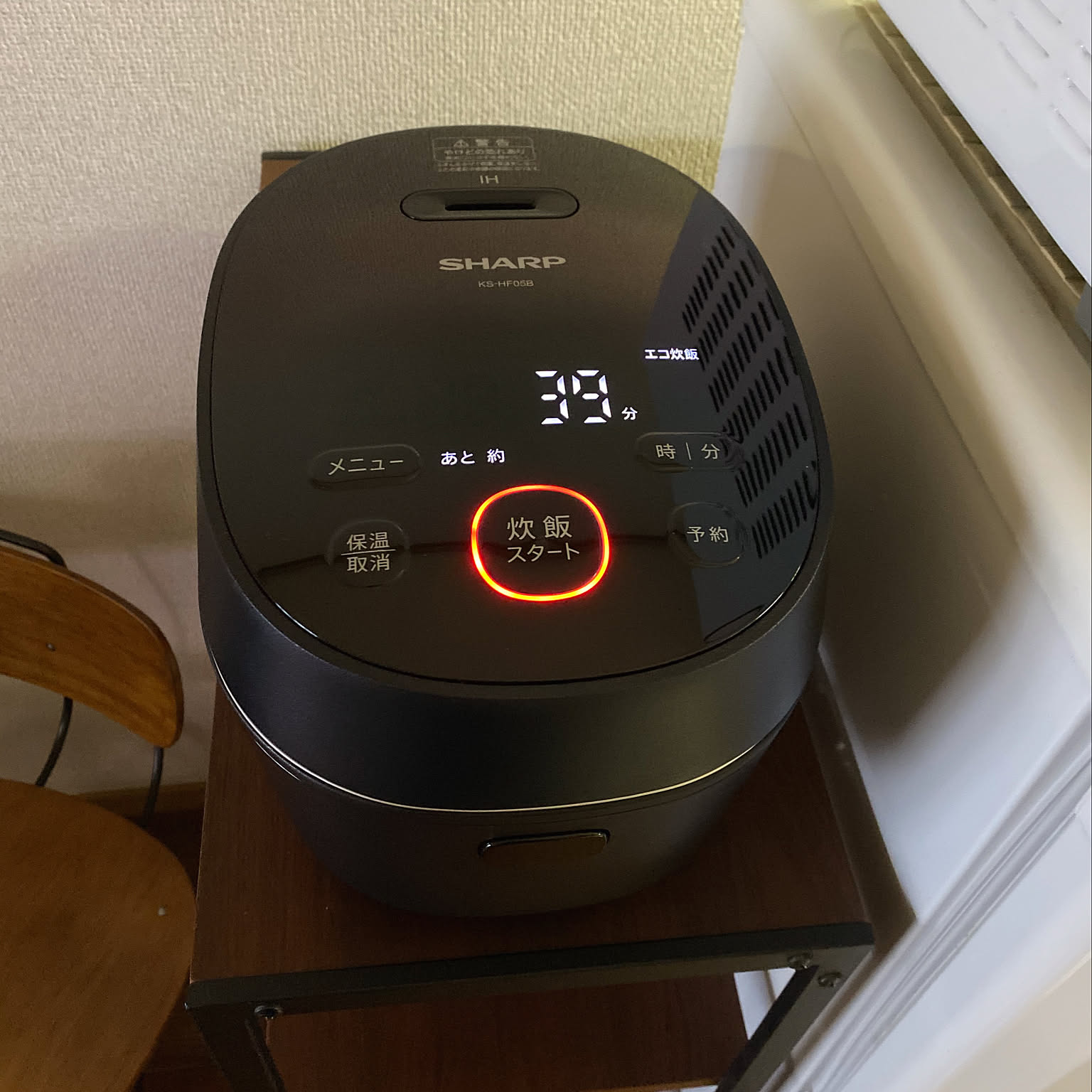
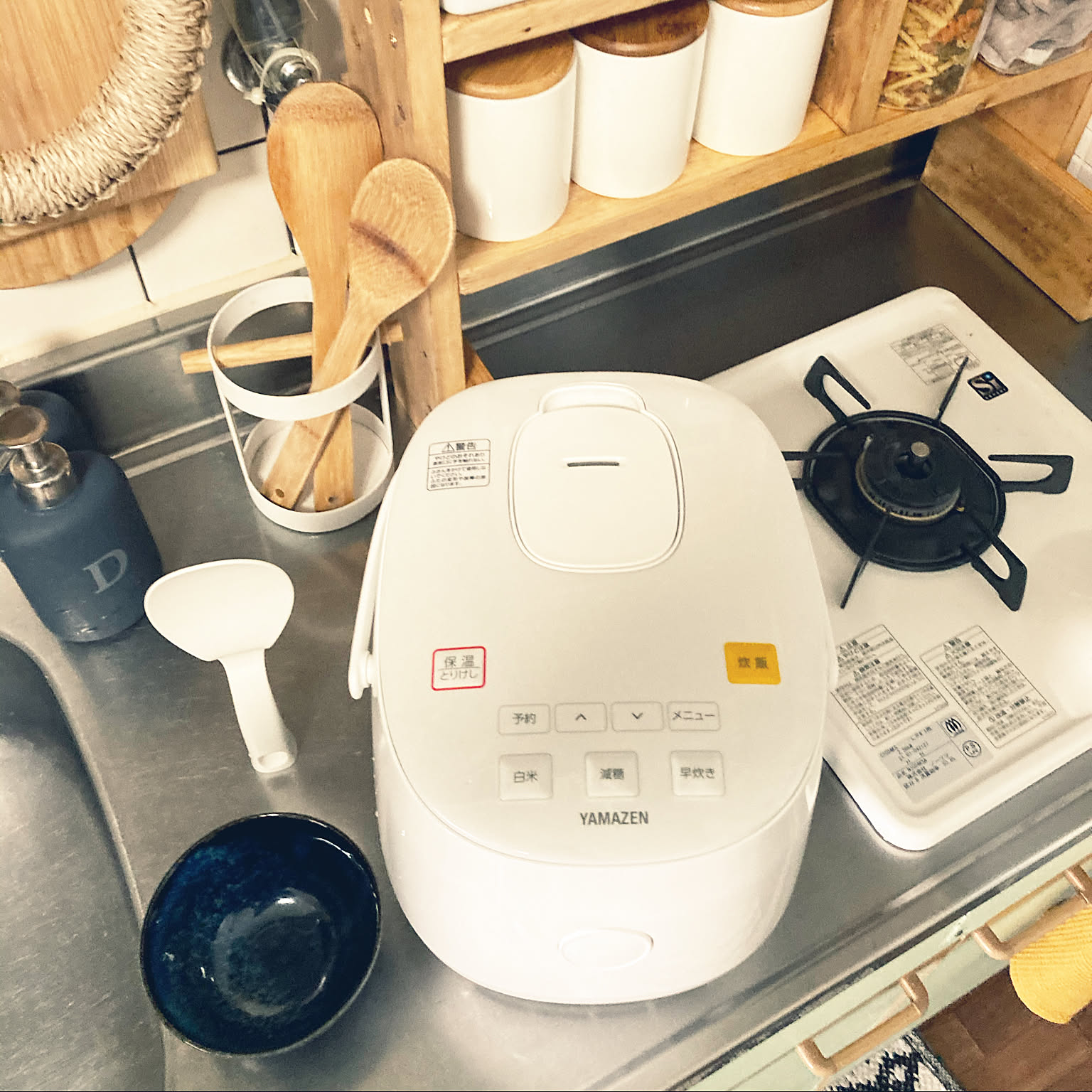
A mini cooker can fit on a shelf or a narrow stretch of counter. The photos help you judge where the appliance might sit; they cannot establish electrical compatibility, US warranty coverage, or the capacity of a different model.
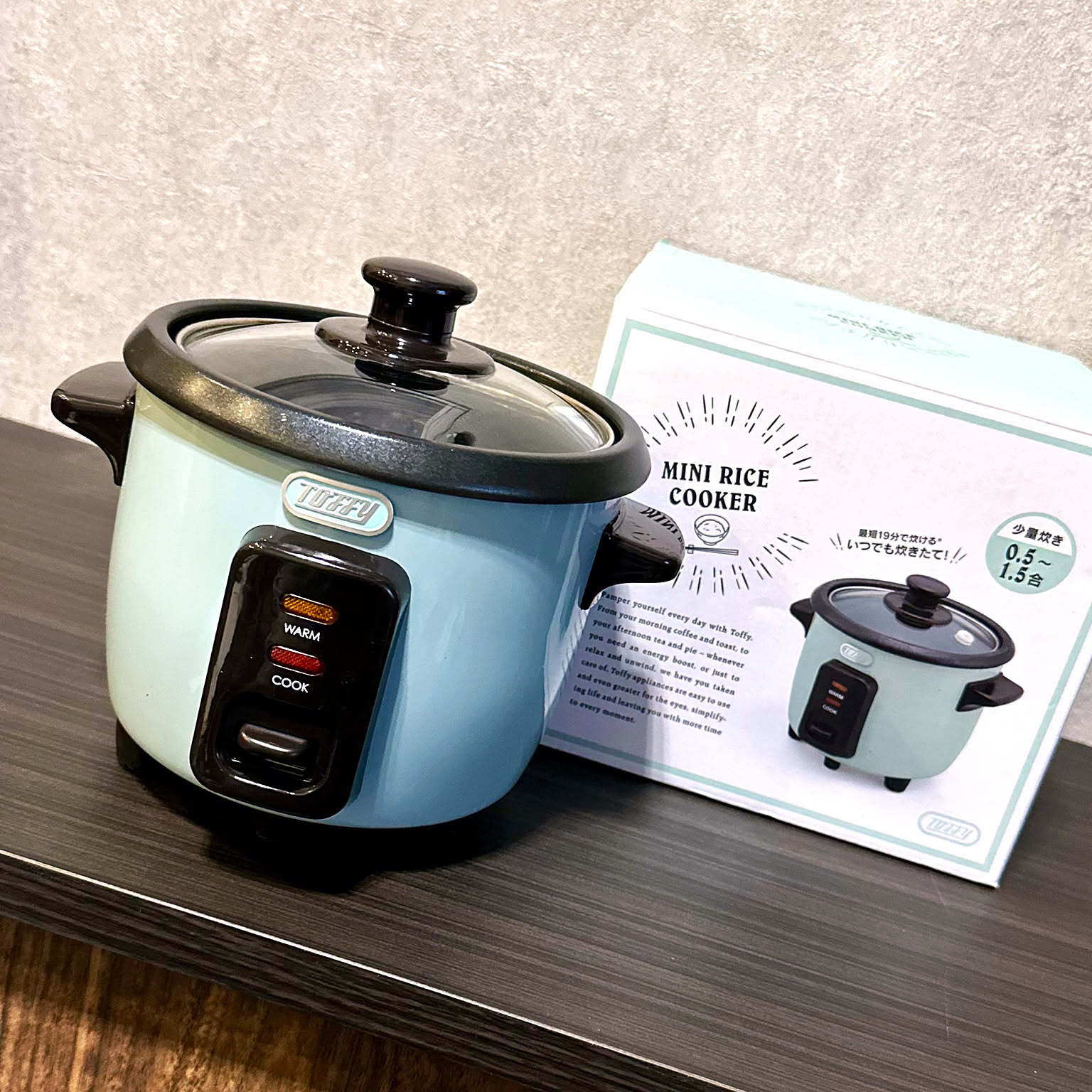
The pictured Toffy K-RC1 is a 0.5- to 1.5-go AC100V model that Toffy marks discontinued. Panasonic also marks the pictured SR-MC03 discontinued. Treat both as Japanese size and layout examples, not products to order for a US outlet. Toffy specifications and Panasonic product status are the primary sources.
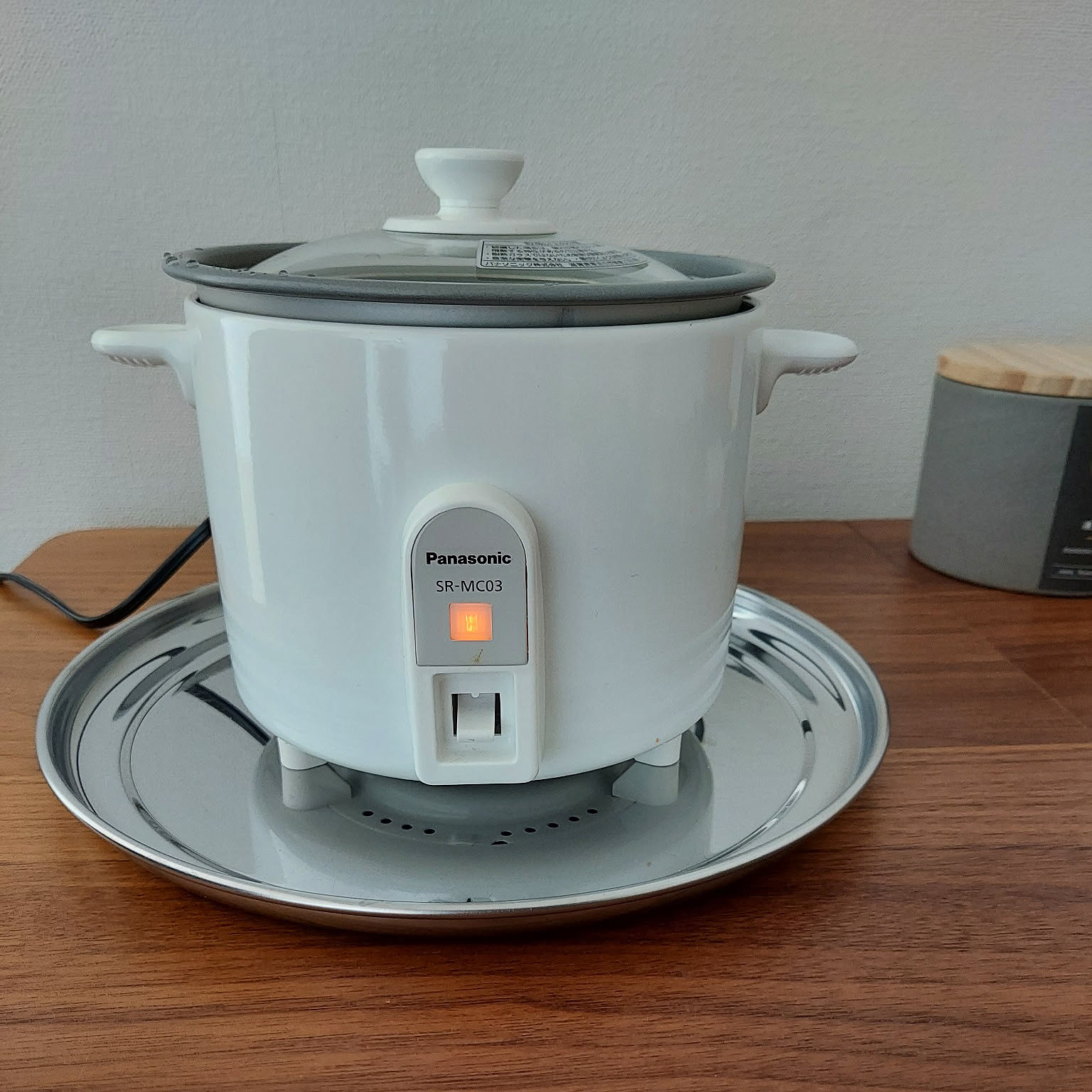
Measure the counter, shelf, and lid clearance
Measure the place where you will actually fill, open, vent, and clean the cooker. A body that fits under a shelf may still be awkward if the lid cannot open or steam reaches the underside of the cabinet. Plan space for the rice bowl and measuring cup, too.
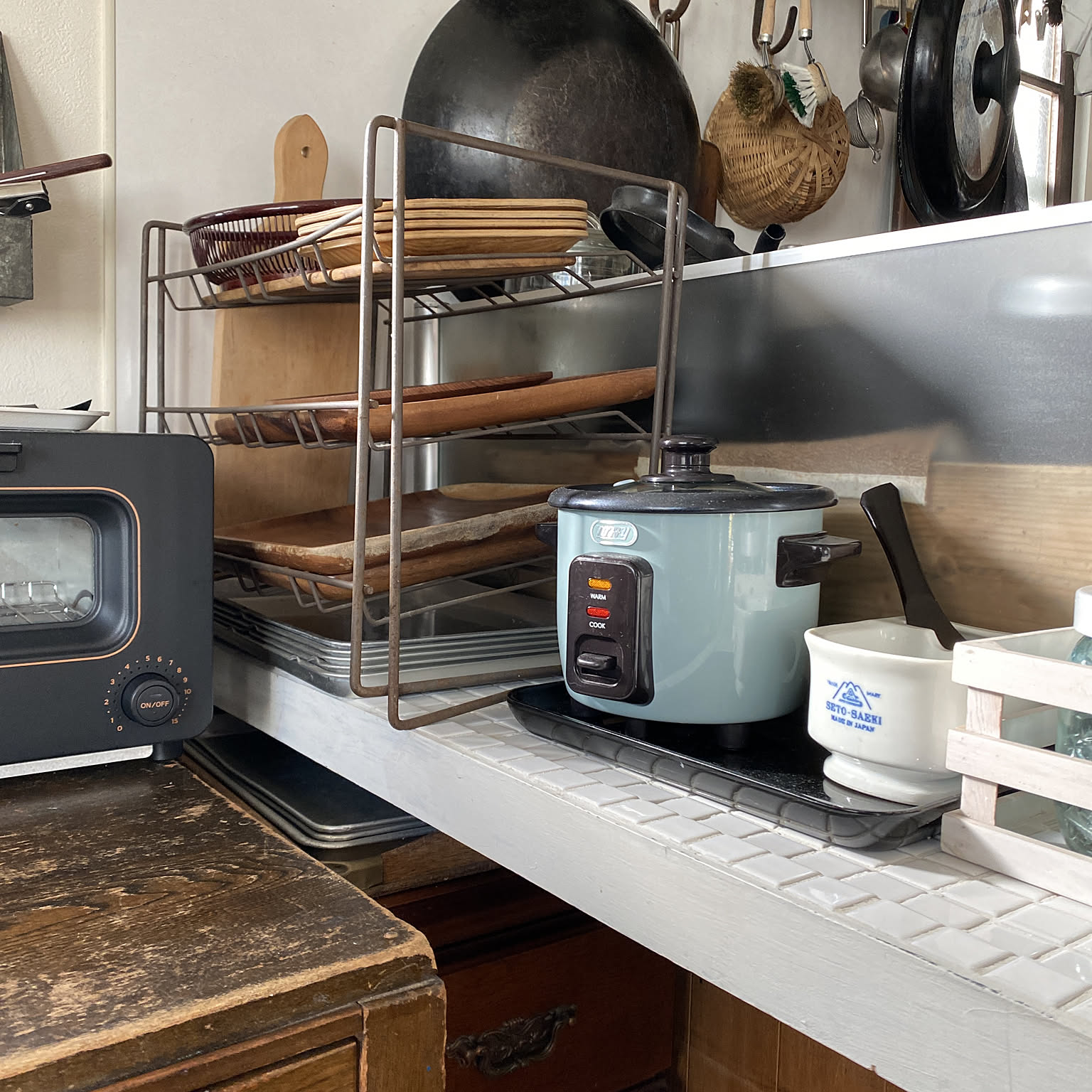
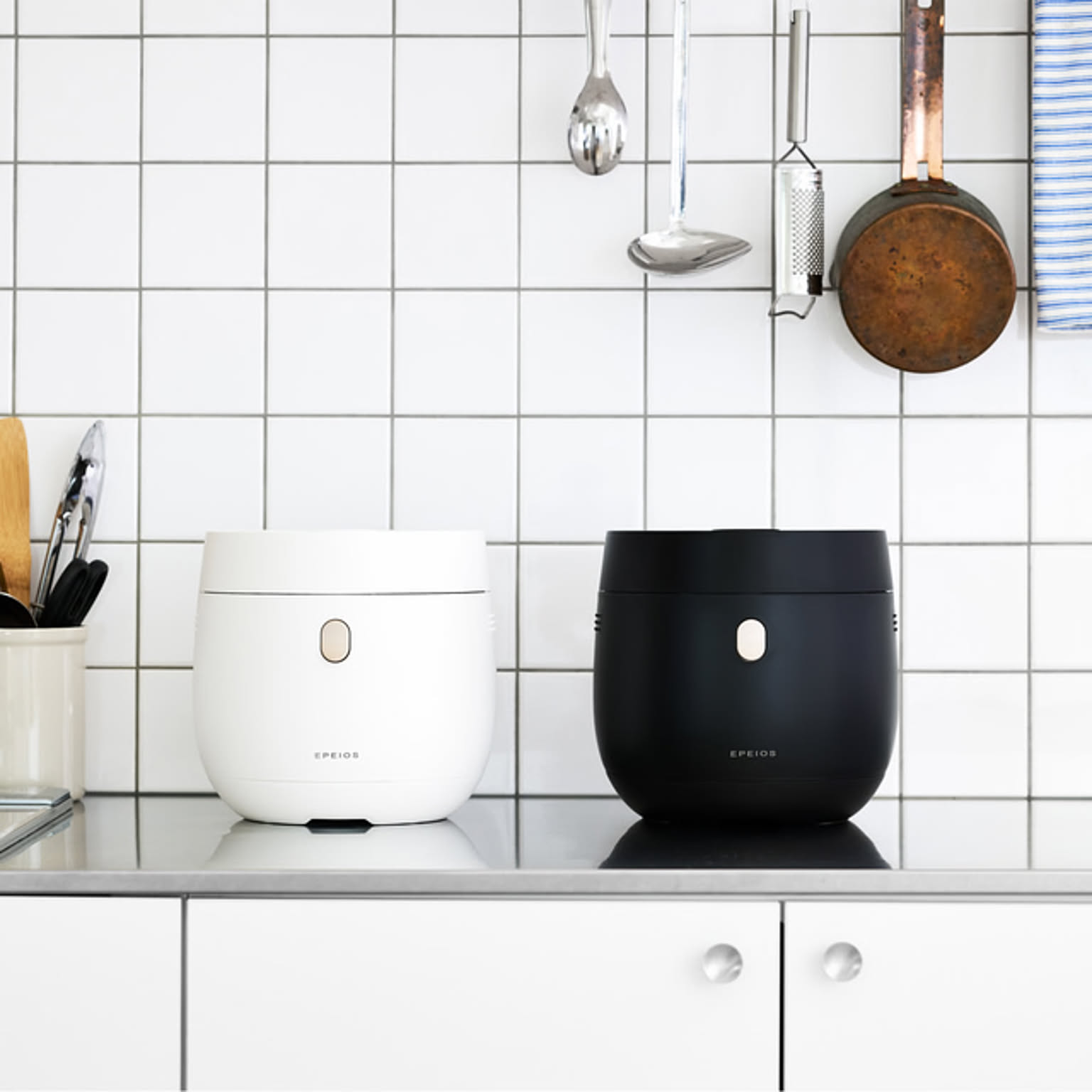
A visible cooker can suit a small kitchen, but finish and color do not compensate for the wrong capacity or voltage. The Japanese-room examples here show placement only; compare a US model's published dimensions and lid-open height before buying.
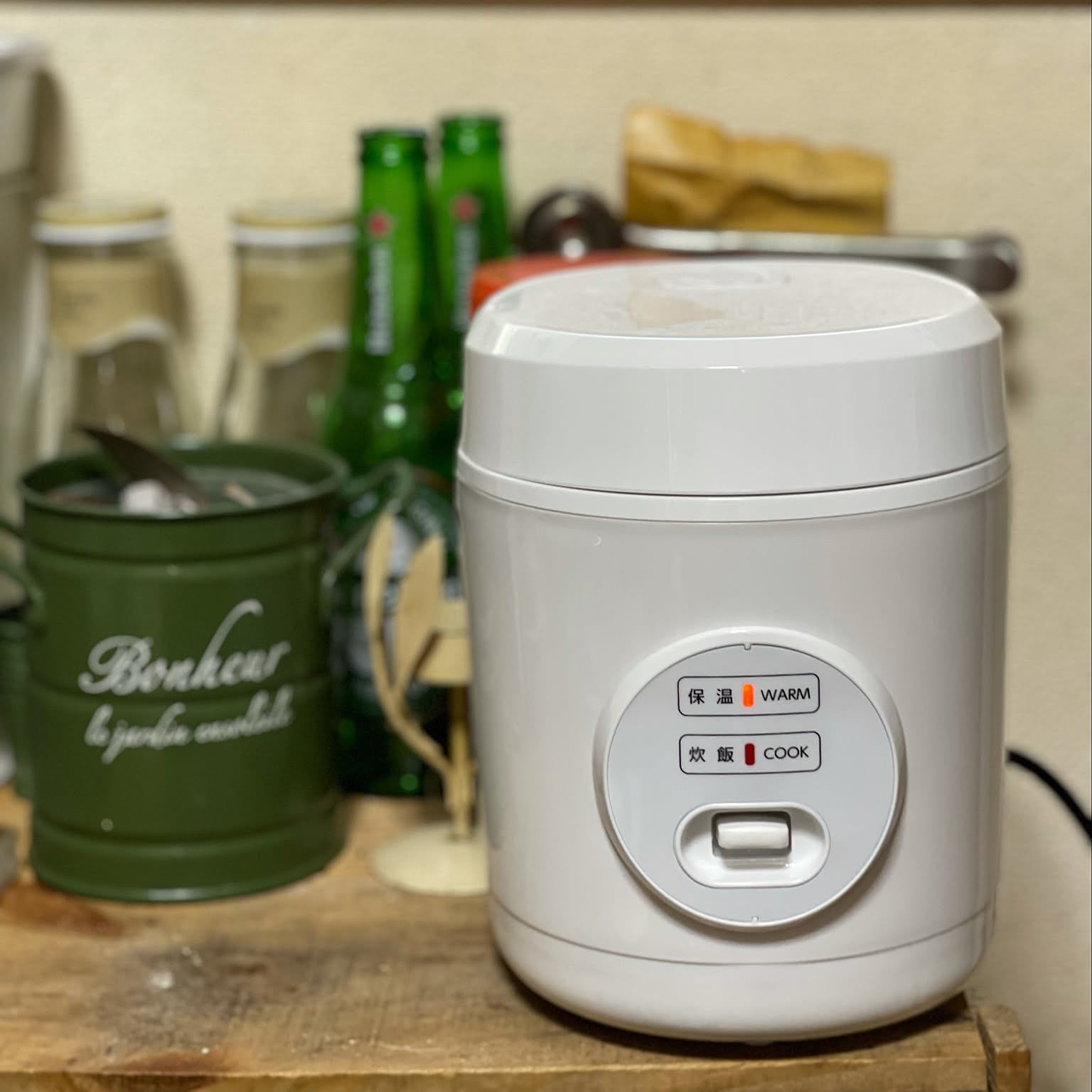
Where a US 3-cup cooker fits
A 3-cup cooker is a practical small daily appliance if you make rice for one or two people and sometimes want leftovers. Tiger lists the JBS-A55U at 120V, 0.5-3 rice cups, with a 15.2-inch lid-open height and a US/Canada limited warranty. Zojirushi lists the NS-LGC05 at 120V, 0.5-3 rice cups, with Micom menus and a 9-1/8 by 11-7/8-inch footprint. Check current sellers and stock before ordering; Zojirushi's own store showed the NS-LGC05 out of stock when checked September 28, 2026.
These are verified US-spec examples, not a second 3-cup ranking on this page. Compare the models, features, and tradeoffs in our 3-cup rice cooker shortlist. The Tiger JBS-A55U specifications and Zojirushi NS-LGC05 specifications establish the model-specific electrical and size claims.
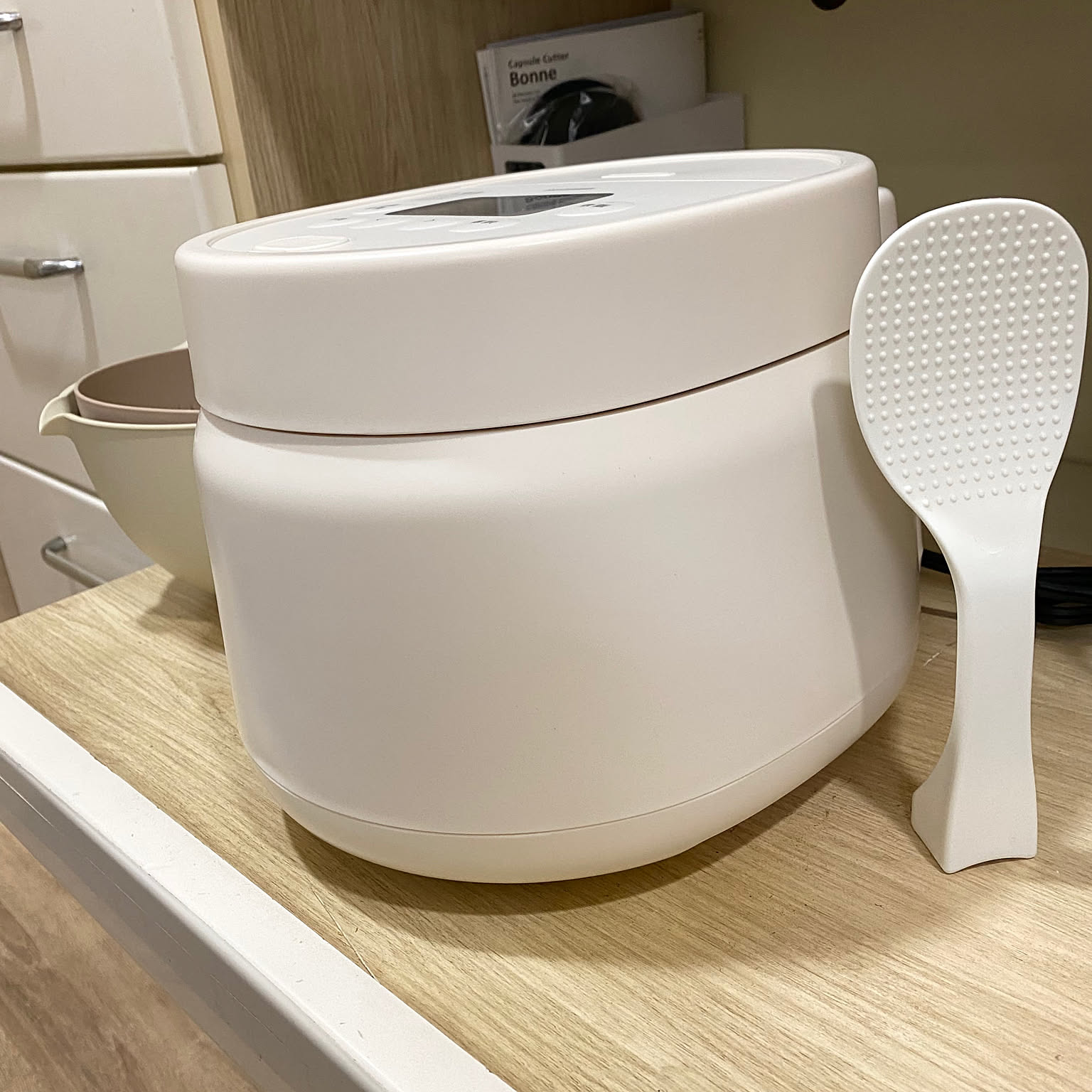
The Iris Ohyama RC-MSA30 in this Japanese-home photo is a size reference only. Iris specifies AC100V for that model, so do not substitute an import listing for a US-rated 3-cup cooker. See the manufacturer's rating.
When a smaller cooker is still worth considering
If you normally cook a single fresh portion and have no room for a 3-cup body, first confirm how much uncooked rice you need and whether you can safely fit a cooker where its lid opens. Then look for a model whose manufacturer explicitly supports your electrical supply and whose seller offers suitable service. The mini-cooker guide explains the smaller sizes; its Japan-market examples also require model-by-model checks before any US purchase.
For an exact 2-cup limit, use our 2-cup capacity guide. For 1.5-go and the smallest footprints, see the mini rice cooker guide. If you cook and freeze larger batches, compare 3-cup versus 5.5-cup before paying for a smaller machine.
Before you buy
- Read the rating label on the exact model; do not rely on a marketplace title or a plug adapter.
- Compare your usual uncooked-rice batch with the model's stated minimum and maximum.
- Measure the footprint and lid-open clearance where you will use it, not only where you will store it.
- Check the seller, warranty, and replacement-part route for the country where you live.
Frequently asked questions
What size small Japanese rice cooker should I buy?
Is a 1.5-go rice cooker enough for two people?
Can I use a Japan-market small rice cooker in the US?
When is a 5.5-cup rice cooker better than a small one?
by Japanese Home Goods Editorial
RoomClip usage context, manufacturer specifications, and US-market availability are reviewed by the Japanese Home Goods editorial team. We do not claim hands-on testing unless an article explicitly says so.
Related Articles

Japanese Rice Cookers Explained: Sizes, Settings, and Daily Use
A complete guide to Japanese rice cookers: how sizes translate from go to cups, what the key settings actually do, and how rice cookers fit into daily routines in Japanese homes.

Mini Japanese Rice Cookers: Footprint and Small-Batch Tradeoffs for US Kitchens
Compare compact US rice cooker dimensions, small-batch support, and keep-warm tradeoffs. Use Japanese-home photos as placement examples, then check the exact model that fits your space.

Best 2-Cup Rice Cooker? What US Buyers Should Know
Most exact 2-go electric rice cookers are Japan-market imports, not verified US models. Learn when to choose a US-market 3-cup cooker or a microwave vessel instead.

Best 3-Cup Rice Cookers for US Kitchens and Two-Person Homes
Two verified 120V, 3-cup Japanese-brand rice cookers for US kitchens, compared by everyday simplicity, grain settings, compact placement, and warranty support.

1-Cup vs 3-Cup Rice Cooker: Which Small Size Fits Your Routine?
A 1-cup rice cooker sounds perfect for one person, but a 3-cup model is often easier to live with. Use this guide to choose the small rice cooker size that fits your kitchen, cooking rhythm, and leftover plans.

3-Cup vs 5.5-Cup Rice Cooker: Which Size Should You Buy?
If you are stuck between a compact 3-cup cooker and a standard 5.5-cup model, start with kitchen reality, not brand hype. Here is when 3 cup really makes sense, and when 5.5 cup is the safer default.