Japanese Rice Cookers Explained: Size, Micom vs IH, and Zojirushi vs Tiger
Choosing a first Japanese rice cooker for a US kitchen: decide the size from your usual batch, then micom, IH, or pressure IH, then Zojirushi or Tiger, and check the exact 120V model.

What makes a Japanese rice cooker different
If you have only used a basic on-off rice cooker, a Japanese model from a brand like Zojirushi or Tiger works differently. Most are micom (microcomputer) cookers: instead of heating until a thermostat trips, they adjust heat and time through the cycle for the amount of rice and water in the pot. Zojirushi calls its version fuzzy logic.
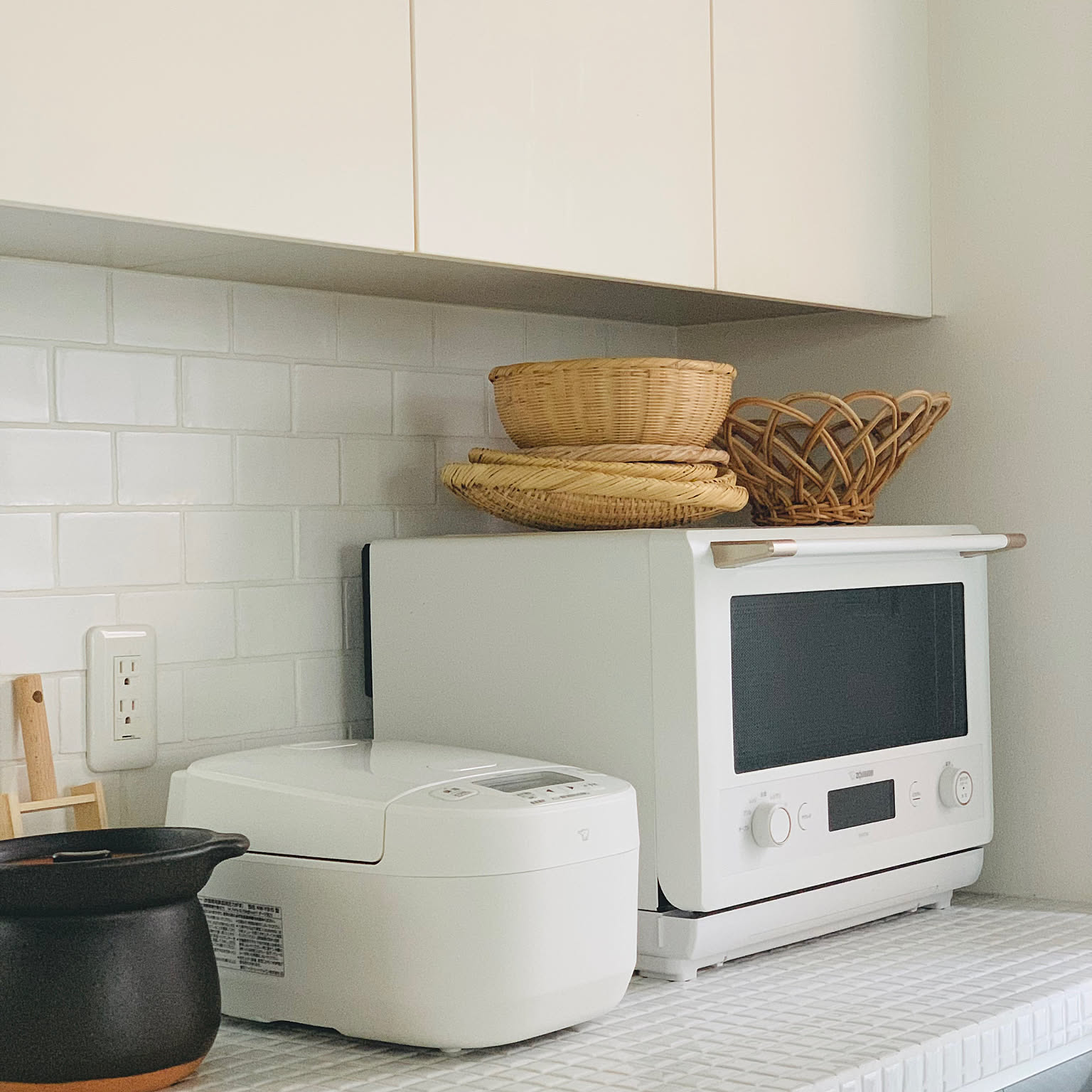
This guide is for a first Japanese rice cooker in a US kitchen. Decide in this order: the size from your usual batch, then the heating method, then the brand, and last the exact 120V model. If you already know you need 3 cups or less, go straight to our small Japanese rice cooker guide, which compares four US 3-cup models.
Choose the size from your usual batch
What "go" and "cups" actually mean
Japanese rice cooker sizes are measured in go (合), about 180 milliliters of uncooked rice. Every cooker comes with a measuring cup that holds one go. One go is roughly three-quarters of a US measuring cup, so a "3-cup" Japanese rice cooker does not mean 3 US cups of uncooked rice.
3-cup or 5.5-cup?
Choose by how much uncooked rice you cook at once, not by the number of people. Portion sizes vary too much for a head count to settle it.
| Spec | 3-cup | 5.5-cup |
|---|---|---|
| Uncooked rice | Up to 3 rice cups; several cook 1/2 cup | Up to 5.5 rice cups; some cook 1/2 cup |
| Best for | Small batches eaten the same day | Dinner plus leftovers, freezing, mixed rice |
| Size example | Tiger JBS-A55U: 9.7 x 10.9 x 7.6 in | Tiger JBT-B10U: 9.7 x 11.5 x 8.5 in |
| US choice | Fewer models | The widest range of models and heating types |
| Main drawback | Little room for a second meal | More counter space and a taller lid |
Size examples from Tiger USA, checked October 21, 2026. Both are micom models from the same maker.
The size difference between the two Tiger micom models is smaller than the capacity difference suggests: the 5.5-cup body is about 0.6 inches deeper and 0.9 inches taller. If you cook once for two meals or freeze portions, that extra room is usually worth it. If you make a small batch and eat it the same day, a 3-cup cooker is enough, and the small rice cooker guide compares the US 3-cup models.
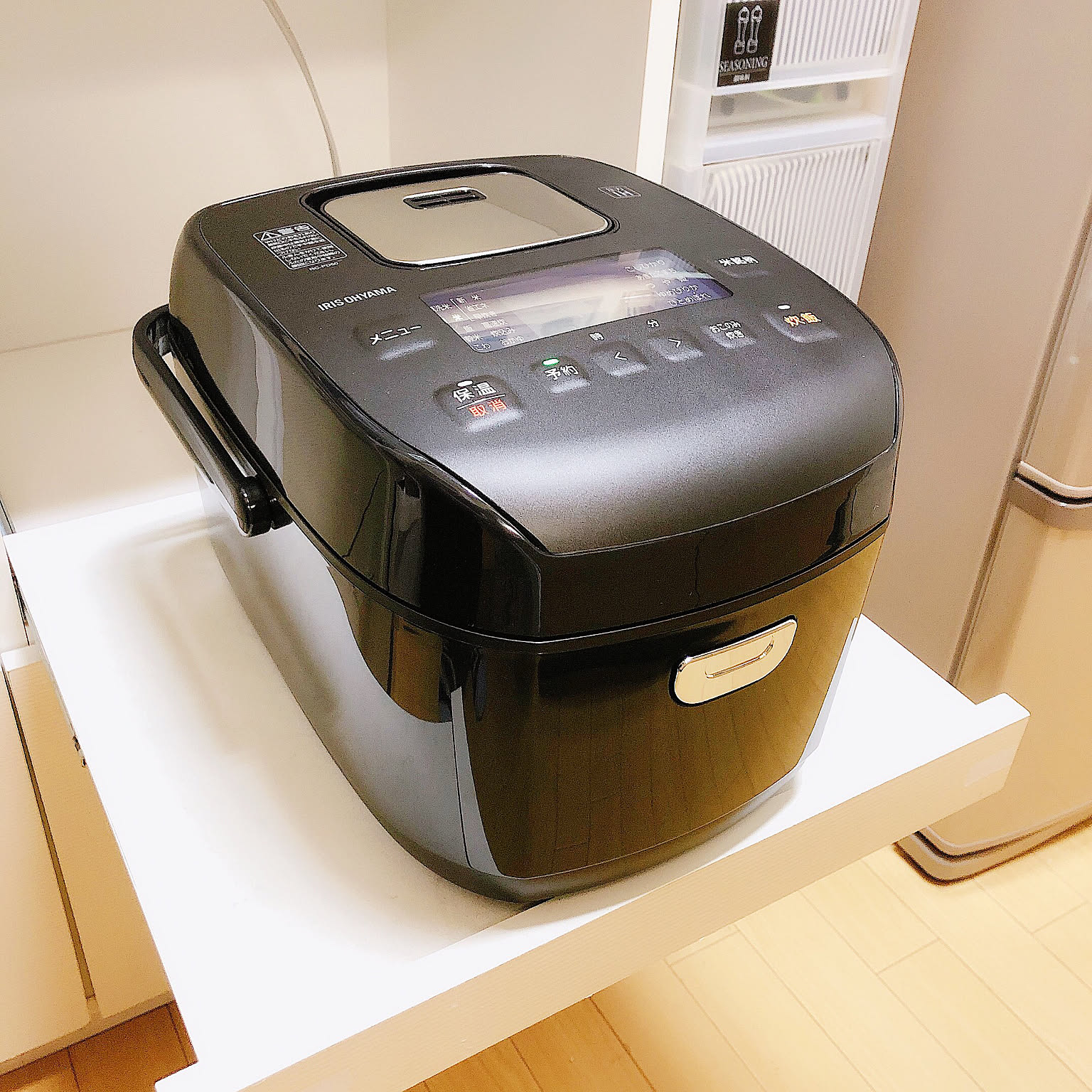
A one-cup mini and a compact cooker in two Japanese kitchens.


Brown rice and mixed rice usually have a lower maximum than white rice, so check the manual's limits if you cook them often. A 10-cup cooker makes sense only for large households or batch cooking.
Micom, IH, or pressure IH?
Micom cookers use a microcomputer to control a heater under the inner pot. IH (induction heating) cookers heat the inner pot itself by induction. Pressure IH adds a sealed, pressurized cycle on top of IH. Makers market the higher tiers on rice texture; we have not tested cookers side by side, so treat those claims as the makers' own.
For small batches of white rice, a micom cooker is a reasonable start. Consider IH if you cook larger batches, brown rice, or mixed rice often, and compare the menus, minimum batch, and manual limits rather than the heating label alone. In the 3-cup size, Zojirushi lists the same footprint for its micom NS-LGC05 and IH NP-GBC05, so IH does not buy a smaller cooker.
Common modes you will actually use
- White rice: the default mode for short-grain white rice.
- Sushi rice: for slightly firmer rice that will be seasoned with vinegar.
- Brown rice / mixed grain: a longer soak and cook for grains that need more water and heat.
- Quick cook: a shorter cycle when you are short on time; texture can be less consistent.
- Porridge (okayu): rice cooked with extra water at a lower temperature.
- Keep warm: holds rice after cooking. Texture drops the longer it sits, and some small models, such as the NHS-06, have none.
Settings most US buyers can ignore at first
Higher-end models add settings such as umami or steam-reduce modes. They are refinements; if two models differ only by one specialty mode, do not let that drive the decision.
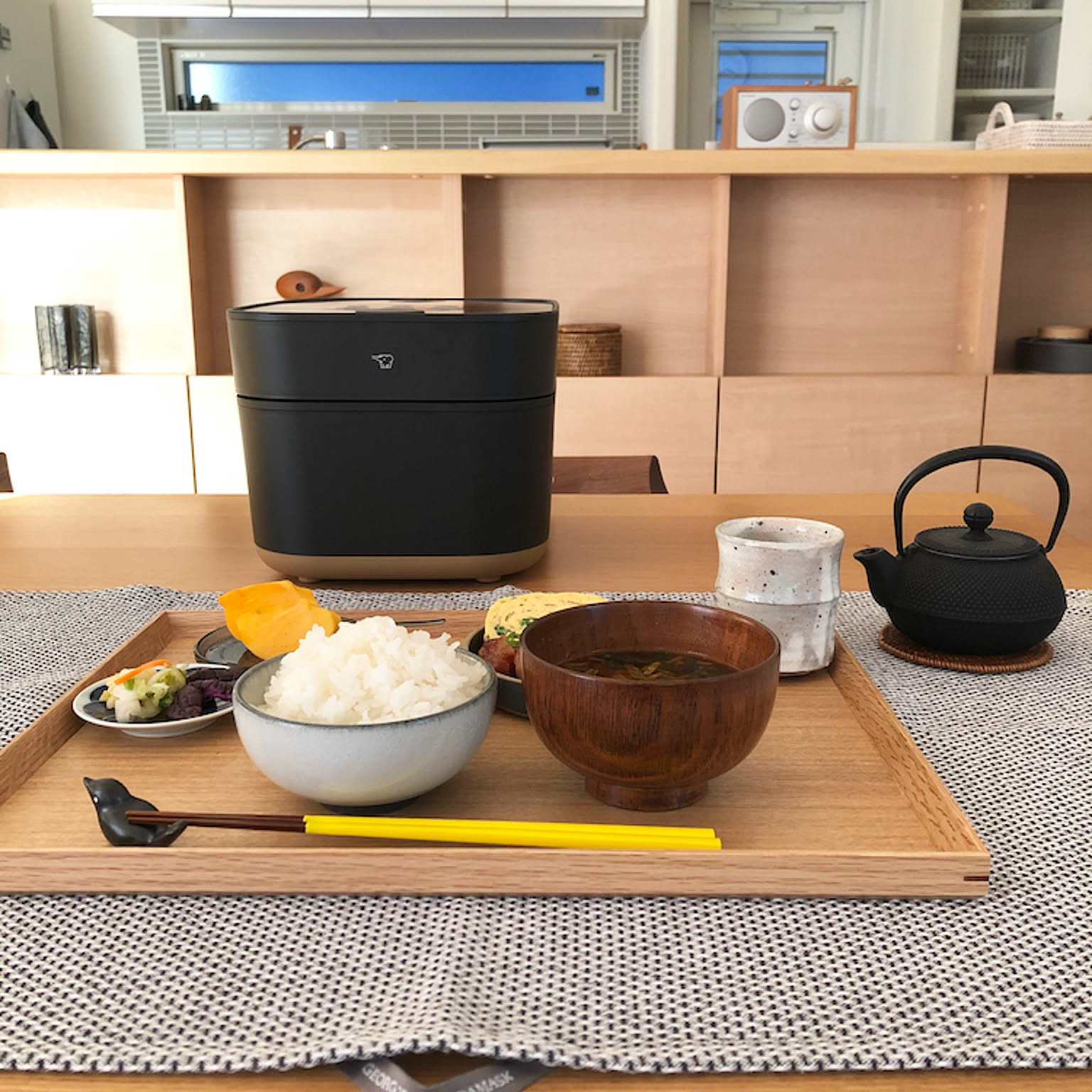
Button and touch-panel controls on two Japan-market cookers.


Daily use: rinse, measure, cook, rest, fluff
- Rinse the rice in cold water until the water runs mostly clear. This removes surface starch.
- Measure water using the lines inside the inner pot, which are marked for each number of rice cups.
- Select the mode and start cooking. For white rice, the default mode is usually right.
- Let the rice rest for about 10 minutes after the cooker signals it is done.
- Fluff with a rice paddle using a cutting motion to release steam without crushing the grains.
Many models have a delay timer: load rice and water the night before, set the time you want, and the cooker works backward to finish then. For leftovers you will not eat that day, portion the rice while it is warm and freeze it rather than leaving it on keep warm.
Cleaning and maintenance basics
Most Japanese rice cookers are built so the parts that touch food come apart for washing. Check the manual for your model.
- Inner pot: wash by hand with a soft sponge after every use. Abrasive scrubbers can damage the nonstick coating.
- Inner lid: if your model has a removable inner lid, take it off and rinse it each time. Moisture left there can cause odor.
- Steam vent: wipe the vent cap or valve regularly and clean dried starch.
- Exterior and base: wipe with a damp cloth. Do not immerse the body in water.
Zojirushi vs Tiger in the US
Zojirushi and Tiger are the two Japanese brands with broad 120V household lineups in the US. In our RoomClip rice-cooker brand study of 8,049 photos from Japanese homes, Zojirushi appeared in about 22% of rice-cooker photos overall and 36% of those posted in the last three years, the most of any brand. That measures what RoomClip members photograph, not what sells in Japan or the US.
| Spec | Zojirushi (US) | Tiger (US) |
|---|---|---|
| Rice cookers listed | 21 on its US store | 4 model families on Tiger USA |
| Sizes | 3, 5.5, 6, and 10 cups | 3, 5.5, and 10 cups |
| Heating types | Single switch, micom, IH, pressure IH | Micom and IH |
| Made in | Japan, China, or Thailand by model | Japan for all four listed |
| US prices | $59.99 to $914.99 on its US store | Not listed on Tiger USA |
Zojirushi's US store and Tiger USA product pages, checked October 21, 2026. Lineups and prices change.
Zojirushi gives you more models to choose from in each size and tier. Tiger's US lineup is smaller, and every model it listed was made in Japan: the 3-cup JBS-A55U, the micom JBT-B10U, and the IH JPW-G10U and JPW-H10U. If made in Japan matters to you, check the exact Zojirushi model: the 5.5-cup IH NW-QAC10 and 3-cup IH NP-GBC05 are listed as made in Japan, while the 3-cup NS-LGC05 is made in China and the NHS-06 in Thailand.
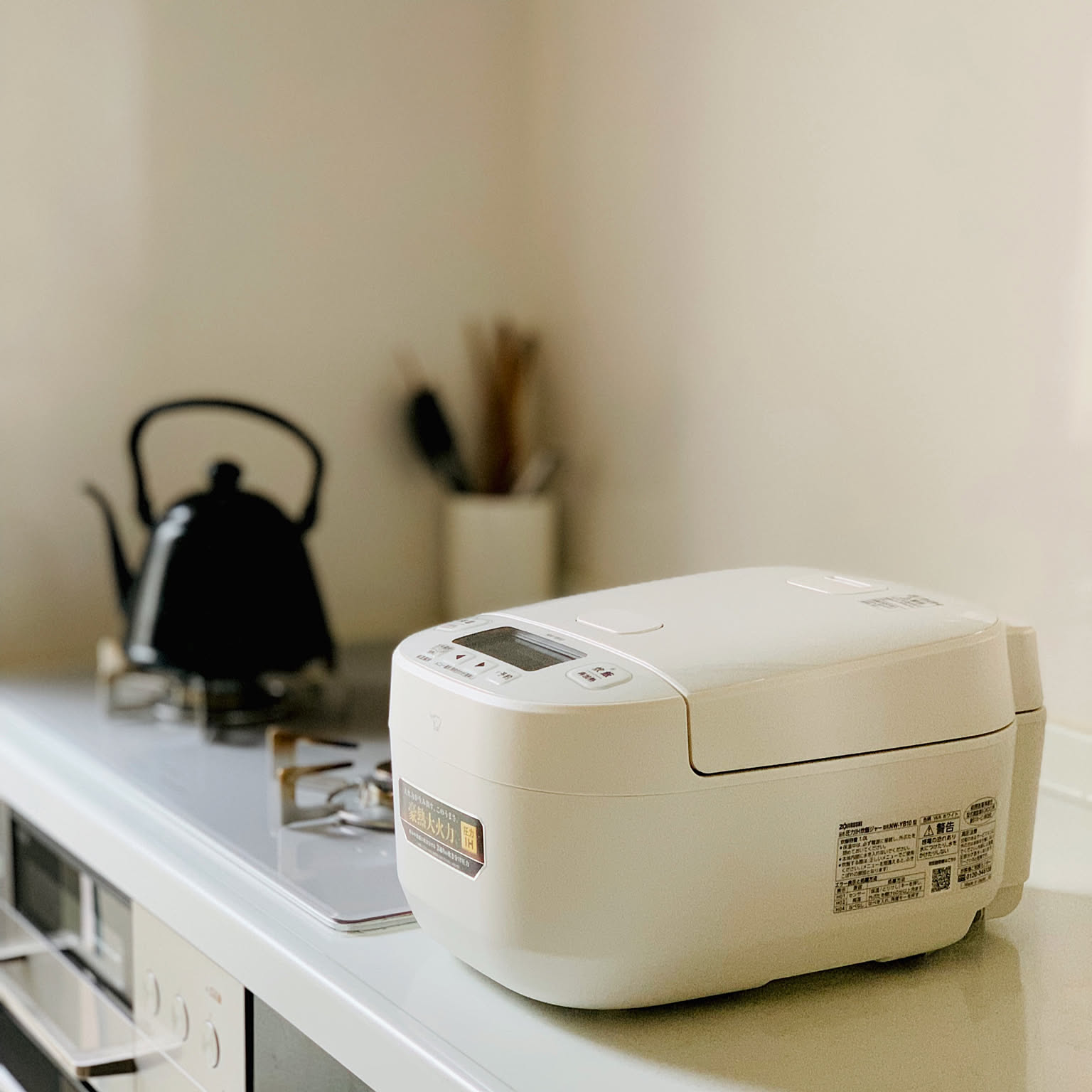
Japan-market Zojirushi and Tiger cookers in two homes.


Before you buy in the US
- Voltage: choose a model the maker lists for 120V. Many cookers photographed in Japanese homes, and many Japan-market imports sold online, are AC100V models; a plug adapter does not change the voltage.
- Batch range: compare your usual uncooked batch with the model's minimum and maximum, including the lower brown-rice limit.
- Space: measure the depth, width, and the height with the lid open where the cooker will sit.
- Menus: make sure the settings you need, such as brown, sushi, or porridge, are on the exact model.
- Seller and warranty: buy from a seller that supports the model in the US, and check where it is made if that matters to you.
Frequently asked questions
What is a 'go' and how does it compare to a US cup?
What is the difference between micom, IH, and pressure IH?
Should two people buy a 3-cup or a 5.5-cup rice cooker?
How long can rice stay on keep warm?
Can a Japanese rice cooker handle brown rice?
Are Zojirushi and Tiger rice cookers made in Japan?
Where to go from here
If you need 3 cups or less, compare the four US models in the small Japanese rice cooker guide. For which brands appear in Japanese homes and how that has changed, see the RoomClip brand study.
by Japanese Home Goods Editorial
RoomClip usage context, manufacturer specifications, and US-market availability are reviewed by the Japanese Home Goods editorial team. We do not claim hands-on testing unless an article explicitly says so.
Related Articles

Small Japanese Rice Cookers for US Kitchens: 2-Cup, Mini, and 3-Cup Choices
Looking for a 2-cup, mini, or 3-cup Japanese rice cooker? Start with your usual batch, then compare four 120V 3-cup models from Zojirushi and Tiger by footprint, keep warm, and where they are made.

Which Rice Cooker Brands Show Up in Japanese Homes? An 8,049-Photo Study
We analyzed 8,049 item-tagged rice-cooker photos from RoomClip to see which brands appear most often in Japanese homes and how the mix has changed since July 2023. The counts measure RoomClip posting patterns, not sales or national market share.