Japanese Tableware for Everyday Meals: Rice Bowls, Donburi, and Small Plates to Buy First
Choose rice bowls, donburi or ramen bowls, and small plates by the meals you actually make, then check stacking and storage. HASAMI PORCELAIN is one stackable system with US prices.

Start with the meals you actually make: a bowl of rice beside a few side dishes, a one-bowl lunch, a noodle night. Rice bowls, donburi bowls, ramen bowls, and small plates look alike in search results, but each does a different job on the table. Choose by that job first and by pattern second.
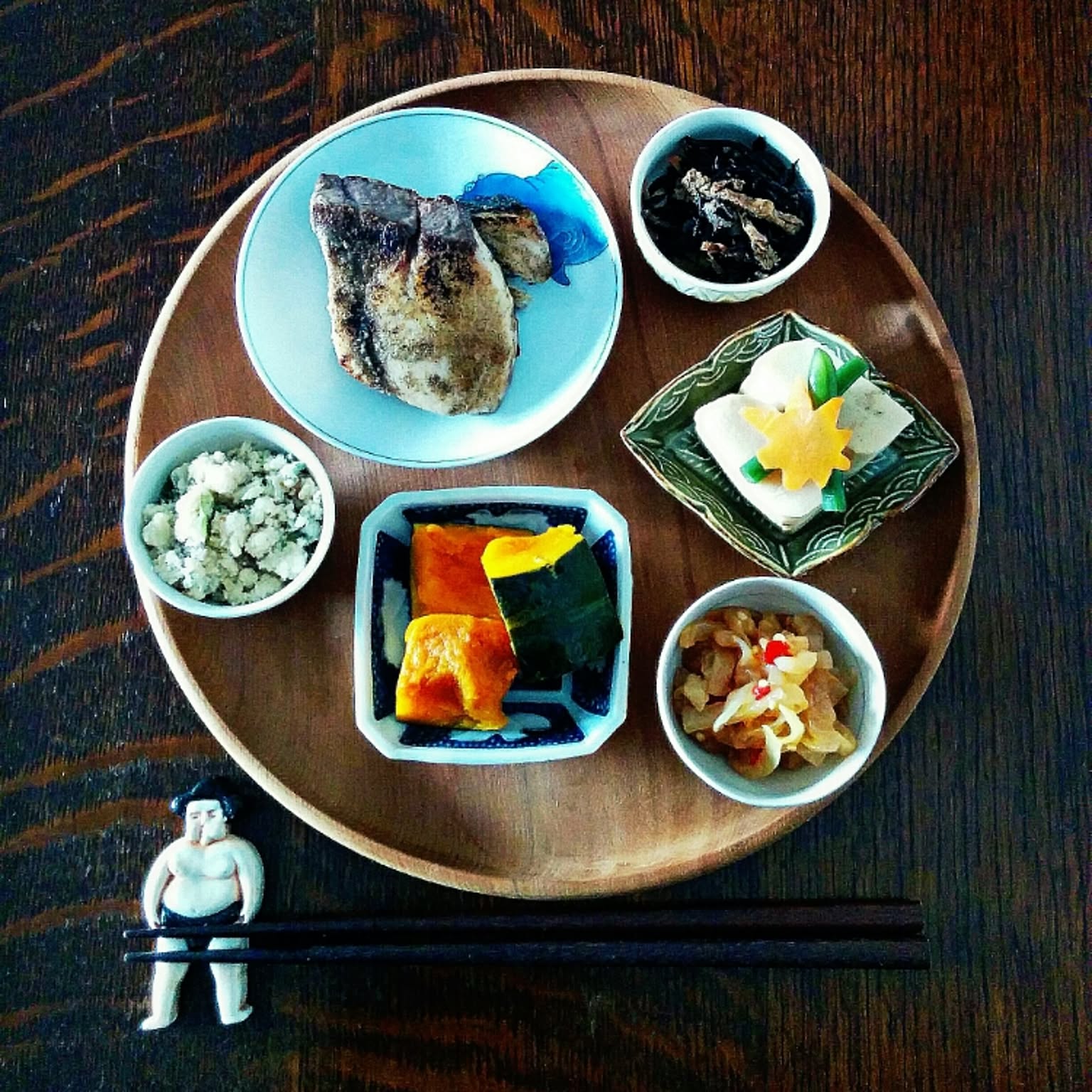
Rice bowl, donburi, or ramen bowl?
The three bowls differ in size and shape because they hold different meals.
- Rice bowl: the smallest. It holds a serving of rice beside soup and side dishes, so it should sit comfortably in one hand and stack in multiples.
- Donburi bowl: deeper, for rice with a topping on it: chicken and egg, beef, curry, or last night's leftovers. Depth keeps sauce and toppings together over the rice.
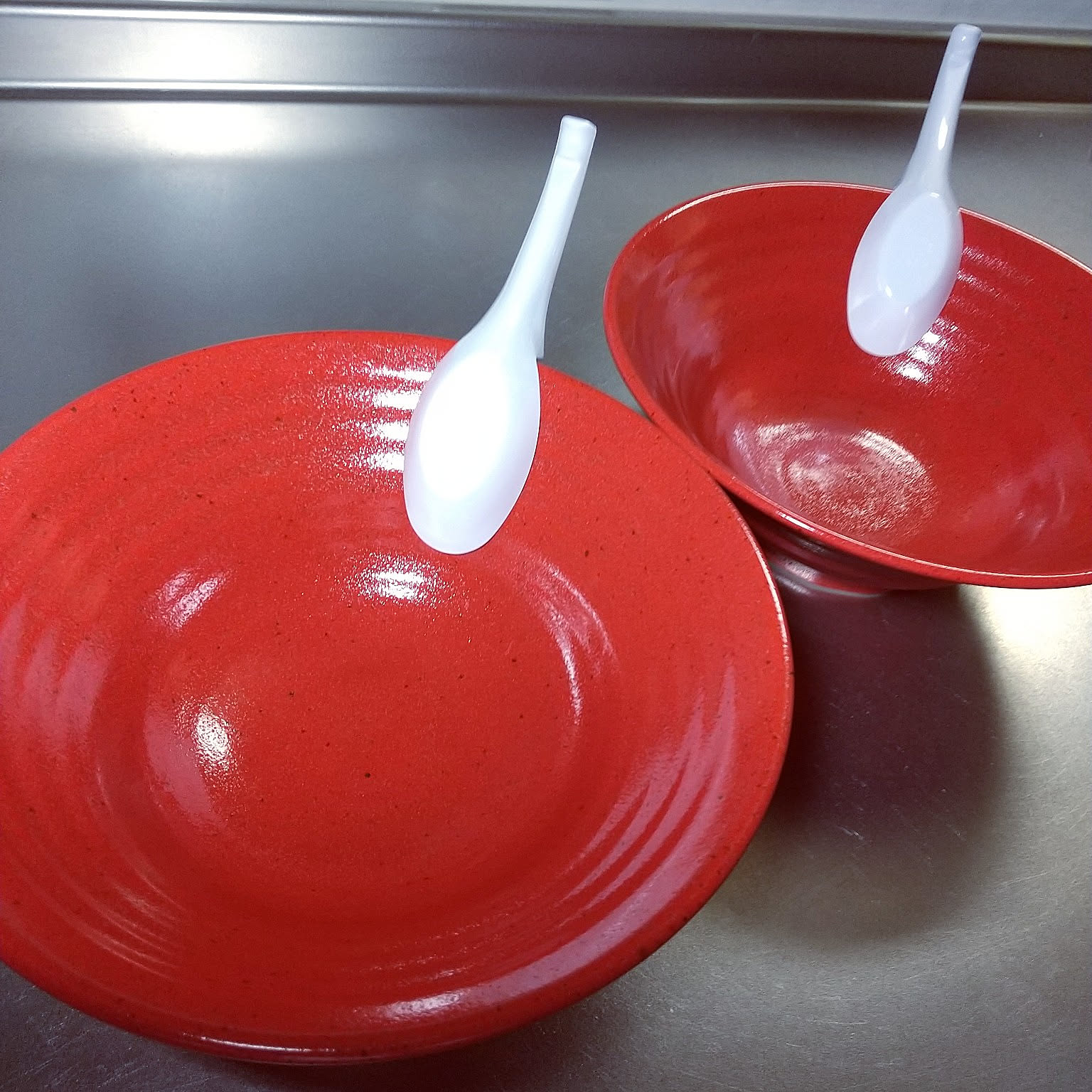
- Ramen bowl: the widest, for broth, noodles, and toppings at once. A wide opening lets toppings sit on top instead of sinking and makes it easier to lift noodles without pushing broth over the rim.
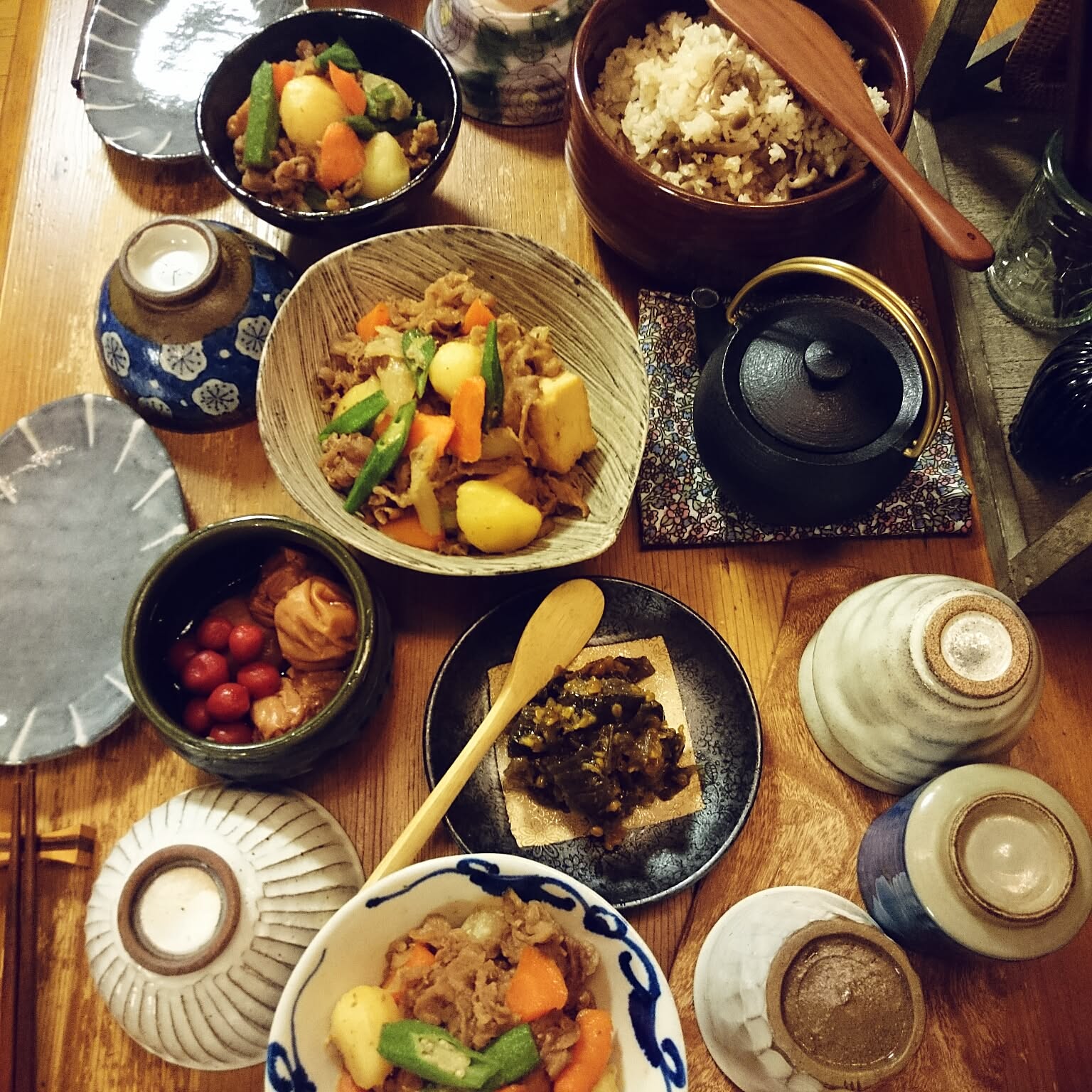
Width for ramen, depth for donburi.
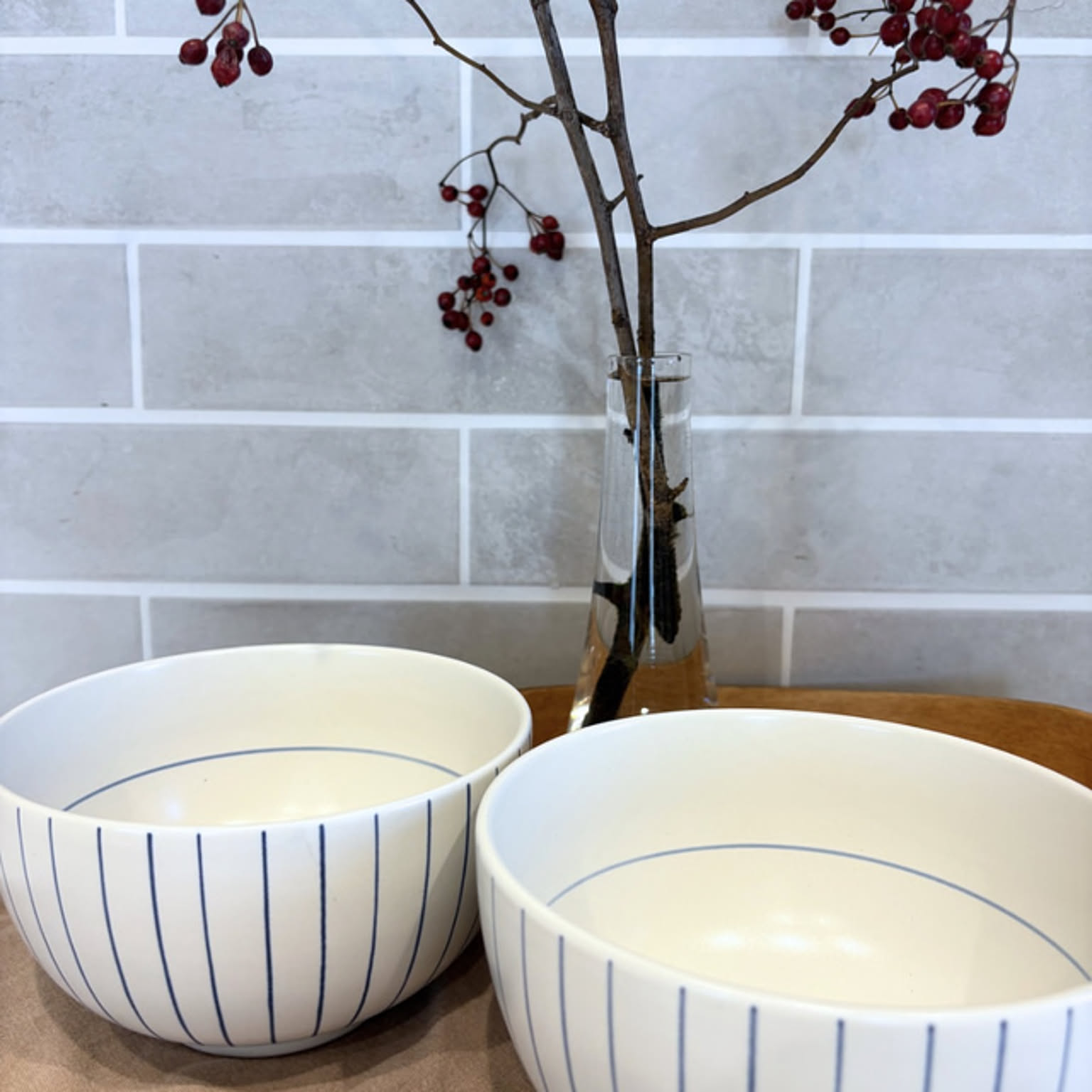
Do not choose by diameter alone. A wide shallow bowl and a narrower deep one can hold a similar amount but behave differently with broth, rice, and toppings. If storage is tight, one medium-large bowl can handle donburi on a weeknight and ramen now and then; it will feel slightly large for rice and slightly small for a broth-heavy ramen. If you cook both meals often, two bowl types will feel better.
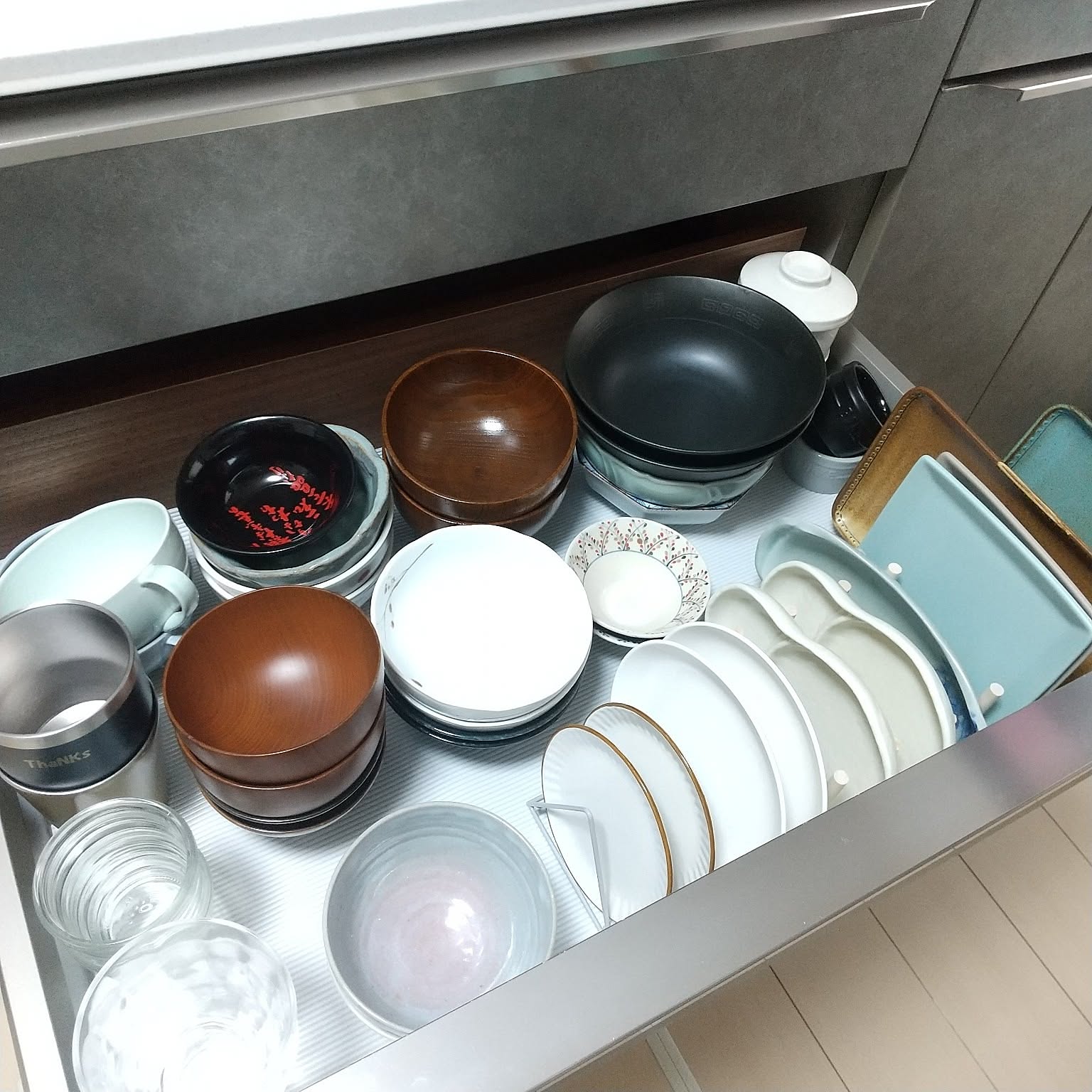
Before buying four or six bowls, measure the shelf height and check that the shape stacks securely. Ramen bowls usually take the most room because of their wide opening.
Small plates for side dishes and sauce
Small plates make a meal easier to serve: pickles stay separate, sauce does not flood the rice, and leftovers become a side dish instead of a pile on a dinner plate. Buy them by job, in this order:
- Side plates: about 5 to 6 inches across, big enough for a real portion of vegetables, pickles, fruit, or a small dessert. If a plate is too small for that, it becomes a sauce dish.
- Tiny dishes: for soy sauce, ponzu, salt, grated ginger, or chili oil. Choose ones shallow enough for dipping but deep enough that sauce does not spill when you move them.
- Accent plates: patterned or colorful pieces for snacks or a guest's table, after the practical sizes are covered.
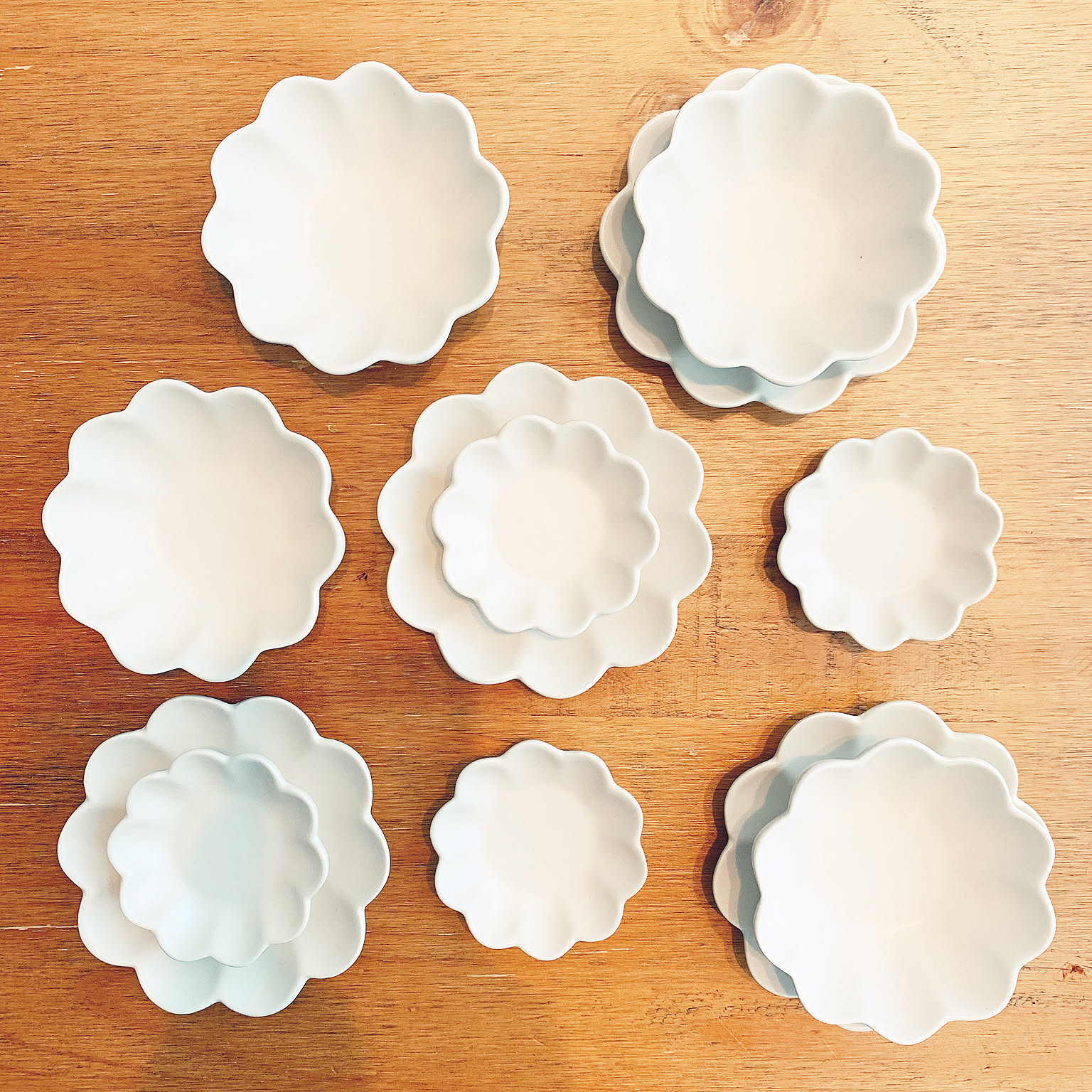
A side-dish plate and tiny dishes for condiments.
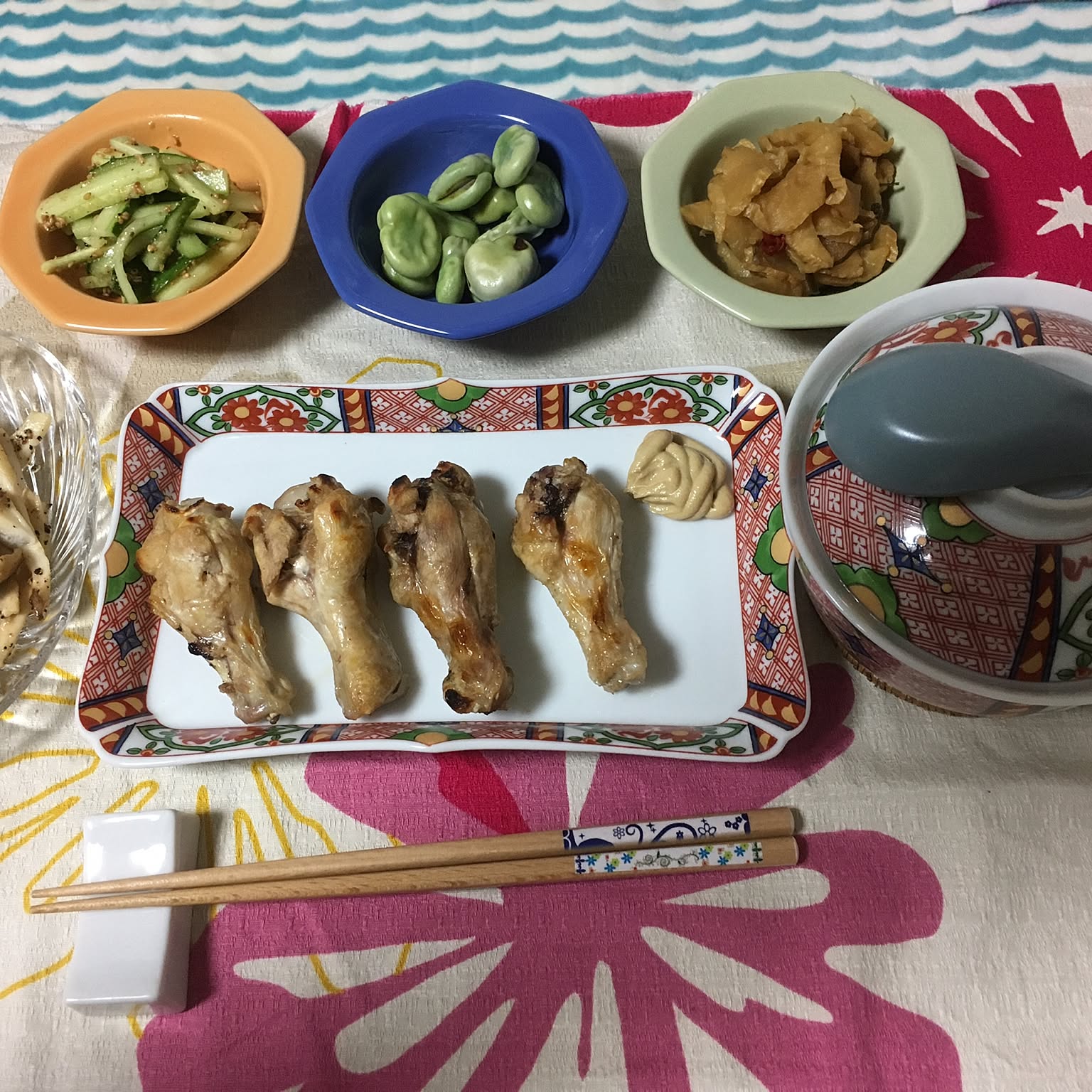
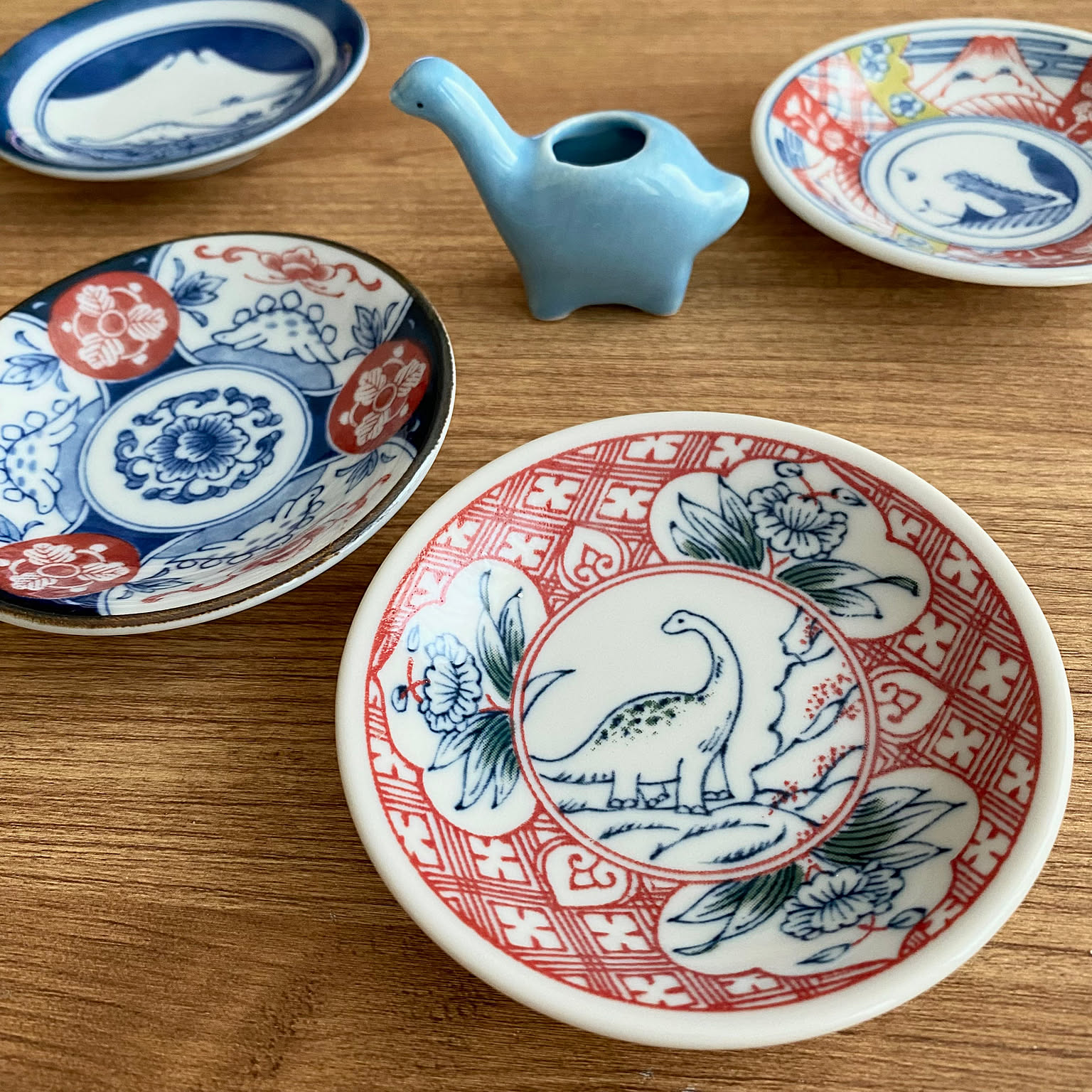
Mix patterns without crowding the table
Mixed tableware looks calmer when one element repeats: blue and white, warm clay tones, a similar rim, or the same general size. Keep accent pieces to small plates, where color reads as an accent rather than taking over the table. If plates crowd the table, use fewer before buying more.
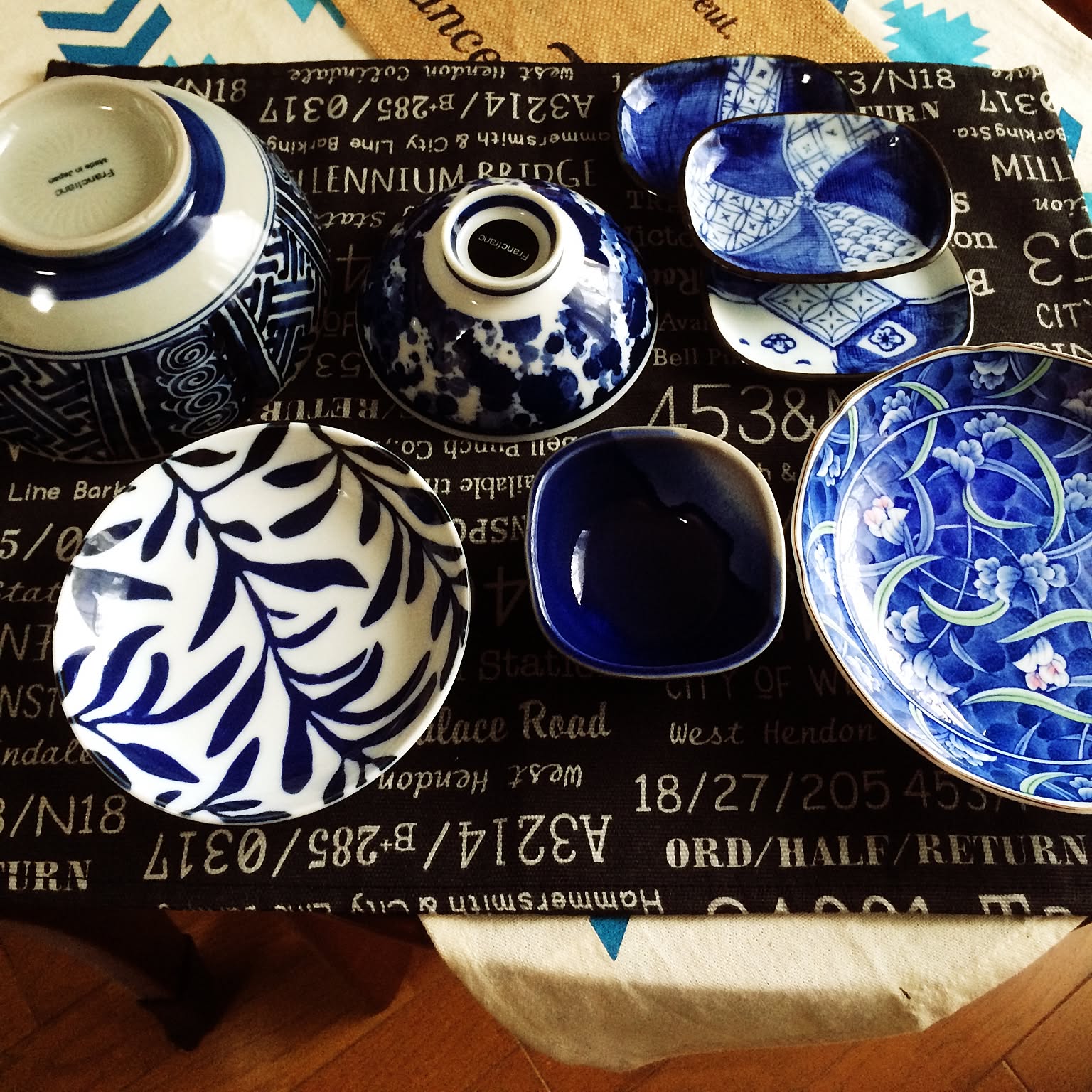
Plan storage before you buy
Small plates and bowls are easy to overbuy. Before adding a set, check that the pieces stack cleanly with what you own and that the stack fits your drawer or shelf.
One system to start with: HASAMI PORCELAIN
Most tableware is bought one piece at a time, and the pieces share a table without stacking together. HASAMI PORCELAIN works the other way. The line is made in Hasami, a pottery town in Nagasaki, and designed by Taku Shinomoto, who owns Tortoise General Store in Los Angeles. Its plates and bowls come in five diameters, 3-3/8, 5-5/8, 7-3/8, 8-5/8, and 10 inches, and pieces of the same diameter stack. The store lists the plates as plate/lids for that reason: a 7-3/8 inch plate covers a 7-3/8 inch bowl in the fridge.

A practical first order for one or two people is two 7-3/8 inch plates and two 7-3/8 inch round bowls: $160 at the store's Natural prices. That covers lunch on the plate, noodles or a salad in the bowl, and the plate as a lid for leftovers. The store offers free US shipping, outside Hawaii and Alaska, on orders of $200 or more. Add 5-5/8 inch plates later as side plates.
The Natural and Black finishes are unglazed on the outside and have a sandy texture. The store says color changes and staining occur naturally over time. Gloss Gray and Gloss White put a glaze over the same shapes. Tortoise General Store lists the pieces as dishwasher and microwave safe, but not oven safe or flame safe, and asks buyers not to knock pieces together when stacking.

Ready to buy?
Both pieces below are the 7-3/8 inch size in the Natural finish, so the plate covers the bowl. Prices were checked at Tortoise General Store on October 21, 2026 and can change.
HASAMI PORCELAIN Plate / Lid 7-3/8 in (HP003), $32

The store lists this plate at 7-3/8 by 7/8 inches. It works as a lunch plate, a tray for a mug and a snack, and a lid for any 7-3/8 inch bowl in the line. Best for: the piece to buy in pairs. Avoid if: you want a full dinner plate; at 7-3/8 inches it is smaller than a typical US dinner plate. Main drawback: the low wall is too shallow for saucy food.
HASAMI PORCELAIN Round Bowl 7-3/8 in (HP032), $48

The store lists this round bowl at 7-3/8 by 2 inches. Its curved sides suit noodles, salad, or a one-bowl dinner, and the plate above covers it. Best for: eating a whole meal out of one bowl. Avoid if: you mainly want a deep ramen bowl or a small rice bowl; this sits between the two. Main drawback: it costs half again as much as the plate.
Featured Product
HASAMI PORCELAIN Plate / Lid 7-3/8 in, Natural (HP003)
$$ ($32 at Tortoise General Store, checked October 21, 2026)
Verify specifications with the manufacturer · Checked 2026-10-21
Featured Product
HASAMI PORCELAIN Round Bowl 7-3/8 in, Natural (HP032)
$$$ ($48 at Tortoise General Store, checked October 21, 2026)
Verify specifications with the manufacturer · Checked 2026-10-21
Frequently asked questions
What size small plate should I buy first?
How many pieces should I buy first?
What is the difference between a rice bowl and a donburi bowl?
Can I use one bowl for both ramen and donburi?
Is Japanese tableware dishwasher and microwave safe?
Is HASAMI PORCELAIN the same as Hasami ware?
by Japanese Home Goods Editorial
RoomClip usage context, manufacturer specifications, and US-market availability are reviewed by the Japanese Home Goods editorial team. We do not claim hands-on testing unless an article explicitly says so.
Related Articles

How to Choose a Japanese Santoku Knife for a US Kitchen
Choose between a santoku, gyuto, nakiri, and petty knife, then pick blade length, steel, and handle. Two santoku with US prices, and the board, washing, sharpening, and storage that keep the edge.

Japanese Kitchen Organization Ideas: Keep Small Counters Ready to Cook
Arrange the kitchen tools you already own around prep, cooking, washing, and putting things away. Test the layout first, then measure before adding a Tower dish rack or slim cart.

Japanese Pantry Organization for a Small Kitchen
A practical small-kitchen pantry guide using Japanese homes as examples: food-stock limits, dry-goods drawers, rolling carts, labels, and weekly rotation.