Japanese Pantry Organization for a Small Kitchen
A practical small-kitchen pantry guide using Japanese homes as examples: food-stock limits, dry-goods drawers, rolling carts, labels, and weekly rotation.

The short answer: choose one main place for everyday pantry food, with a separate place for unopened backups if needed. Group food by the meals you make, check both places before shopping, and buy only what you plan to use and have room to store.
The RoomClip photos below show individual Japanese homes using cabinets, drawers, and shelves for food storage. They illustrate arrangements to adapt, not proof that a setup prevents waste. This guide stays focused on food stock; for appliances, cookware, and counter space, see our Japanese kitchen organization ideas.
Choose a main pantry and a place for backups
Start with the food you cook with this week. Give it a main pantry zone: one cabinet section, drawer, or shelf where you can see and reach it. Keep unopened backups together in a separate, defined place if they do not fit. Avoid splitting the same backups among several hidden spots.
This keeps the prep counter from becoming overflow storage. It also makes shopping easier because you can see what you already own before buying another pack of noodles, curry, tea, or snacks.
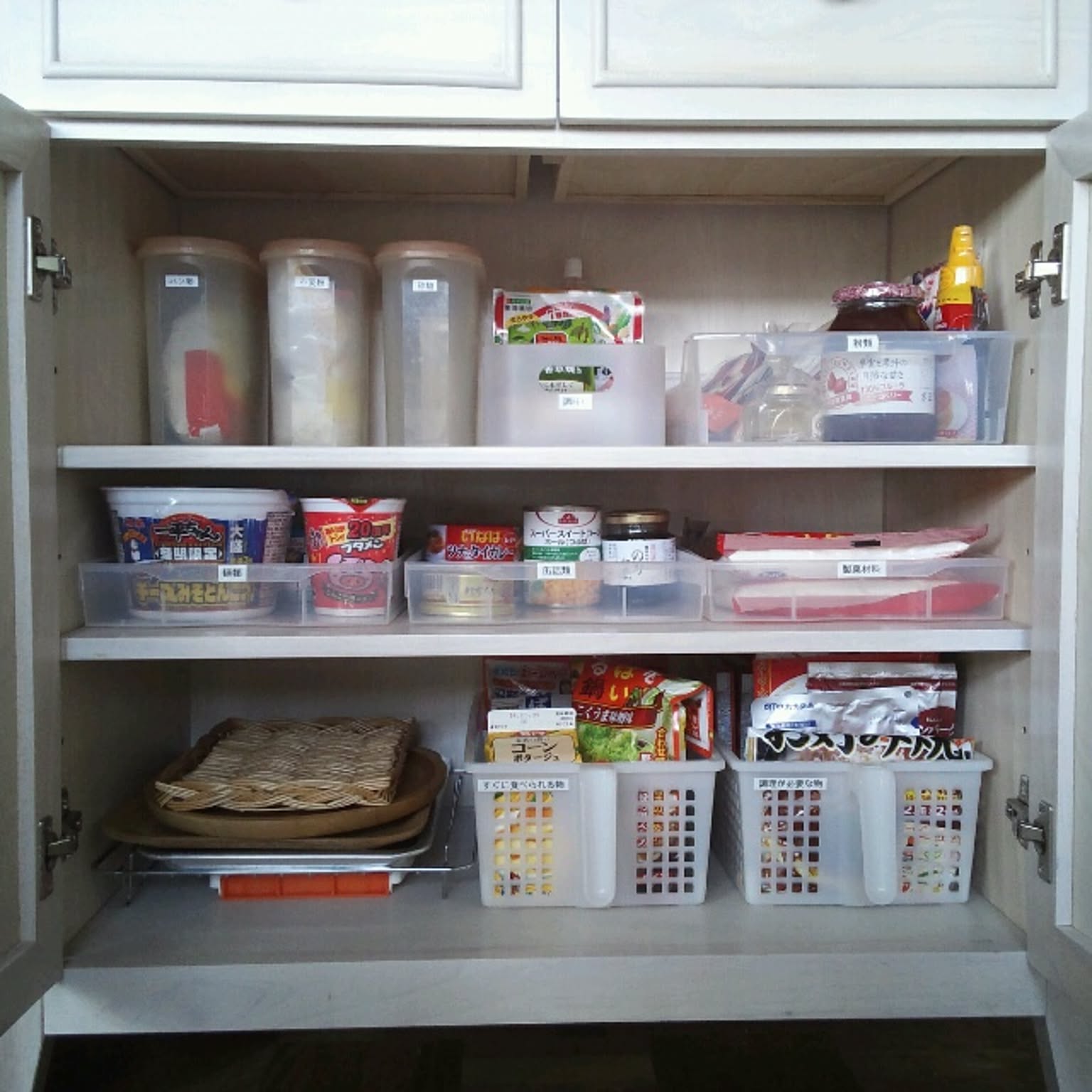
Measure the usable space before buying bins
Measure the inside width, depth, and height of the shelf, cabinet, or drawer in inches. Then check the opening separately: hinges, a face frame, shelf supports, or a drawer lip can make the usable opening smaller than the space inside. For a pull-out bin, also leave enough room above it to grip the handle or lift the lid.
Try your existing packages and bins first. Choose a new container only if it improves access or keeps a food group together. Compare its outside dimensions with the usable space; capacity alone does not tell you whether it will fit.
Choose a cool, dry place for shelf-stable food. USDA recommends keeping it away from the stove and out from under the sink. Follow each package's storage instructions, including refrigeration after opening when required. A home photo does not establish suitable temperature or appliance clearance.
Sort by how food is used
Do not start by buying matching containers. Start by sorting food by use. Use this week's meals to decide which groups you need: weekday cooking, breakfast, snacks, baking, or drinks. Keep open packages visible and unopened backups separate, so a hidden spare does not end up on the shopping list.
Broad zones are easier to maintain than tiny categories. For example, one bin can hold soup and heat-and-eat curry pouches, another can hold tea and drink packets, and another can hold pasta or dry noodles. The goal is to make the next meal easier to start.
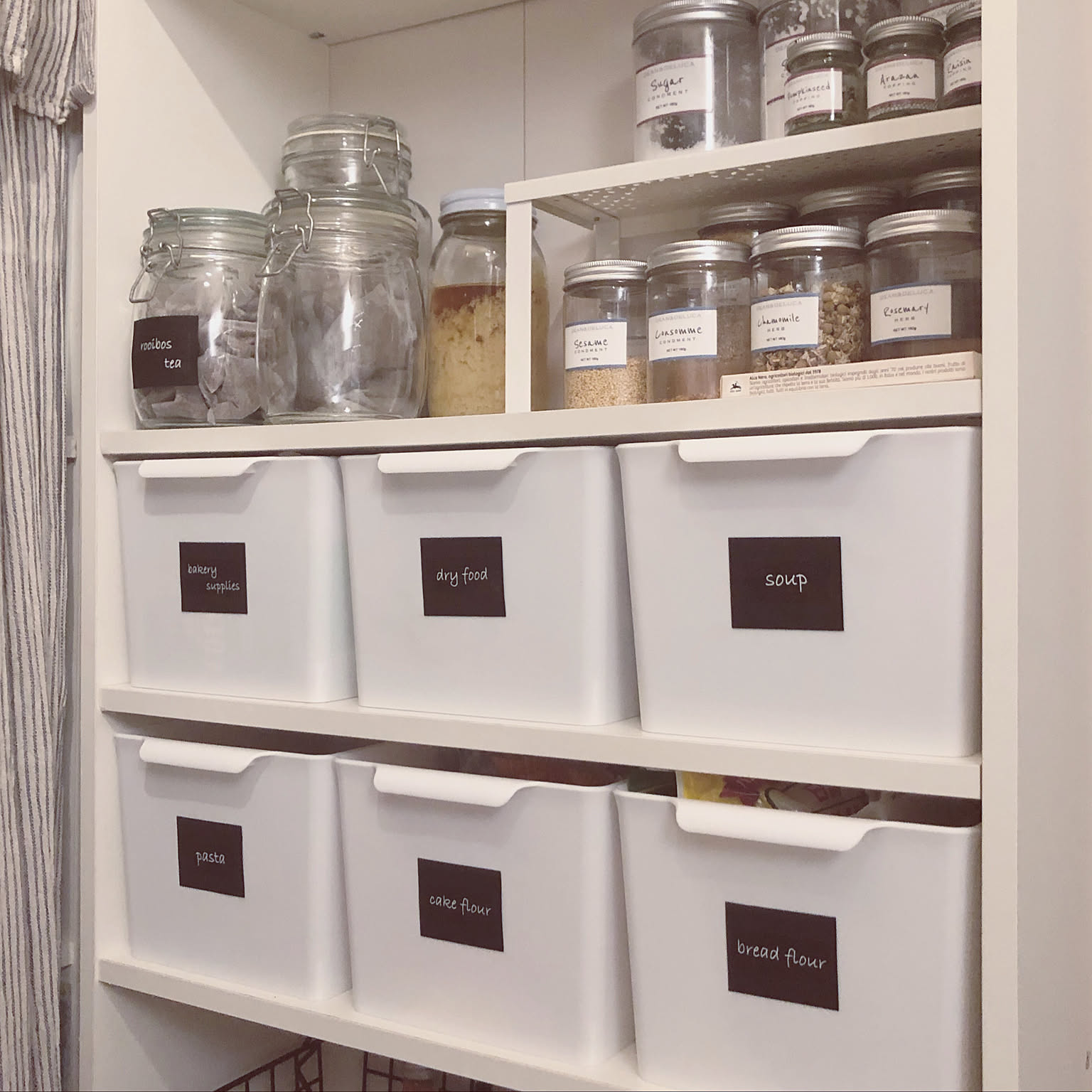
- Daily cooking: rice, noodles, canned tomatoes, broth, curry blocks, and seasonings.
- Fast meals: shelf-stable meal pouches, instant soup, cup noodles, and packet side dishes.
- Backup food: unopened replacements in a defined place; check them before adding more to the shopping list.
Use drawers for dry goods you touch often
Use a drawer when you can see the food from above and take out one package without unloading the rest. Keep frequently used dry goods and packets there if the drawer opens fully and closes with them inside. Use a reachable shelf instead if tall packages catch or the drawer is difficult to access.
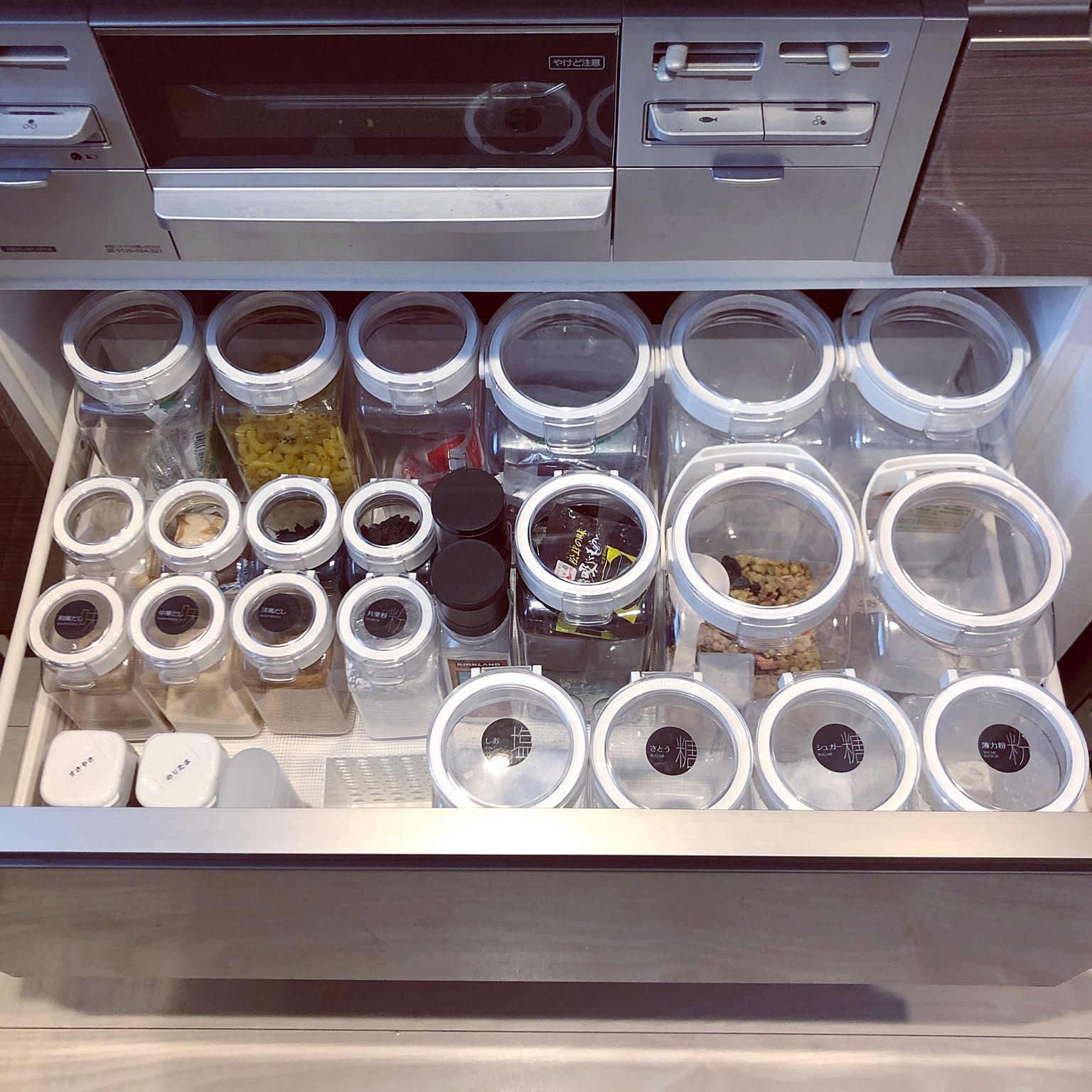
Stand tall items upright
Try tall packages upright only if the drawer closes and you can remove them easily. Use a box or divider to keep them from tipping. If the arrangement blocks the opening, keep them on a shelf instead; standing everything upright is not the goal.
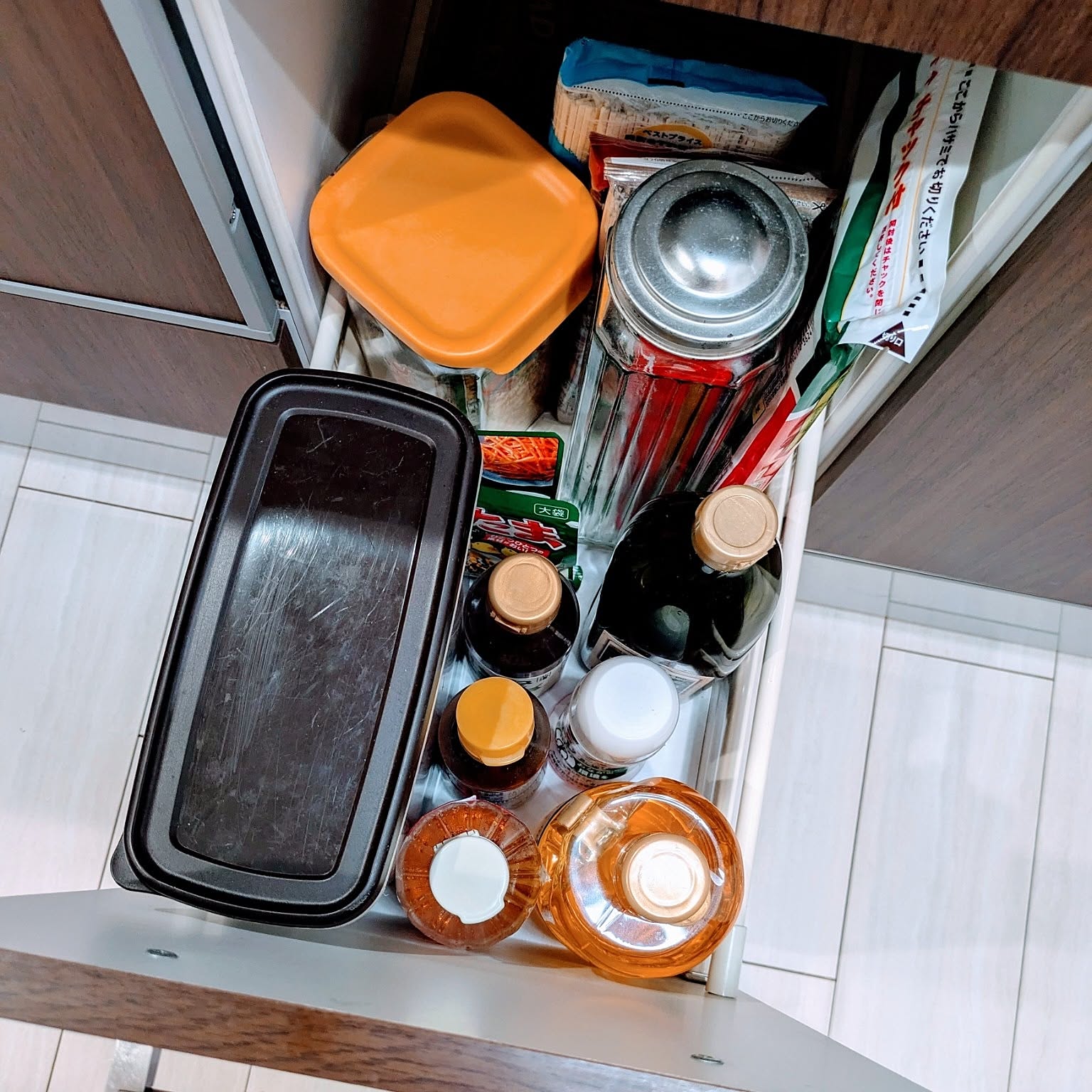
Make hidden storage visible enough
Closed cabinets are useful because they keep visual clutter down, but they can also hide duplicates. Try an open bin or shallow container when it makes the contents easier to check and remove.
The container should make food easier to remove, not just prettier. If you have to lift three boxes to reach tea packets, the system is too deep.
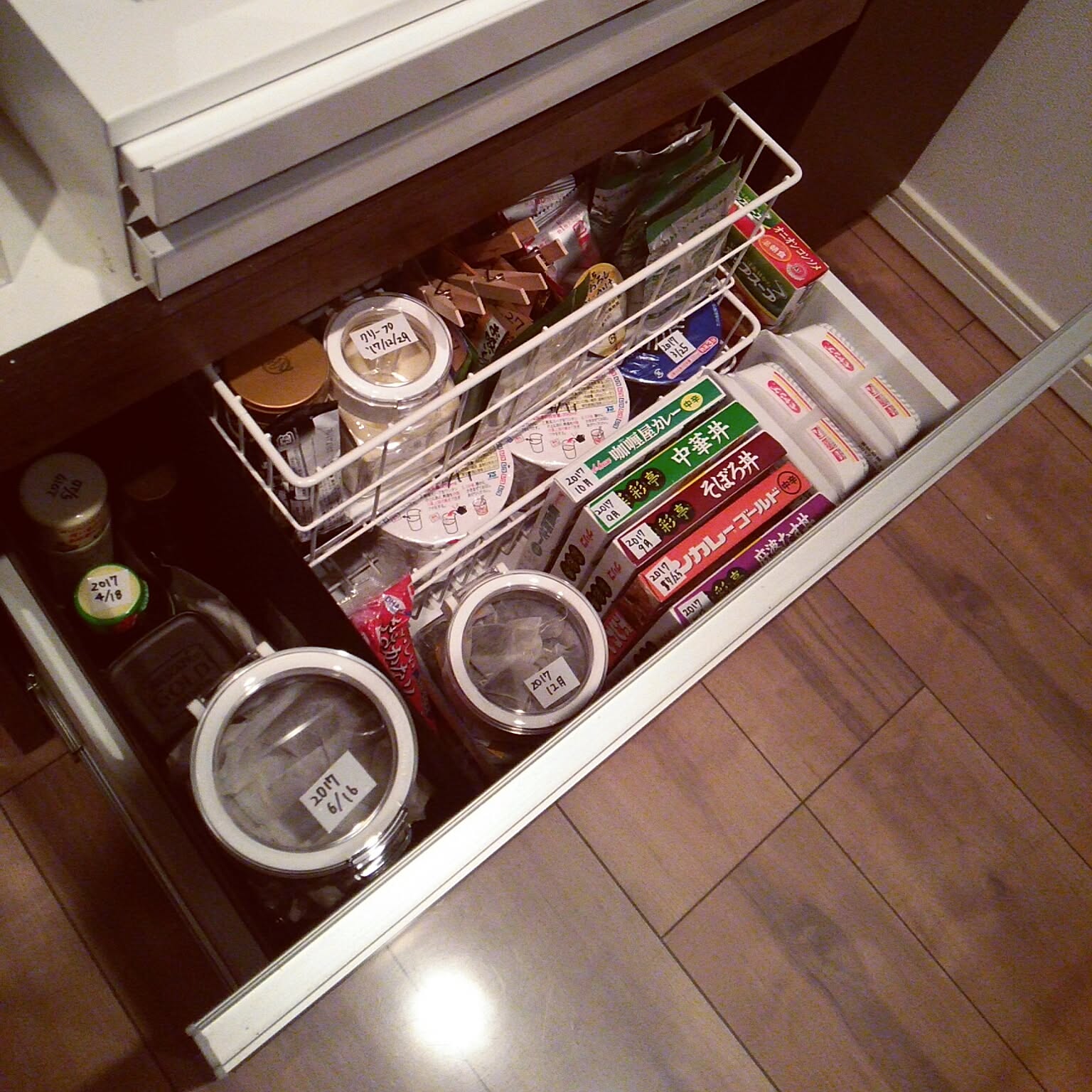
Review the food quantity before adding a cart
Before adding storage, gather duplicate backups and check what you actually plan to use. Buy less at once if the food will not fit. A cart is an option when necessary food still has no accessible home and a suitable storage location remains available.
Give the cart specific food groups and include it in the same shopping check as your cabinet or drawer. Keep shelf-stable food cool and dry, and follow the cart's load and placement instructions. Do not assume a refrigerator gap is suitable without checking the appliance's clearance requirements.
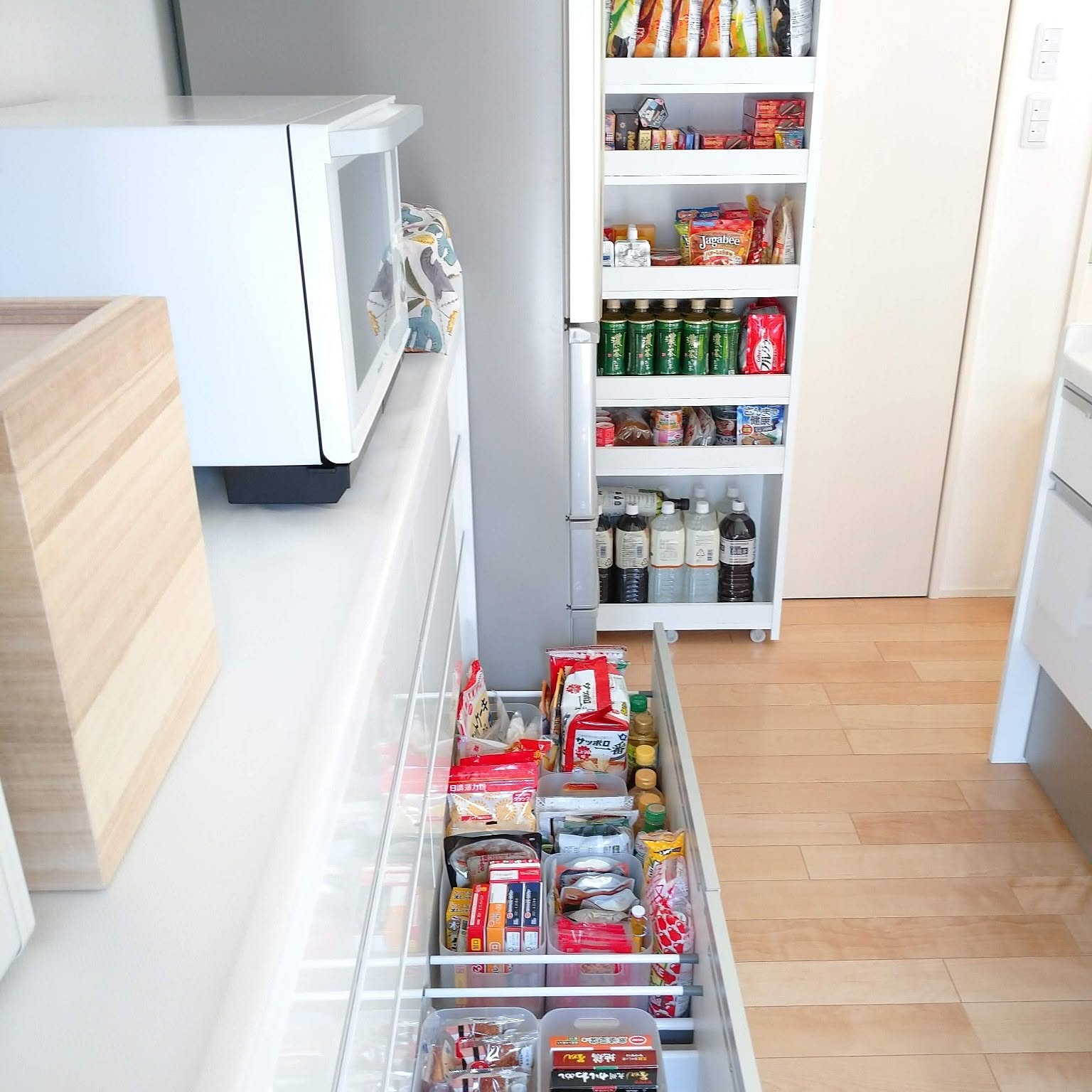
If a cart still seems necessary, the small-kitchen layout guide covers checking a specific slim cart against the gap, pull-out path, and cost. This pantry guide helps decide how much food needs a home first.
Set limits before labels
Labels help, but they do not fix overbuying by themselves. The most useful limit is physical: one bin for meal pouches, one row for canned food, one container for tea, one shelf for backup snacks.
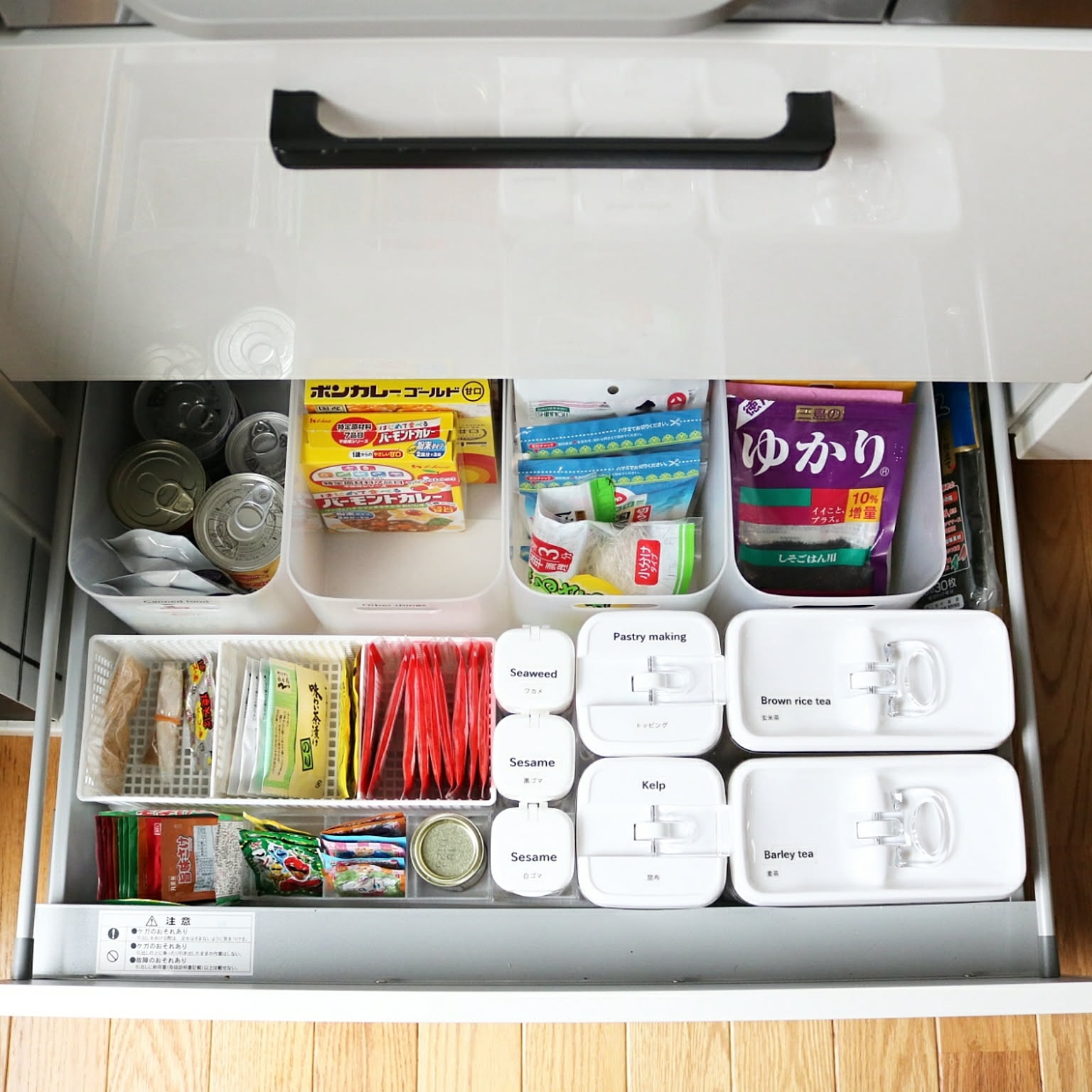
Treat a full bin as a reason to check, not an automatic ban on buying food. If it holds unused pasta but you need rice for this week, reduce the pasta backups or assign rice its own space. Buy a replacement when the remaining amount will not cover planned meals and you have a suitable place for it.
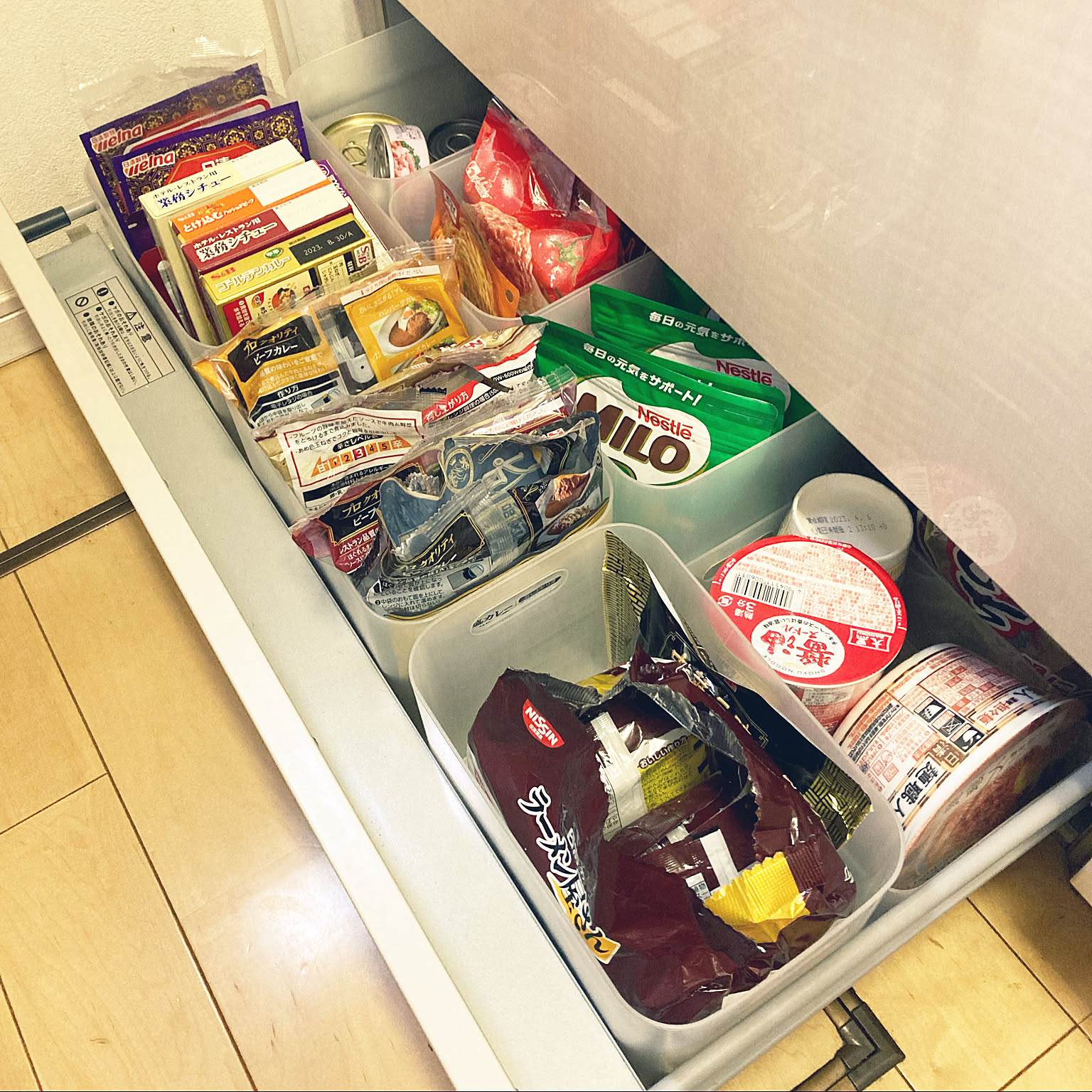
Check what to use and what to buy
Put the packages you intend to use next where you can reach them. Before shopping, check everyday food and backups, estimate what remains for planned meals, and write down only the shortfall. Put newer duplicates behind older ones when their storage instructions allow it.
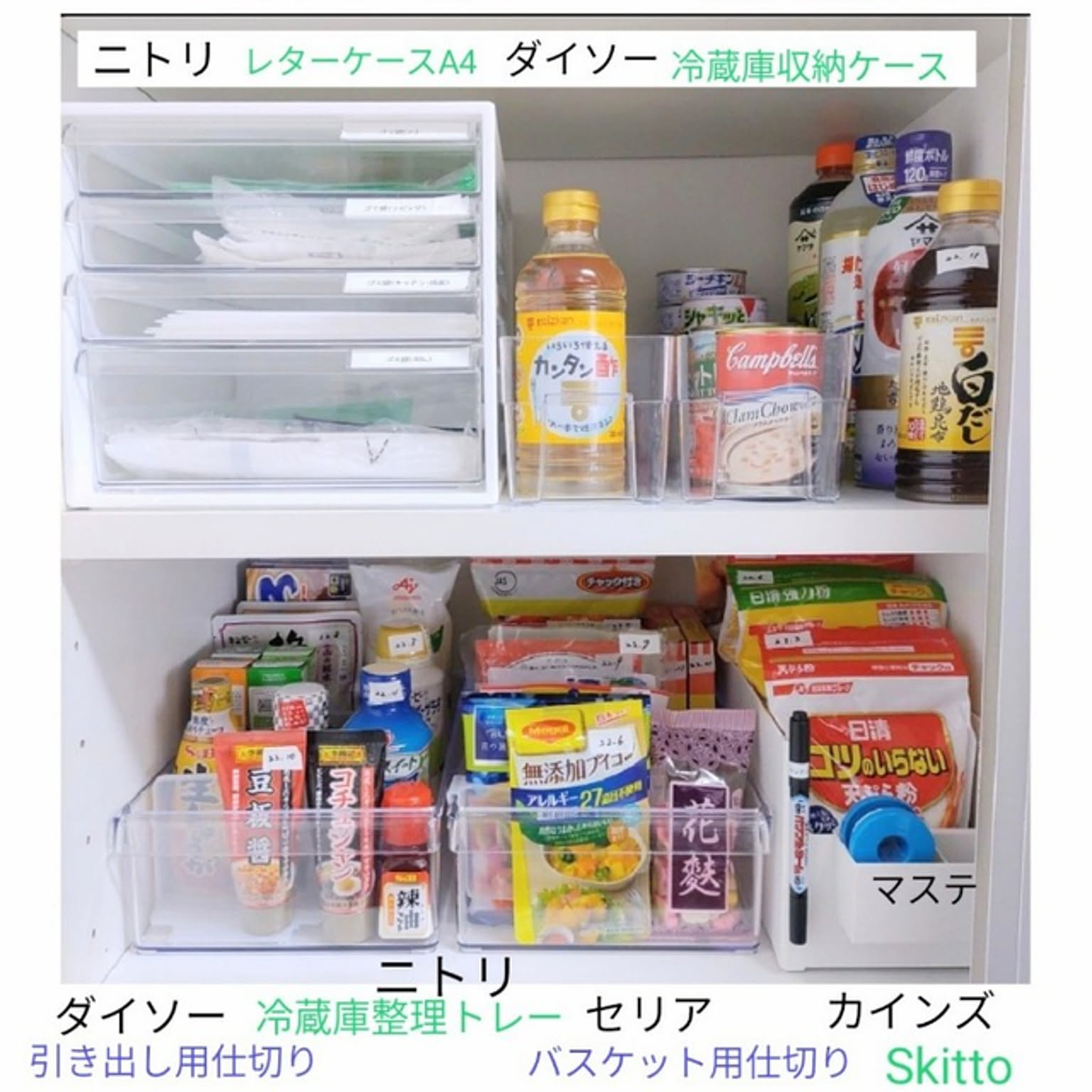
Read package dates together with storage instructions. USDA explains that a Best if Used By date describes quality, not a safety cutoff. Infant formula has a required use-by date. Do not use a pantry checklist to override a product's handling instructions or decide that food is safe.
Check both places before your next grocery trip
For example, keep the rice and noodles you use this week in a reachable drawer, and unopened replacements on one shelf. This still gives you one main pantry and a defined backup place. Check both before shopping; do not scatter extra replacements wherever space opens up.
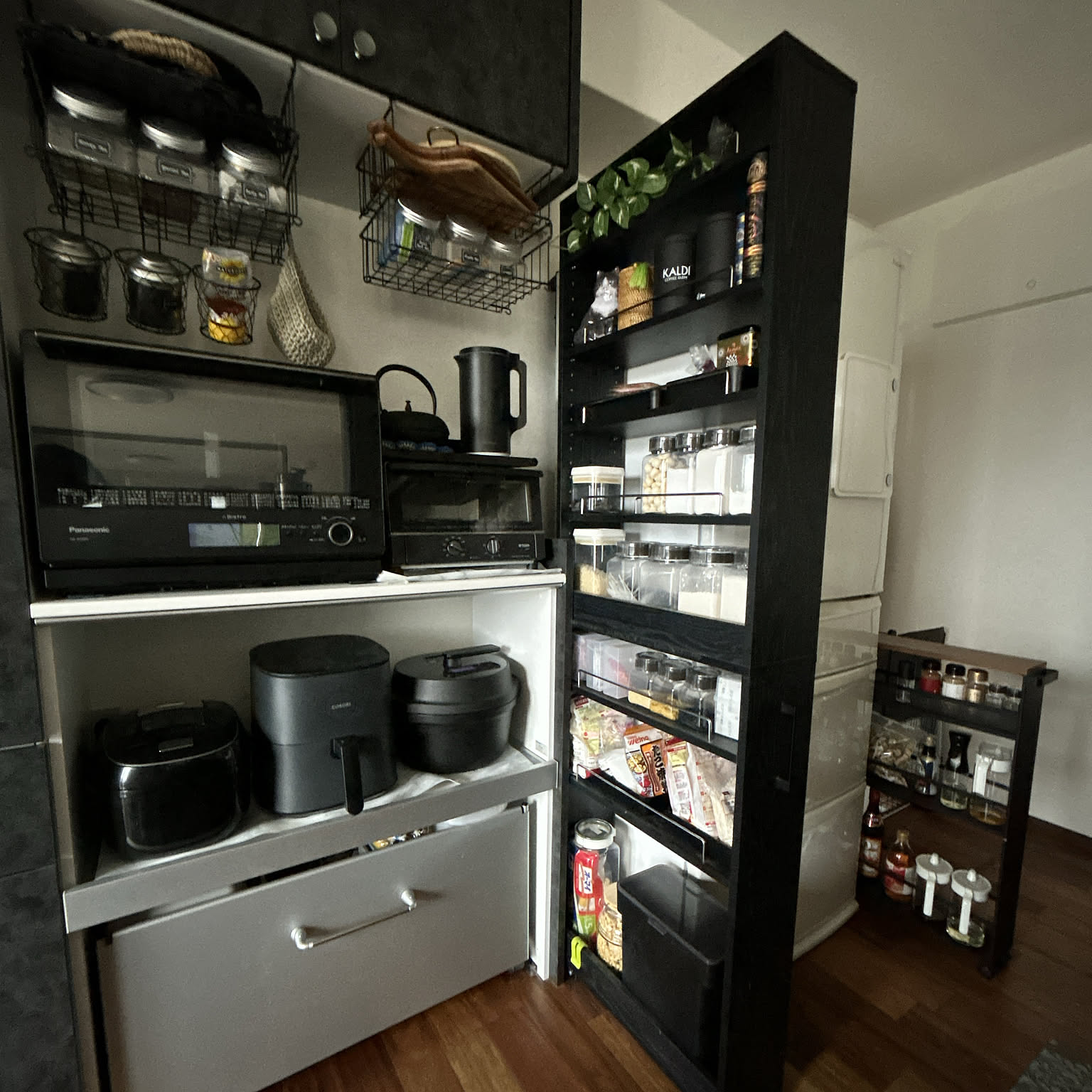
Before your next grocery trip, decide what you will use, what needs replacing, and where it will go. Keep your current storage if that check works. Consider a new bin or cart only when a specific access or storage problem remains after reviewing the quantity.
Once food storage is under control, keep the sink-side zone separate. The kitchen layout guide covers dish-rack fit and drainage without turning the pantry into general kitchen storage.
Frequently asked questions
How do I organize pantry food if I do not have a pantry?
What pantry items should stay in a small kitchen?
Do I need matching containers for pantry organization?
When should I check pantry food before shopping?
by Japanese Home Goods Editorial
RoomClip usage context, manufacturer specifications, and US-market availability are reviewed by the Japanese Home Goods editorial team. We do not claim hands-on testing unless an article explicitly says so.
