A Professional Organizer Workflow for a Small Apartment in Japan
Use a professional organizer's sequence to edit a small apartment: inventory what you own, decide what stays, move each category to its point of use, and test the setup for one week.

The professional sequence: inventory, edit, assign, test
A small apartment does not need a separate organizer for every shelf. It needs a decision order. First see what you own, then decide what stays, place each remaining category where it is used, and test whether the setup survives a normal week.
Step 1: inventory one problem category
Do not empty the entire apartment at once. Choose one category that causes daily friction: shoes on the entry floor, cookware stacked too deeply, clothes that no longer fit the closet, or bathroom supplies spread across several rooms.
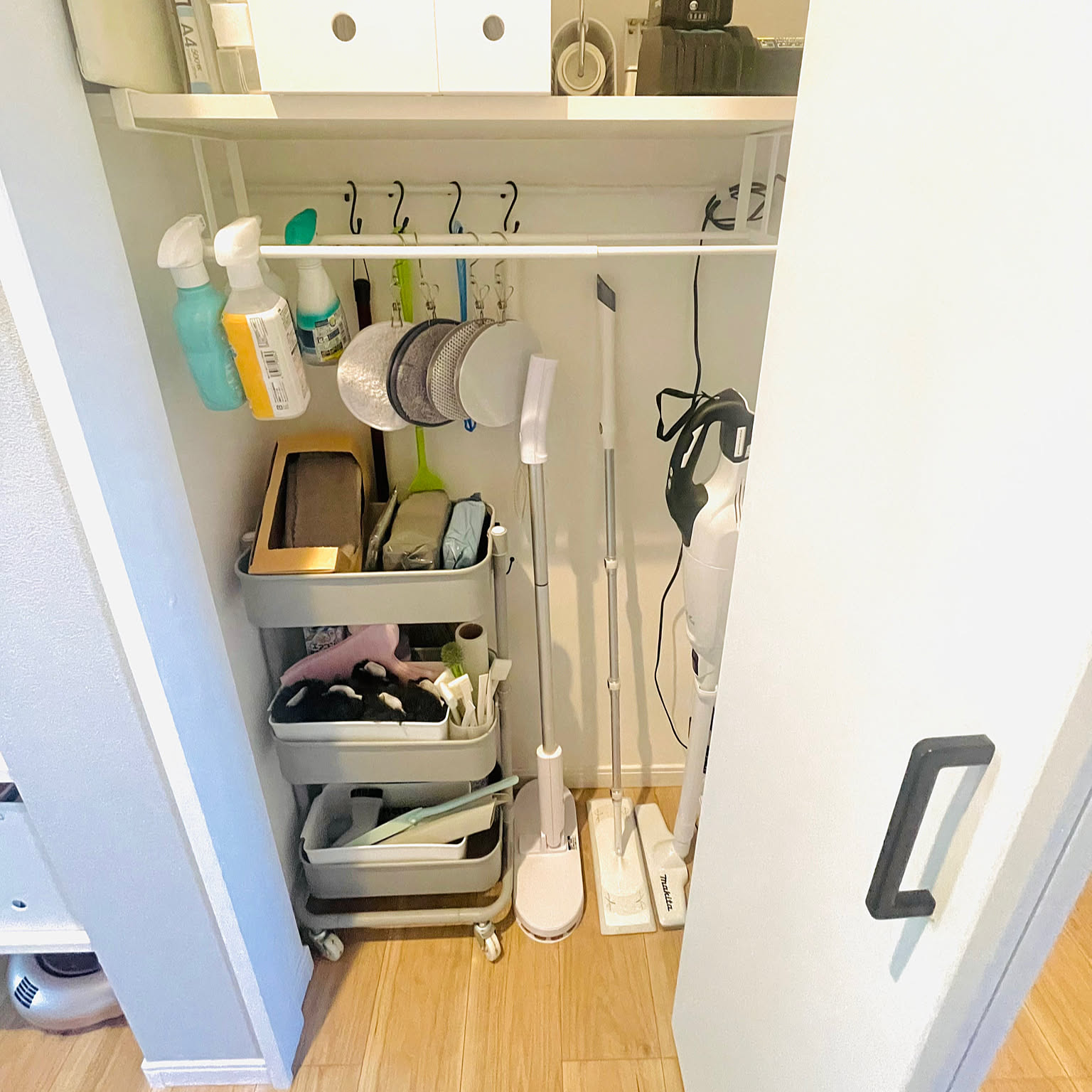
Bring that category into view and count it. Include duplicates, items waiting for repair, and supplies stored in another room. The goal is to see the true volume before deciding how much storage it deserves.
Step 2: define the result in one sentence
A useful goal describes an action, not an appearance. Try: every pan can be removed without lifting another pan, the entry floor is clear at night, or one person can put away clean towels in under a minute.

This sentence becomes the test for every item and every storage move. If a solution looks neat but makes the routine harder, it does not meet the goal.
Step 3: decide keep, move, or remove
Make three decisions before measuring shelves. Keep items that are used and fit the current home. Move seasonal or occasional items away from prime space. Remove broken pieces, unnecessary duplicates, and anything you would not choose again.

- Keep here: used often and needed in this room.
- Move elsewhere: useful, but seasonal or needed less often.
- Remove: broken, duplicated, expired, or no longer suitable.
Step 4: assign homes by point of use
The correct room matters more than matching containers. Put an item where the action happens, then choose the easiest height and depth for how often it is used. Daily items belong between knee and shoulder height; occasional items can move higher, lower, or farther away.
Living room: protect shared surfaces
Start with what repeatedly lands on the table, sofa, or floor. Give remote controls, chargers, paperwork, toys, and hobby items separate return points near where they are used. Do not turn one large basket into a mixed holding area.

Kitchen: group by task, then frequency
Keep prep tools near the counter, pots near water or heat, and daily dishes within easy reach. Move special-occasion cookware and bulk supplies out of prime drawers. For a deeper kitchen plan, see Japanese Pantry Organization for a Small Kitchen.

Closet: let the current season own prime space
Separate current-season clothes from off-season and occasional pieces. Keep everyday clothing visible and easy to return. If the closet is still overfull after editing, reduce the category again before adding another drawer unit.

Bathroom and laundry: lower the effort to put things away
Towels, toiletries, and laundry supplies need simple categories that tolerate wet hands and rushed routines. Open bins or broad labels may work better than detailed sorting if several people share the space. See Japanese Bathroom Storage for a Small Apartment for fixture-specific ideas.

Entryway: keep only departure and return items
The entry should support leaving and coming home: current shoes, keys, one umbrella location, and the bags or gear used that week. Other household stock belongs elsewhere. For product-level storage choices, use Japanese Entryway Shoe Storage for a Small Apartment.

Step 5: test the setup for one normal week
Do not judge the new arrangement immediately after cleaning. Use it through workdays, laundry, groceries, and one busy evening. Notice where items actually land and which return steps people skip.

- If an item lands elsewhere repeatedly, move its assigned home closer.
- If a container overflows, edit the category instead of adding a second overflow bin.
- If putting an item away takes several steps, remove a lid, door, or unnecessary subdivision.
The weekly 10-minute reset
Once a week, return misplaced items, remove packaging and expired supplies, and check one category that is beginning to spread. A small apartment stays workable through short corrections, not repeated whole-home makeovers.
Frequently asked questions
What should I organize first in a small apartment?
How do I decide what to keep when storage is limited?
Should I buy organizers before decluttering?
How long should I test a new storage setup?
by Japanese Home Goods Editorial
RoomClip usage context, manufacturer specifications, and US-market availability are reviewed by the Japanese Home Goods editorial team. We do not claim hands-on testing unless an article explicitly says so.
Related Articles

Japanese Entryway Shoe Storage for Small Apartments
Small Japanese entryways work when daily shoes, backup pairs, umbrellas, keys, and cleaning tools each have a narrow place to land. Use these real genkan examples to keep the floor clear without adding bulky furniture.

Japanese Pantry Organization for a Small Kitchen
A practical small-kitchen pantry guide using Japanese homes as examples: food-stock limits, dry-goods drawers, rolling carts, labels, and weekly rotation.

Japanese Bathroom Storage Ideas for Small Apartments
Make a small Japanese-style bathroom easier to clean with magnetic, hanging, tension-pole, and removable storage ideas that keep bottles and tools off the floor.

Japanese Indoor Laundry Drying for a Small Apartment
Build a compact indoor laundry-drying setup by choosing one usable zone, spacing clothes for airflow, controlling humidity, and storing the rack when it is dry.