Japanese Kitchen Organization Ideas: Keep Small Counters Ready to Cook
Arrange the kitchen tools you already own around prep, cooking, washing, and putting things away. Test the layout first, then measure before adding a Tower dish rack or slim cart.

Start with the tools you already own
Choose one normal meal you cook at home. Clear enough counter for its cutting board, ingredients, and plating, then decide where the tools for that meal will come from and go back. Test those places before buying another rack or set of bins.
The RoomClip photos below show individual Japanese kitchens with appliance shelves, hanging tools, divided drawers, and separate overflow storage. They are examples to adapt, not proof that a mounting method fits your US kitchen or rental.
Two ways to move storage away from a small work surface.
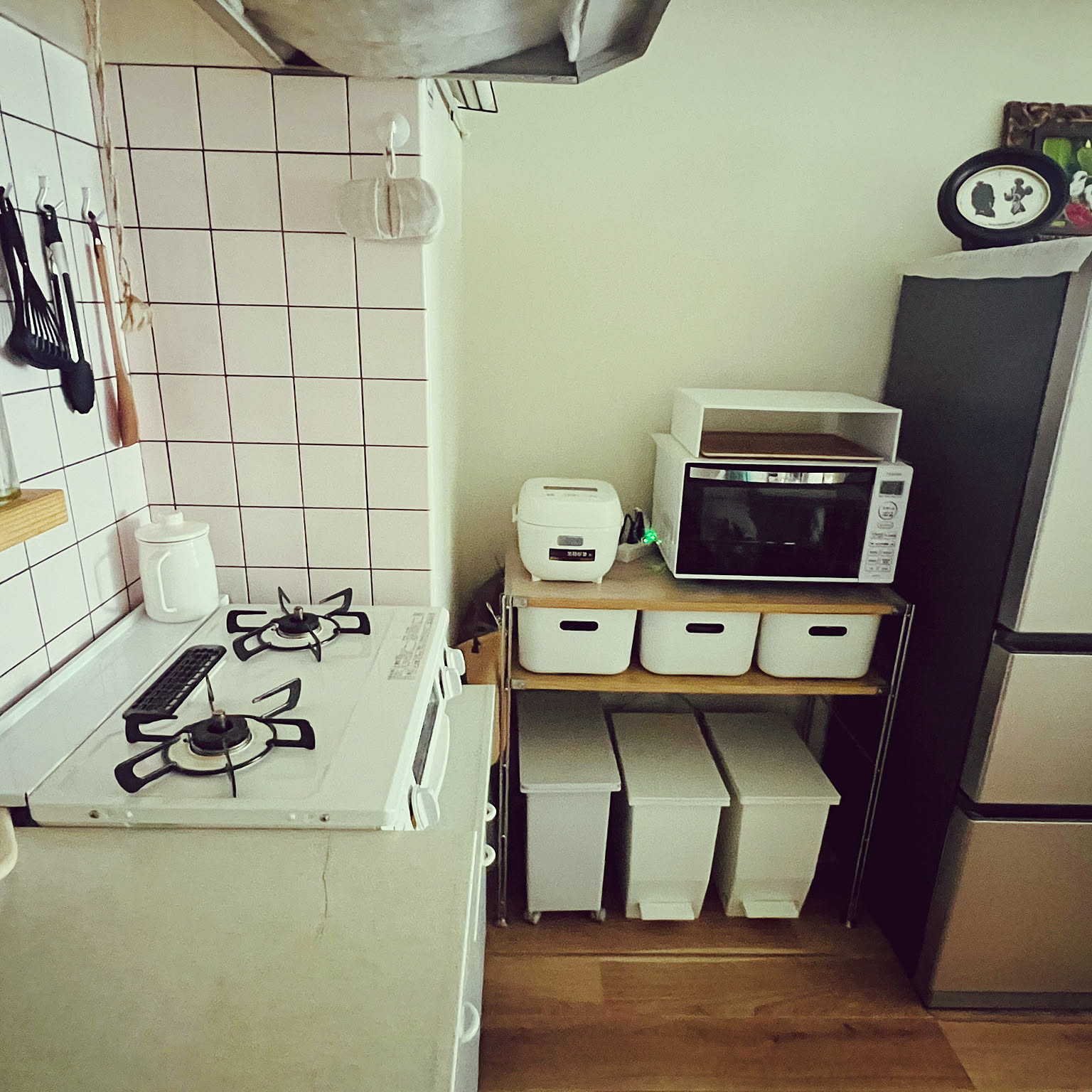
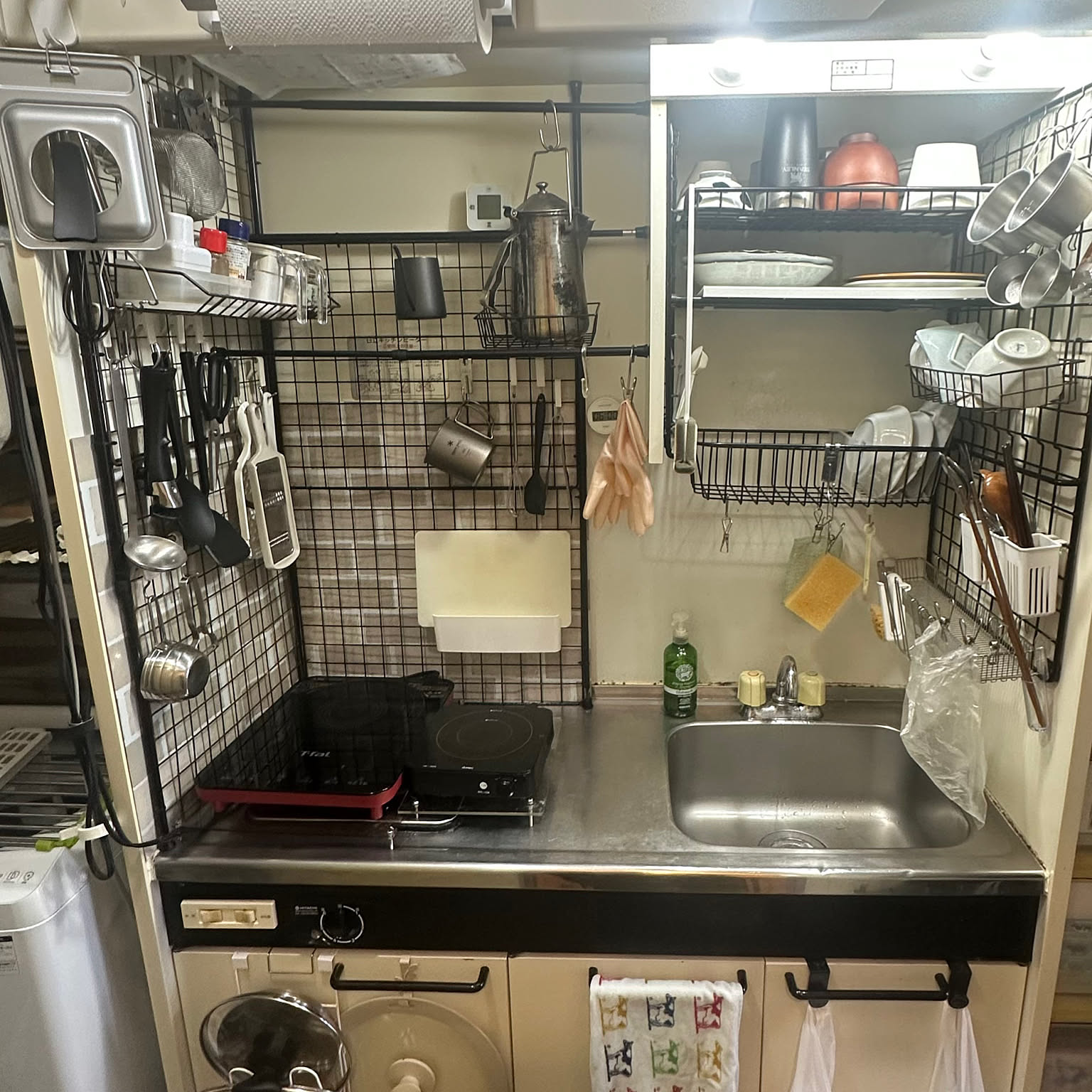
Map one meal from prep to putting things away
- Prep: Put your cutting board and ingredients on the cleared surface. Open the drawer or cabinet you need. If it catches on a cart, bin, or appliance, move the obstruction.
- Cook: Keep the utensils for this meal within comfortable reach. Follow your appliance instructions for ventilation and clearances; a storage photo cannot establish a safe distance from heat.
- Wash: Give used tools a washing and drying place that leaves the prep surface available. Check that you can use the faucet and lift dishes without hitting stored items.
- Return: Once tools are clean and dry, put each one back. A place that requires unloading several other items will be hard to use after every meal.
Repeat the test with a few regular meals. Keep the arrangement if you can cook, open storage, and clean without a preliminary reshuffle. If something gets in the way each time, move it, reduce duplicates, or use another existing shelf before adding storage.
Use a short wall area only where it fits
A small hanging area can keep a few utensils close. Choose tools you can remove and return without tangling handles or reaching across the cooktop. Frequently used tools can stay in a drawer when that is easier to reach and clean.
Check the exact accessory's instructions for the supporting surface, mounting method, and load. A magnetic accessory needs a compatible magnetic surface; a hook needs the specified opening and clearance. No-drill does not by itself establish permission, fit, or a damage-free result. If a support shifts, a door catches, or storage interferes with an appliance, stop using that position.
Separate places for cooking tools and washing tools.
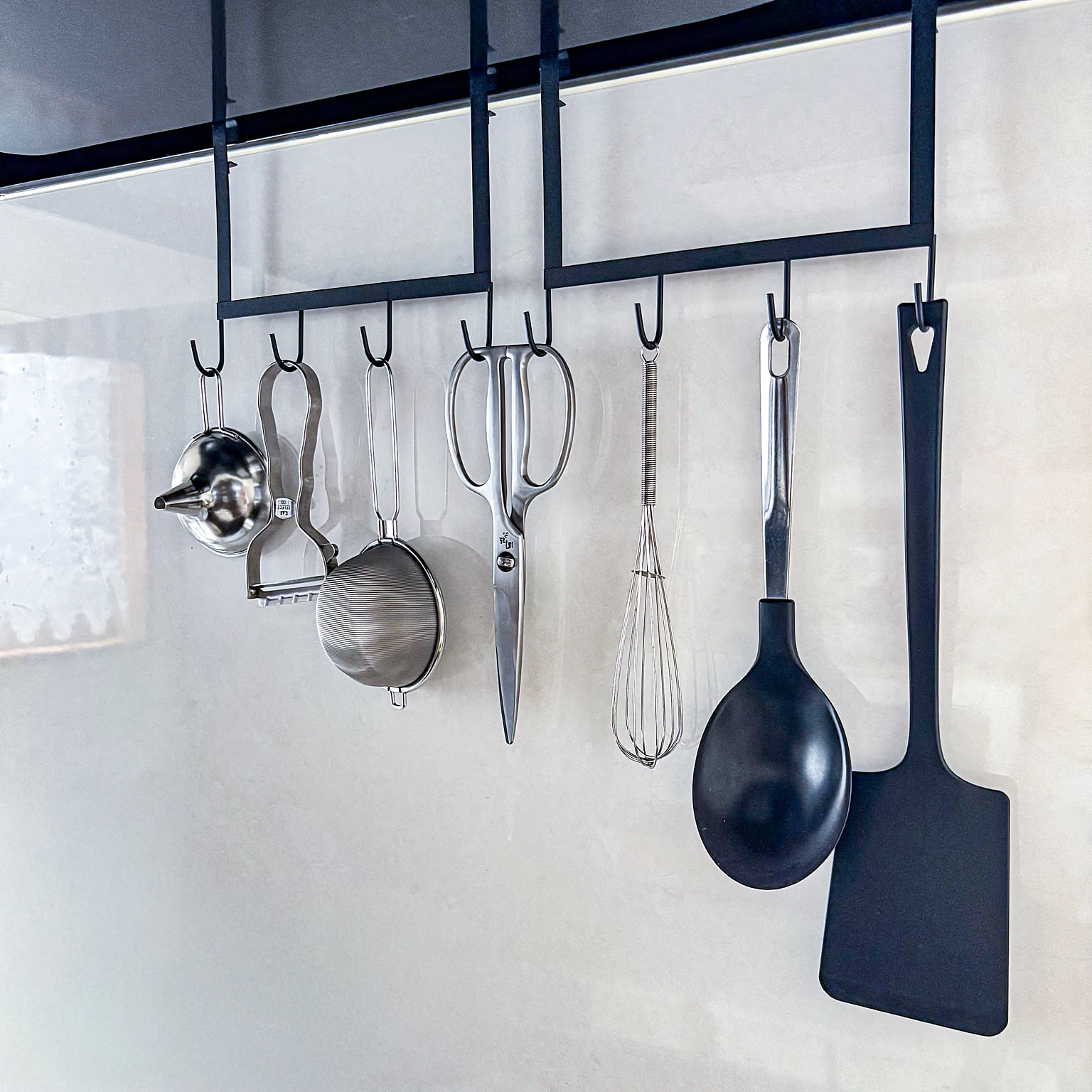
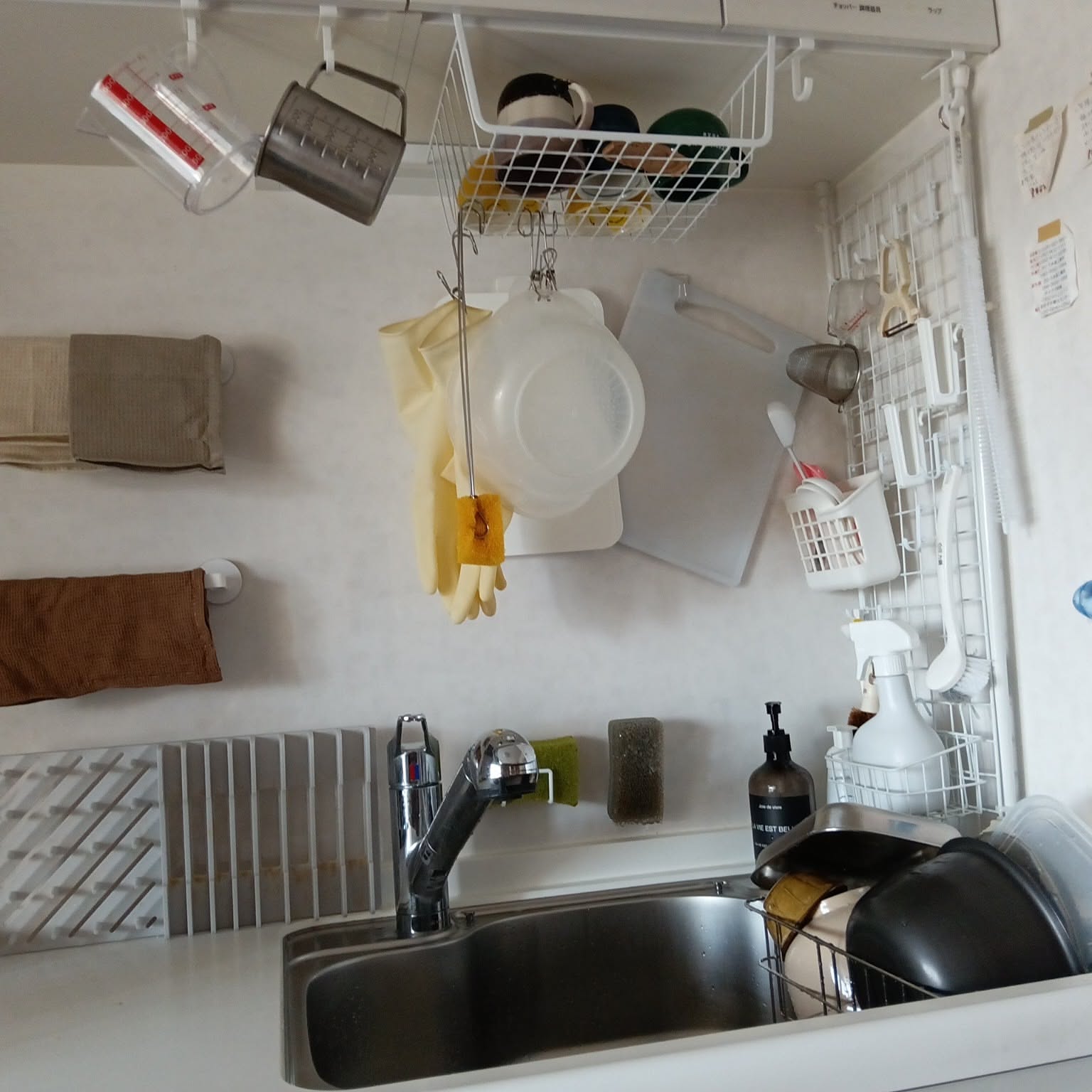
Keep the group small enough to wipe the surrounding area. If utensils collect grease or you have to remove several pieces to clean, put some in a nearby drawer.
Yamazaki Tower dish rack or Tosca? Measure the sink first
A dish rack earns counter space only if washed dishes need somewhere to dry before you put them away. If you dry and put dishes away right after washing, a towel or a small mat may be enough. If dishes stay out until the next meal, measure before choosing a rack.
- Counter strip: Measure the width and depth beside the sink, plus the height under any shelf or cabinet above it.
- Faucet: Swing the faucet both ways and check that it clears the rack and anything standing in it.
- Water: Decide where runoff goes. A spout or tray needs to drain toward the sink, not toward the counter edge.
- Cleaning: Leave room to lift out the tray or utensil holder and wipe under the rack.
Tower Wire and Tosca dish racks in two Japanese kitchens.
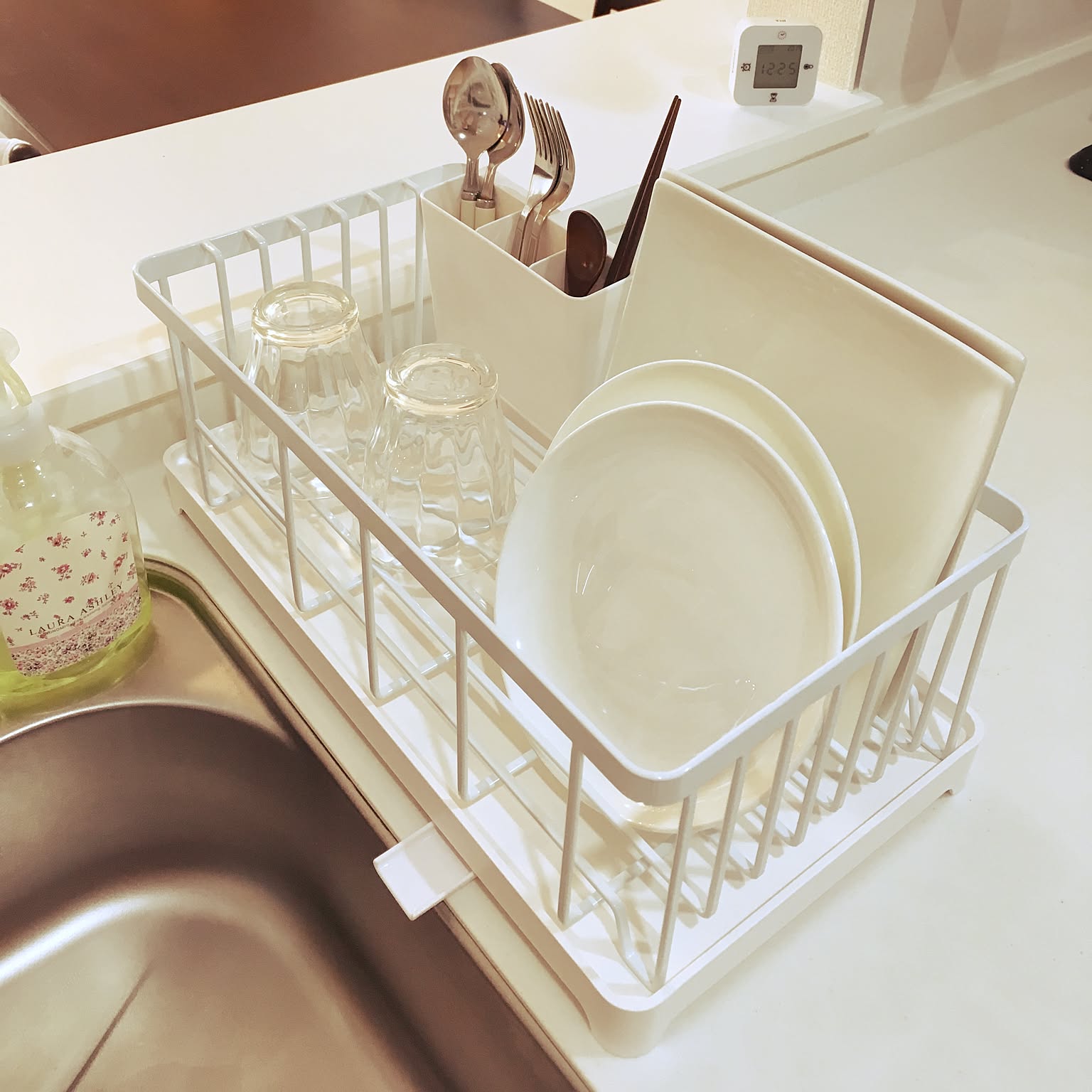
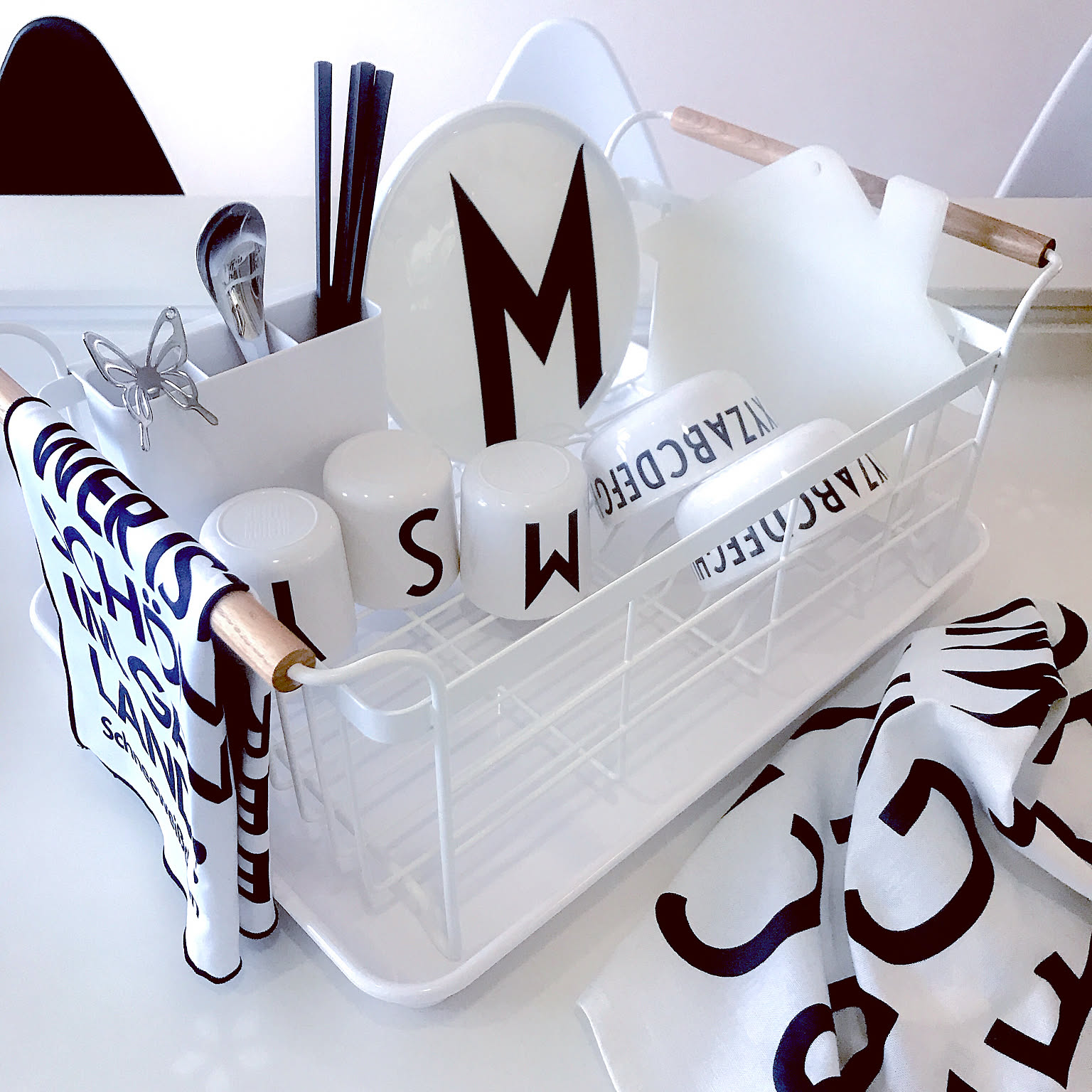
| Spec | Tower Wire Dish Rack | Tosca Dish Rack |
|---|---|---|
| Best for | A narrow strip beside the sink | A rack that stays in view |
| Size (L × W × H) | 9.06 × 16.54 × 6.69 in | 13.19 × 18.5 × 7.87 in |
| Drainage | Rotating spout aimed into the sink | Removable tray to empty and dry |
| Listed load | 17.6 lb | 22 lb |
| Price | $88 | $98 |
| Main drawback | Needs a permanent spot by the sink | Larger footprint; tray needs emptying |
Specifications and prices from Yamazaki Home US, checked October 21, 2026. Prices and stock can change.
Choose the Tower Wire Dish Rack when the strip beside the sink is narrow and its spout can point into the basin. Choose the Tosca Dish Rack when the rack stays in view and you have room for its wider footprint and for lifting the tray out. The photos show where these racks sit in Japanese homes; they do not confirm that either rack fits your sink.
Skip a permanent rack if you wash a few items at a time and put them away quickly. If you often wash pans and mixing bowls in one load, dry the large pieces separately rather than buying a rack sized for your biggest wash.
Give drawers and cabinets jobs you can maintain
Separate everyday tools from backups
Place tools for your regular meals in the easiest drawer or cabinet to open. Move duplicates and occasional equipment farther away. Try the trays or boxes you already have before buying a matching set; the useful test is whether you can see, take, and return one item.
Stand cookware upright only when the opening allows it
Dividers can separate lids, pans, and boards so you do not have to lift a whole stack. Test with your own cookware: handles need room, the drawer must close, and each piece needs a removal path. If a tall pan blocks the opening, store it flat elsewhere rather than forcing the whole collection upright.
Visible small tools and separated cookware in two homes.
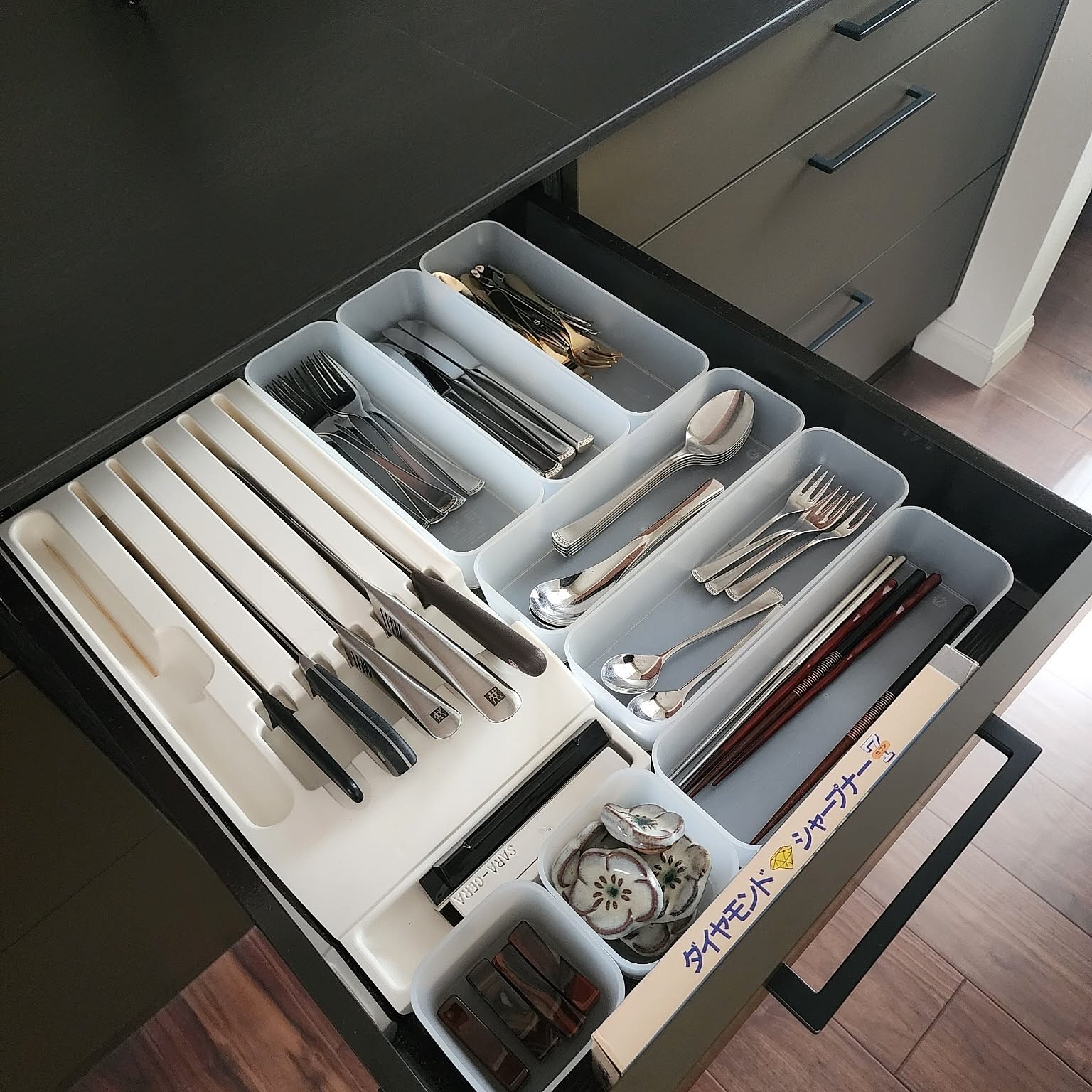
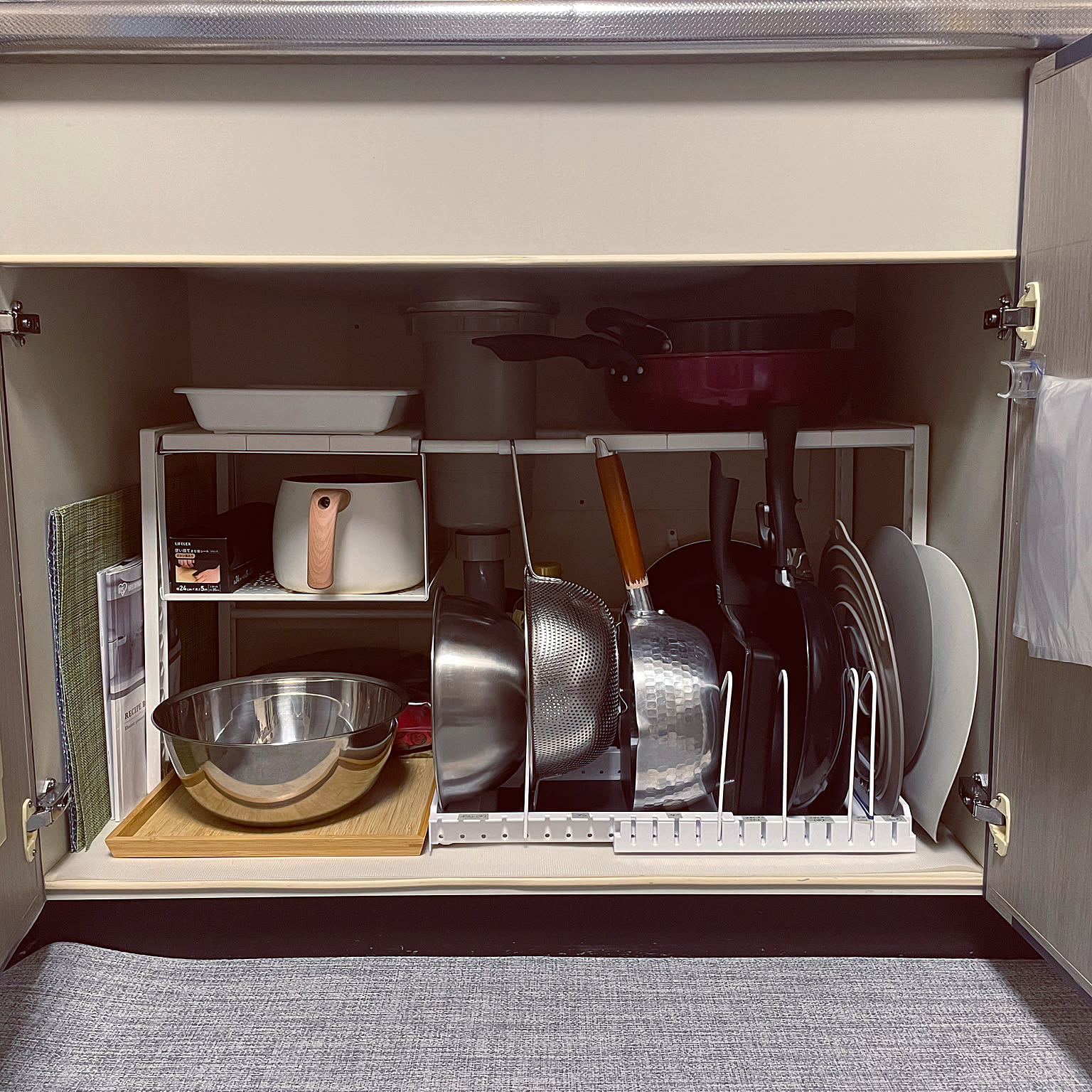
The under-sink photo shows cookware storage in one home. Before copying it, check for dampness, leaks, plumbing access, and chemicals. Use another cabinet for cookware and food-contact tools if those conditions make this one unsuitable. Keep pantry food elsewhere: USDA's shelf-stable food guidance advises against storing it under the sink or above or beside the stove.
Give overflow a boundary outside the prep area
Use an existing shelf, cabinet section, or side rack for things that do not need to sit where you chop and plate. Give that place a specific job. If it blocks a door, narrows the route through the kitchen, or must be moved every time you cook, choose another location or keep less there.
A separate overflow rack and a clear work surface.
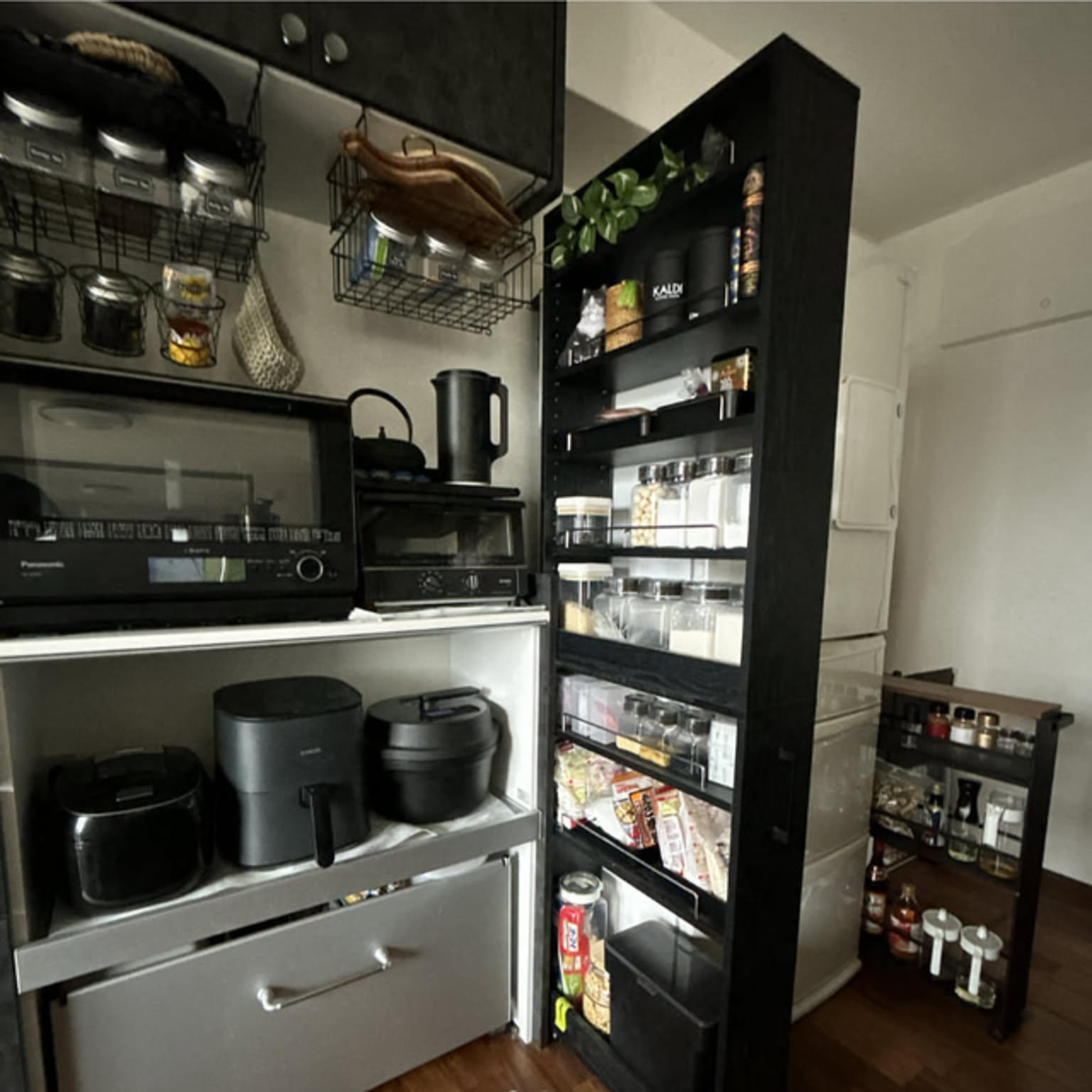
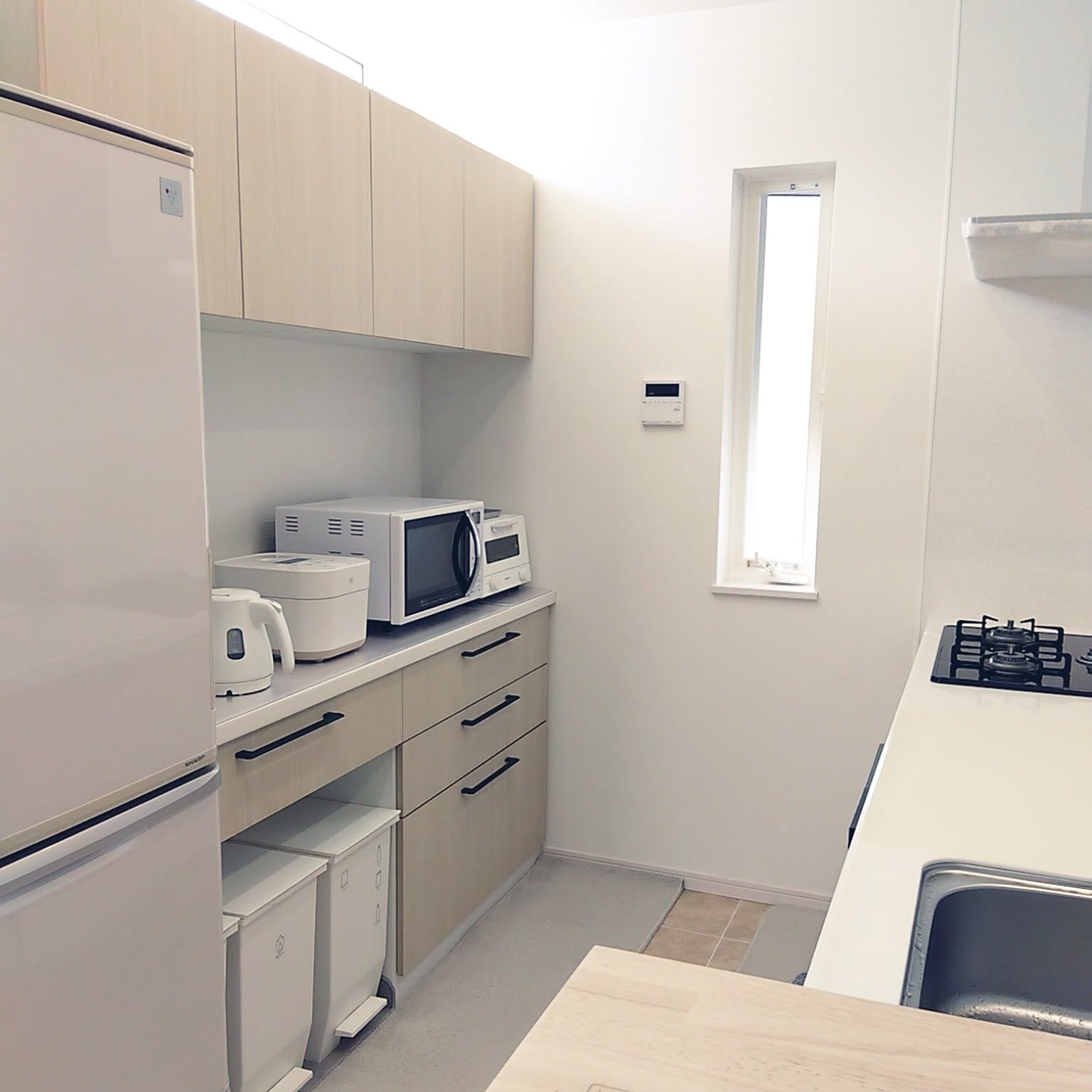
Choose a food-storage spot away from the prep surface. Use the small-kitchen pantry guide to decide food groups, stock limits, and what to check before grocery shopping. Keep food storage separate from cleaning chemicals.
Finish with a layout test, then decide whether to buy
After cooking, washing, and putting away, check three things: the work surface is available again, doors and drawers open normally, and you can wipe the counter without dismantling storage. A useful arrangement passes all three with the tools you actually use.
Keep your current storage if that test works. If one problem remains, name it before shopping: cookware trapped in a stack, a measured gap that could hold overflow, or a small group of cooking supplies with no accessible home. A new organizer should fix that problem rather than add another place to fill.
For brewing tools and where wet equipment goes afterward, see Small Kitchen Coffee Station Ideas. Start with the layout that lets you finish a meal and get the kitchen ready for the next one.
If one narrow gap remains: the Tower slim cart
A slim cart fits one problem: overflow with no home, next to a measured gap beside the refrigerator or a cabinet. It will not free pans trapped in a stack or use empty height inside a cabinet; dividers or a shelf address those, and only after you measure your cookware and the opening.
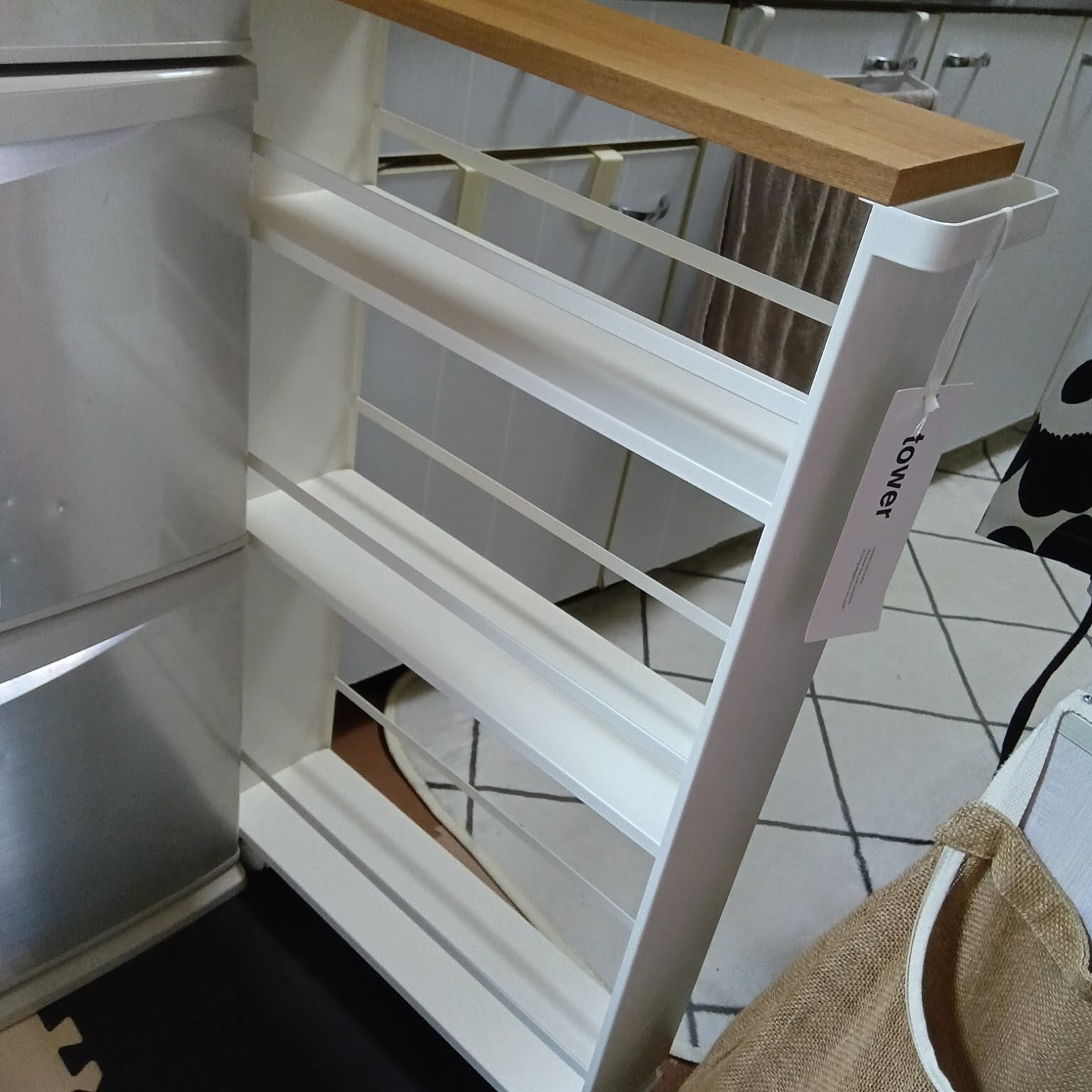
| Spec | Keep existing storage | Tower slim cart (32-inch) |
|---|---|---|
| Best for | Items already fit and are easy to reach | Overflow beside a usable narrow gap |
| Avoid when | Taking one item means unloading others | No clear pull-out path or appliance clearance |
| Footprint | Your existing shelf or cabinet | 18.7 L × 5.12 W × 31.69 H in |
| Shelf loads | Your current storage | Top board 2.2 lb; shelves 4.4, 6.6, and 13.2 lb |
| Price | No new purchase | $165 |
| Main drawback | May not solve persistent overflow | Narrow shelves; needs a wall or items beside it |
Cart specifications and price from Yamazaki Home US, checked October 21, 2026. Shelf loads run from the top shelf to the bottom shelf.
The Slim Storage Cart (32" H) weighs 8.82 pounds and is sold in white (3627), black (3628), and forest green (4584). Yamazaki designs it to sit against a wall or between other items. A gap exactly 5.12 inches wide leaves no room to roll it, so measure the narrowest point, including baseboards and hinges, and allow clearance. Check that the refrigerator can still ventilate and its door can open as its instructions require.
Frequently asked questions
What is the first thing to organize in a small kitchen?
Is open kitchen storage always messy?
What should go under the kitchen sink?
Can renters use these Japanese kitchen ideas?
Do I need a dish rack in a small kitchen?
How many tools should stay on a small counter?
by Japanese Home Goods Editorial
RoomClip usage context, manufacturer specifications, and US-market availability are reviewed by the Japanese Home Goods editorial team. We do not claim hands-on testing unless an article explicitly says so.
Related Articles

Japanese Pantry Organization for a Small Kitchen
A practical small-kitchen pantry guide using Japanese homes as examples: food-stock limits, dry-goods drawers, rolling carts, labels, and weekly rotation.

How Japanese Homes Really Use Yamazaki: A 38,000-Photo Data Study
We analyzed 38,038 item-tagged photos from RoomClip, Japan's largest home-photo community, to see where real Japanese homes actually put Yamazaki organizers — and which of those products make sense in a U.S. home.

Small Kitchen Coffee Station Ideas: Arrange the Tools You Own
Choose what stays on the counter, what comes down from a shelf, and where wet tools go after brewing. These Japanese home examples help you arrange a small coffee station with the gear you already own, and measure before you buy more.