How to Choose a Japanese Santoku Knife for a US Kitchen
Choose between a santoku, gyuto, nakiri, and petty knife, then pick blade length, steel, and handle. Two santoku with US prices, and the board, washing, sharpening, and storage that keep the edge.

If you are buying one Japanese kitchen knife, a santoku is the usual compact all-purpose choice. It is short, wide, and blunt at the tip, and it handles vegetables, fish, and boneless meat on an ordinary board. Start by checking that the santoku shape suits how you cut. Then the decision comes down to four things, in this order: blade length, steel, handle, and how much care you will genuinely do. Both knives below are sold in the US by the maker or its official distributor, at prices you can check before you order.

Santoku, gyuto, nakiri, or petty?
Santoku means three virtues, and the three are meat, fish, and vegetables. The shape follows from that: a blade around 165 to 180 mm, a tall flat profile with only a slight curve near the front, and a tip that drops down instead of coming to a point. The flat edge keeps more blade on the board with each cut, and the height gives your knuckles clearance.

What it is not: a knife for tip work or for rocking. There is no fine point for scoring skin or boning a thigh, and the flat edge means a rocking motion lifts most of the blade off the board. A santoku wants a straight push cut, down and slightly forward. Bread and anything frozen belong to other knives entirely.
| Spec | Santoku | Gyuto | Nakiri | Petty |
|---|---|---|---|---|
| Shape | Short, tall, blunt tip | Longer, pointed tip | Rectangular, flat edge | Small and narrow |
| Best for | Everyday vegetables, fish, boneless meat | Larger ingredients and long slices | Straight cuts through vegetables | Fruit, trimming, small jobs |
| Choose it first if | You want one compact knife | You like an 8-inch chef's knife | You mostly prep vegetables | You already own a main knife |
| Skip it if | You rock the blade or need a point | Your board or counter is small | You cut meat and fish as often | It would be your only knife |
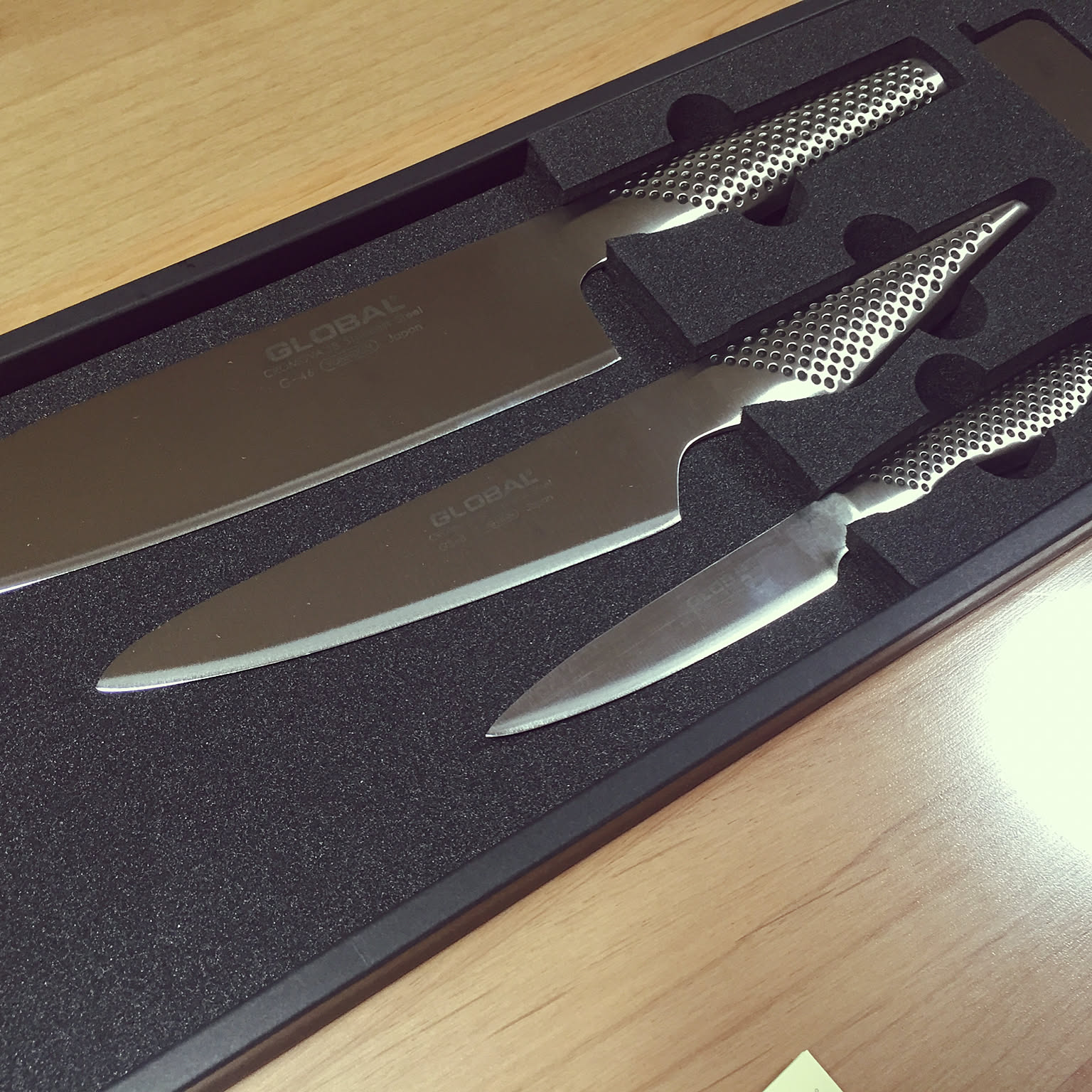
For most kitchens, one main knife plus a petty knife covers more meals than a matching set. Add a nakiri later if vegetable prep turns out to be most of what you do.
Blade length: match your board, not your ambition
This is the decision people get wrong most often, and it is the cheapest to get right. The Japanese standard is 165 or 170 mm, about 6.5 to 6.75 inches, and that is what to buy if you are buying one santoku.

- 145 to 150 mm: for a small board, a shallow counter, or smaller hands. Also the size to buy if a full chef's knife has always felt like too much knife.
- 165 to 170 mm: the default. Long enough for a cabbage wedge, short enough to stay controllable on an ordinary household board.
- 180 mm, about 7 inches: worth it if you regularly break down whole cabbage or winter squash and you have a large board to do it on. On a small board the extra length overhangs the edge and you lose the end of the cut.
Measure the board you use every day before you order. The blade needs room on both sides of what you are cutting; once it reaches edge to edge, you end up working on the corner of the board instead of the middle.
Steel: clad blades, and what the wave pattern means
Most Japanese santoku sold today are clad: a hard steel core does the cutting, and softer stainless steel is forged over both sides. The core holds an edge; the cladding takes the abuse and resists rust. That construction is what produces the wavy line you see running along the blade.

- Clad stainless: what to buy unless you have a reason not to. MIYABI's Birchwood line, for example, runs an SG2 powder-steel core inside 101 layers of damascus. A clad blade takes a fine edge and does not rust if you dry it.
- Single-piece stainless: GLOBAL forms the whole knife, blade and handle, from one piece of its CROMOVA 18 steel. Nothing to trap food, nothing to come loose, and a distinct feel in the hand.
- Carbon steel: sharper and easier to sharpen, but it discolors in days and rusts if left wet. It needs wiping dry during cooking, not just after. Buy it because you want that relationship with a knife, not because a review called it sharper.
Handle: wood, or a seamless steel one
Handles split into two families, and the split has real consequences at the sink.

Wood handles are light, often oval or D-shaped, and they shift the balance forward into the blade, which many people prefer for push cuts. Modern makers use stabilized or laminated wood that resists water far better than plain wood, but it is still the reason those knives are hand wash only.
All-stainless handles have no seam where the handle meets the blade, so there is no gap for food or water to sit in. They are heavier at the back and slippery unless the maker textures them, which is why GLOBAL dimples its handles. If a knife has to survive a busy household rather than a careful one, this is the safer family.
How the two compare
Two santoku at two price levels, both sold in the US by the maker or its official distributor. The specs that decide it are below, and the full write-ups follow.
| Spec | GLOBAL G-46 | MIYABI Birchwood SG2 |
|---|---|---|
| Best for | One seamless piece of steel, at the easiest price to justify | The finest edge here, if you will look after it |
| Steel | CROMOVA 18 stainless throughout | SG2 powder-steel core, 101-layer damascus |
| Hardness | Rockwell C56-C58 | 63 HRC, 9.5-12° edge |
| Blade | 18 cm (7 in) | 7.09 in (18 cm) |
| Weight | About 175 g | About 0.39 lb (177 g) |
| Handle | One-piece stainless, dimpled, no seam | Karelian birch |
| Care | Hand wash only, never the dishwasher | Hand wash only |
| Price | $129.95 | $364.99 |
| Where to buy | Global Cutlery USA, official US distributor | Zwilling US, lifetime warranty |
| Main drawback | Long end of the santoku range, heaviest here, and the steel handle is divisive | Nearly three times the price, and a hard edge casual whetstone work will not restore |
Specifications from each maker's listing, checked August 20, 2026; prices and stock checked October 21, 2026. Prices move; check before you order.
Our picks
Pick #1: GLOBAL Classic Santoku, 18 cm (G-46)

GLOBAL's knives are made by Yoshikin in Niigata, and they solve a problem the other two do not: the whole knife is one piece of CROMOVA 18 stainless, blade through handle, so there is no bolster seam and no wood to keep dry. The handle is hollow and filled with sand to pull the balance back, and it is dimpled rather than smooth so a wet hand still holds it. GLOBAL hardens the Classic line to Rockwell C56-C58 and describes the steel as hard enough to hold an edge yet soft enough to sharpen on a whetstone, so this is an edge you can maintain at home rather than send away. It is also the easier of the two to buy: $129.95 from Global Cutlery USA, GLOBAL's official US distributor, with warranty support you can claim without shipping a knife overseas. Two things to weigh. At 18 cm this is the long end of the santoku range, so it wants a full-size board, and at about 175 g it is the heavier of the two. The steel handle divides people, so hold one before you commit if you get the chance.
Pick #2: MIYABI Birchwood SG2 Santoku, 7 in

MIYABI is Zwilling's Japanese line, handcrafted in Seki, and the Birchwood is the one to buy if the edge matters more than the price. The core is SG2 micro-carbide powder steel wrapped in 101 layers of damascus, ice-hardened to 63 HRC and finished with a three-step Honbazuke edge at 9.5 to 12 degrees, a much finer angle than the GLOBAL arrives at. The pale Karelian birch handle is the visual signature. Because Zwilling sells it directly in the US you get a US price, US stock when it is in, and a lifetime warranty. The trade-offs are price and maintenance. It is $364.99, nearly three times the GLOBAL, and a 63 HRC edge holds beautifully but chips rather than rolls, so casual whetstone work will not bring it back the way it will on a softer knife. It is hand wash only, and stock on this specific model comes and goes.
After you buy: board, washing, sharpening, and storage
A santoku stays sharp because of what it touches, not because of how often you sharpen it.
Choose a board that is kind to the edge
Cut on wood, rubber, or a soft plastic board. Glass, stone, ceramic, and bamboo are harder than the edge and dull it quickly. The board should be noticeably longer than the blade and sit flat without rocking; if part of it hangs over the sink or stove, it moves when you cut.
A hinoki board is one soft option: light, slightly giving under a thin edge, and quick to shed water. It also shows knife marks and darkens with use. Tosaryu, which makes hinoki boards, says to rinse both sides after use, wipe the board, let it dry standing on its edge, and keep it out of the dishwasher. It is not a board for cleavers or chopping through bone.

Wash by hand and dry it at once
GLOBAL and Zwilling both say to hand wash these knives. Wash the blade with mild soap, rinse, and dry it with a towel before putting it away; do not leave it wet in the sink or on a dish rack under other tools.
Sharpen on a whetstone, not a pull-through
A whetstone lets you control the angle and pressure. A medium stone, around 1000 grit, is the usual starting point; a finer stone can polish the edge later. For home cooking, a full sharpening once or twice a year is typical, with a few passes whenever the knife stops biting into tomato skin.
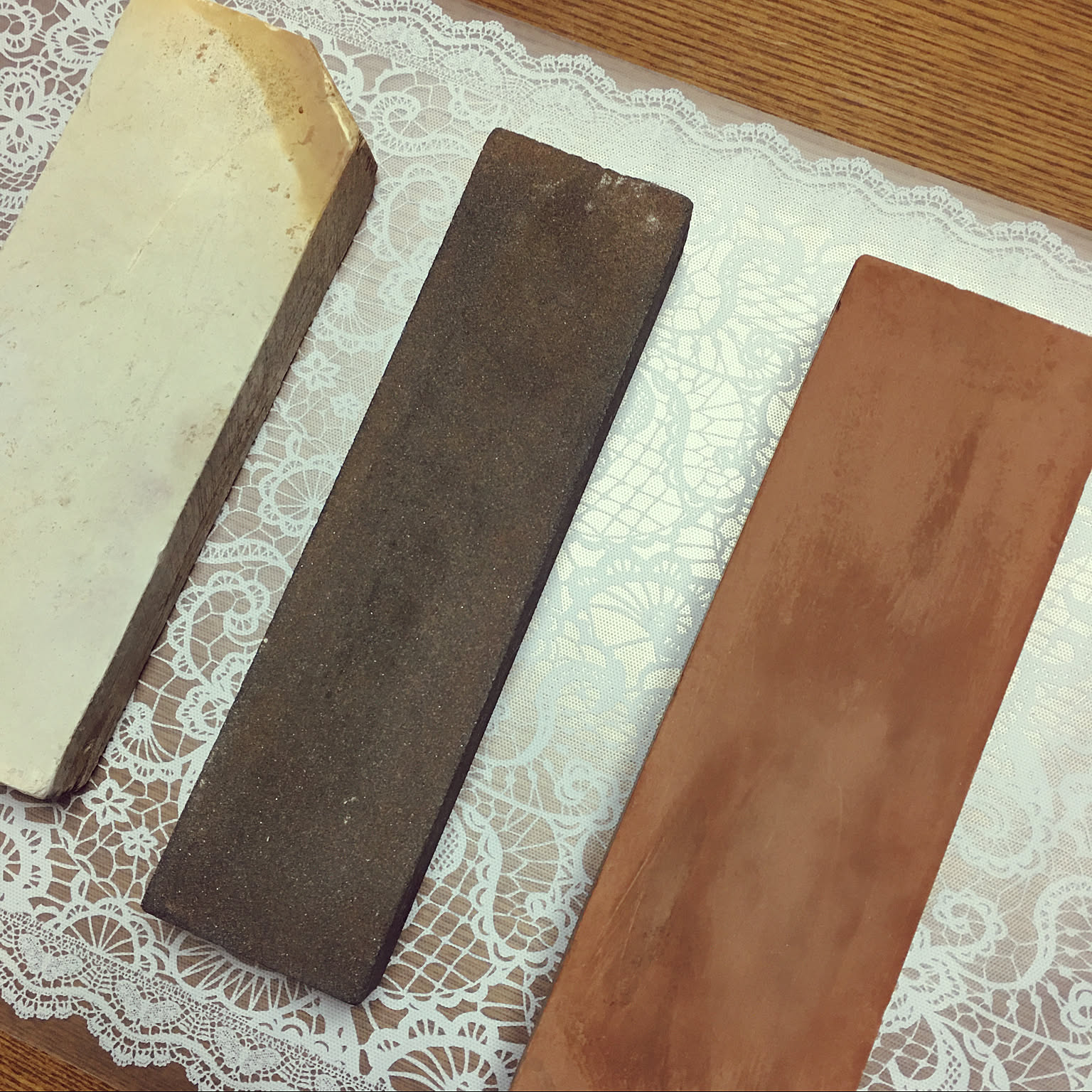
Pull-through sharpeners are quick, but they remove more steel than you need and may not match the blade's angle. A very hard edge such as the MIYABI's 63 HRC is better sent to a sharpening service than forced through one.
Store the edge, and give hard jobs to another tool

- Store it so nothing touches the edge. A magnetic bar, a blade guard, or an in-drawer holder all work. Loose in a drawer is how tips get broken.
- Keep it away from bone, frozen food, and hard squash. GLOBAL names frozen food, pumpkin, corn, dried mochi, bones, and shells specifically. Use kitchen shears or a heavier knife for those jobs.
Ready to buy?
Featured Product
GLOBAL Classic Santoku, 7 in / 18 cm (G-46)
$$ ($129.95 at Global Cutlery USA, checked October 21, 2026)
Verify specifications with the manufacturer · Checked 2026-10-21
Featured Product
MIYABI Birchwood SG2 Santoku, 7 in (34374-183)
$$$$ ($364.99 at Zwilling US, checked October 21, 2026)
Verify specifications with the manufacturer · Checked 2026-10-21
Frequently asked questions
What blade length should I get?
Is a santoku better than a gyuto or a Western chef's knife?
Do I have to import a Japanese santoku?
Can I put a Japanese santoku in the dishwasher?
Stainless or carbon steel?
How often do I need to sharpen it?
by Japanese Home Goods Editorial
RoomClip usage context, manufacturer specifications, and US-market availability are reviewed by the Japanese Home Goods editorial team. We do not claim hands-on testing unless an article explicitly says so.
Related Articles

Japanese Tableware for Everyday Meals: Rice Bowls, Donburi, and Small Plates to Buy First
Choose rice bowls, donburi or ramen bowls, and small plates by the meals you actually make, then check stacking and storage. HASAMI PORCELAIN is one stackable system with US prices.

Japanese Kitchen Organization Ideas: Keep Small Counters Ready to Cook
Arrange the kitchen tools you already own around prep, cooking, washing, and putting things away. Test the layout first, then measure before adding a Tower dish rack or slim cart.

Japanese Pantry Organization for a Small Kitchen
A practical small-kitchen pantry guide using Japanese homes as examples: food-stock limits, dry-goods drawers, rolling carts, labels, and weekly rotation.