Japanese Bathroom Storage Ideas for Small Apartments
Make a small Japanese-style bathroom easier to clean with magnetic, hanging, tension-pole, and removable storage ideas that keep bottles and tools off the floor.

A small bathroom does not need more storage everywhere. It needs fewer things in the wet room, clear floor space, and storage that lets water drain away. Japanese bathrooms make this especially visible because the tub, shower, washing area, bottles, basin, and cleaning tools often share one compact room.
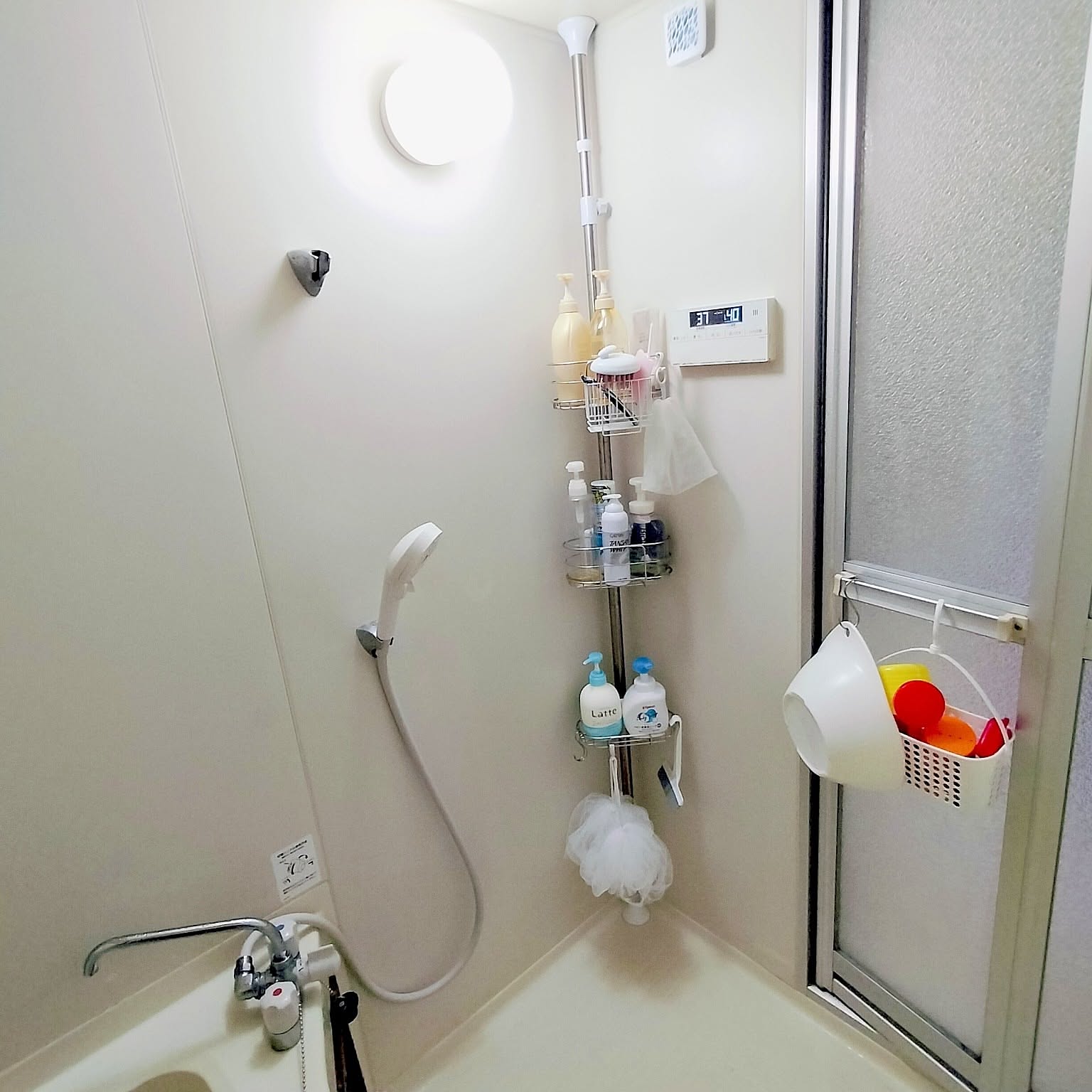
Start by separating the wet room from the vanity or laundry area outside it. This guide focuses on items that are actually used in the bath: open bottles, soap, a wash basin, bath tools, and the cleaning tools needed for a quick reset.
Clear the floor before adding another shelf
Anything left on the floor creates a wet contact point and makes it harder to rinse or wipe the room. Before shopping, list every item that currently touches the floor, tub edge, or built-in ledge.
- Move first: the wash basin, bottles, bath puffs, squeegee, brushes, and small cleaning tools.
- Leave only when necessary: a bath stool that cannot be hung safely and items required for accessibility.
Test the wall before choosing magnetic storage
Many prefabricated Japanese bathroom panels contain steel, which is why magnetic racks and dispensers appear so often in Japanese homes. That does not mean every bathroom wall is magnetic. Tile, glass, some composite panels, and refinished surfaces may need another method.
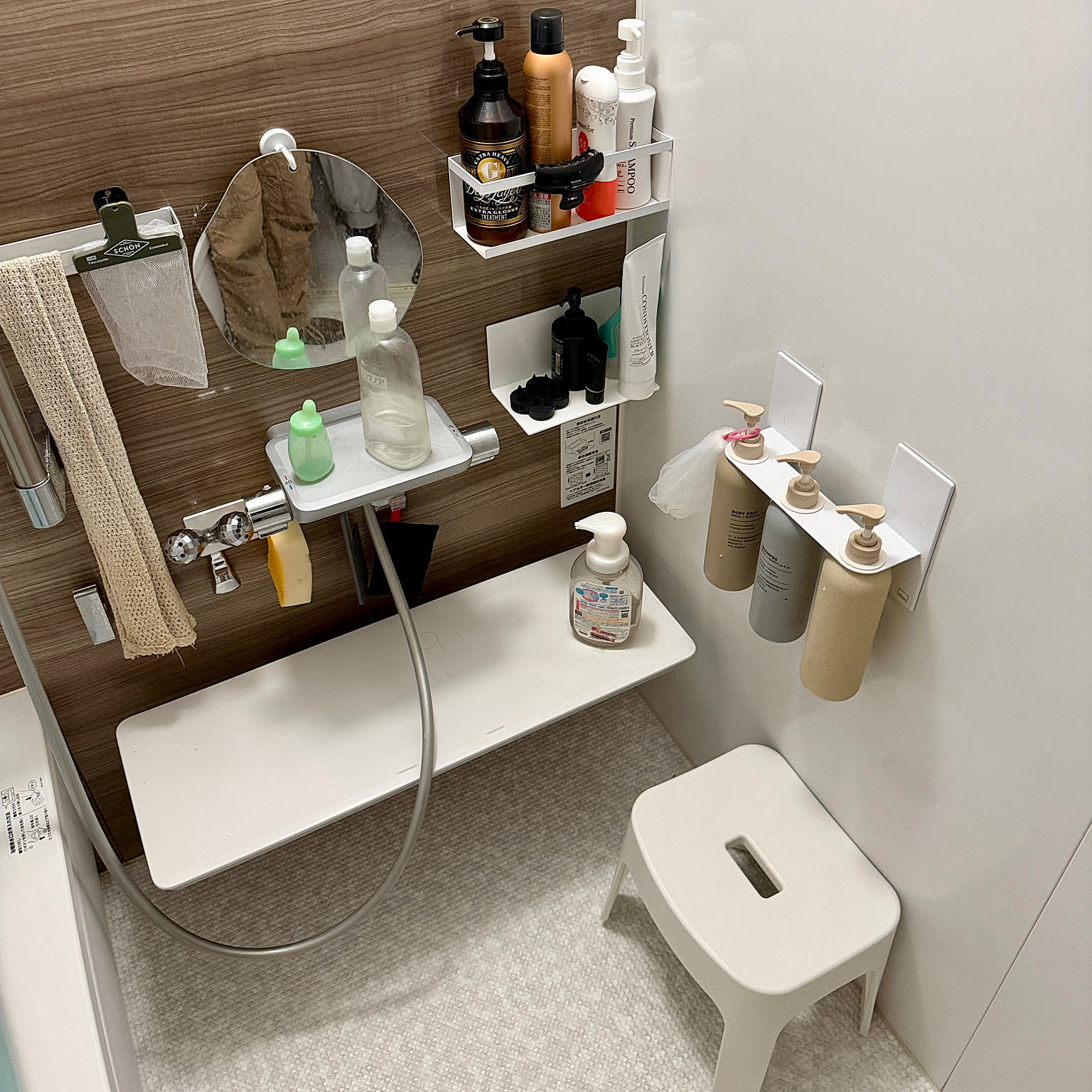
Test a small magnet in several places, including near seams. Then check the accessory's load limit and leave enough space to remove the rack for cleaning. A strong mount still needs drainage and occasional drying behind it.
Hang flexible packages and light tools
Refill pouches, face-wash tubes, bath puffs, and light tools can hang from an existing rail or compatible hook. This removes flat bottle bases and lets air reach both sides of the item.
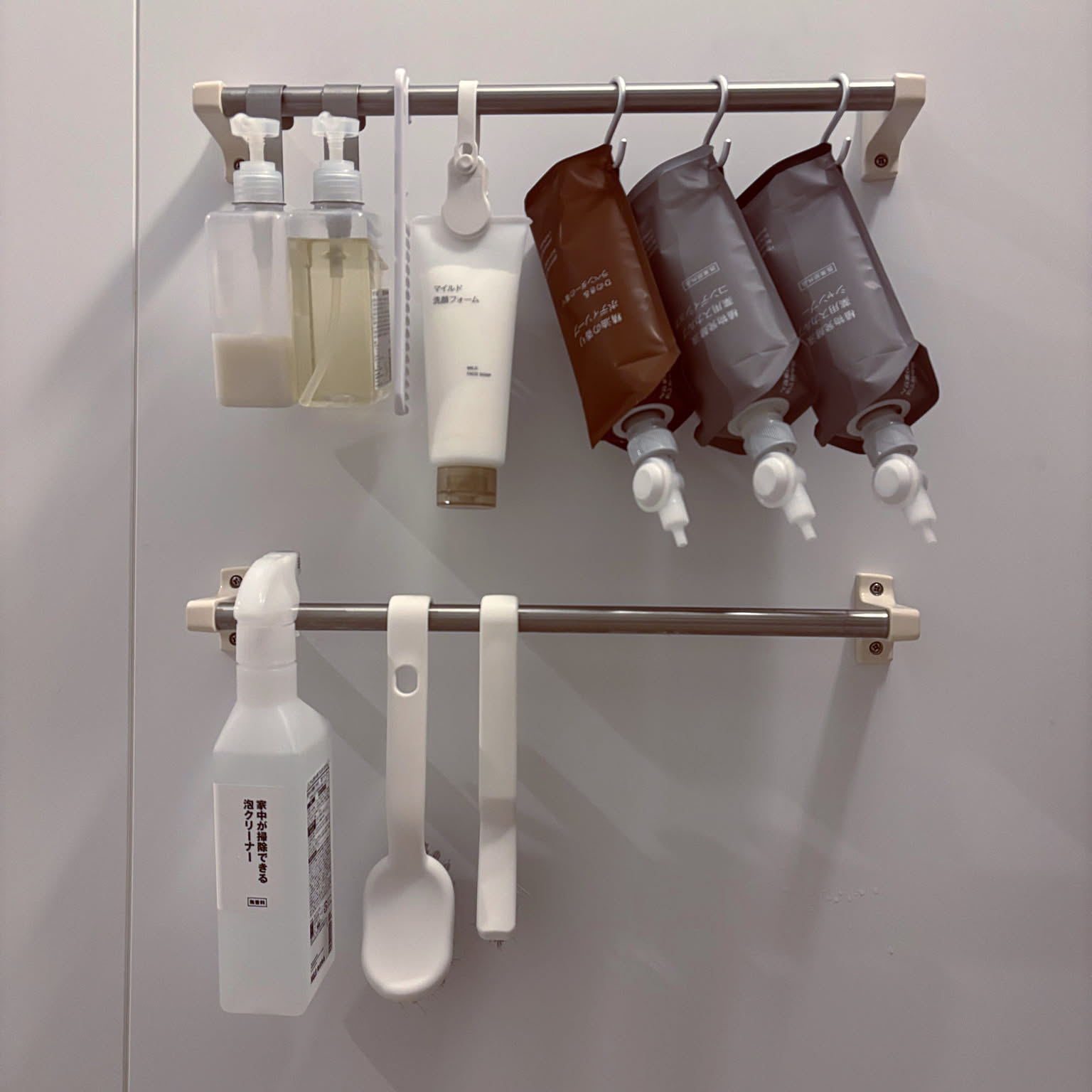
Do not hang more weight than the rail or hook allows. Keep pump nozzles reachable, avoid placing heavy containers over the tub, and make sure nothing swings into the shower controls.
Use one draining basket for grouped bottles
Individual holders look clean, but one wire basket can be easier when several people share products or when the wall cannot accept many mounts. A basket also makes it possible to lift the whole group away for cleaning.
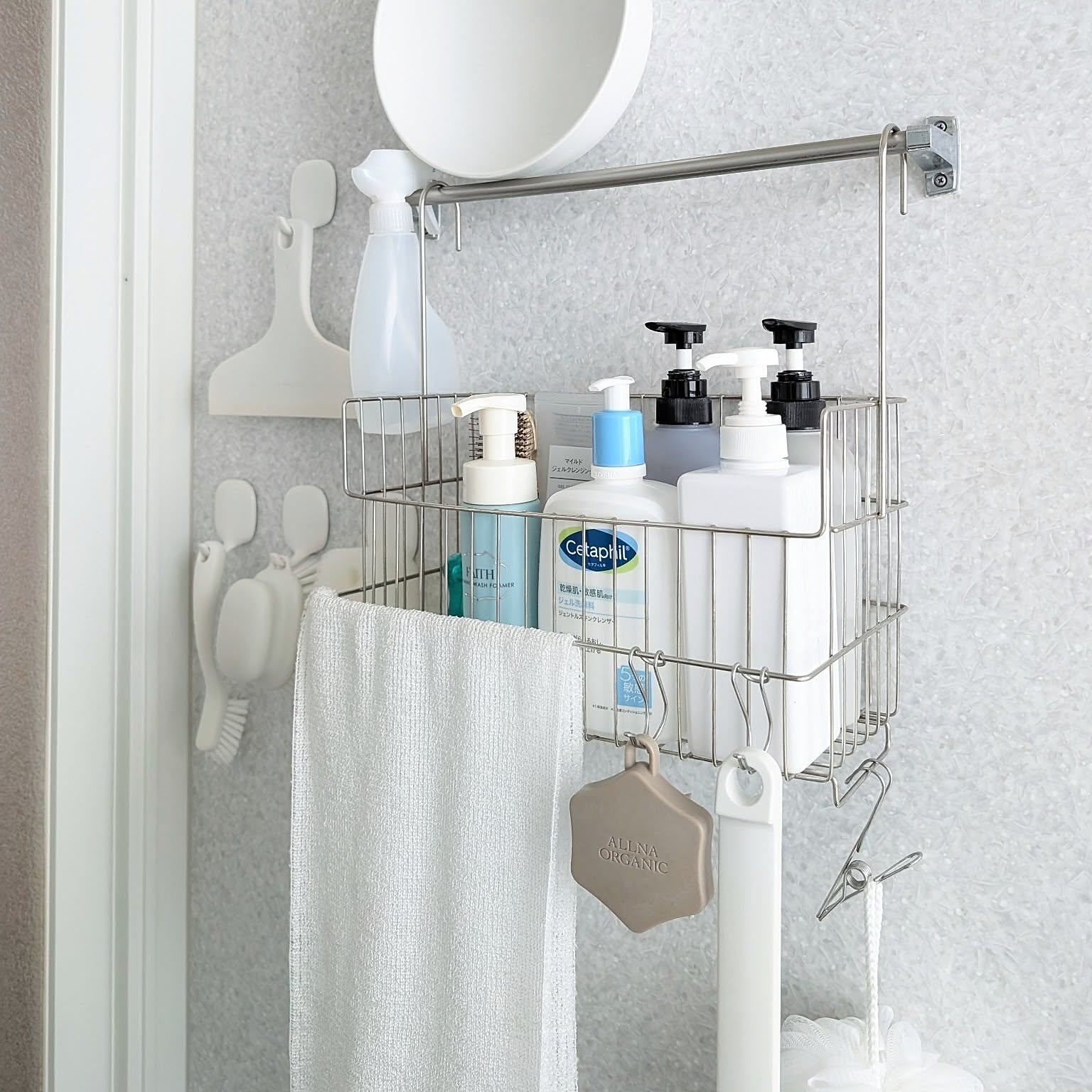
Choose an open bottom, corrosion-resistant material, and a position that does not block the faucet, mirror, door, or shower hose. Keep the basket limited to daily-use bottles so it does not become wet backstock.
If you use a bath stool and wash basin
A Japanese bath stool and wash basin support seated washing outside the tub, and together they take up a surprising amount of floor and tub-edge space. Before buying either, decide how each piece will dry.
- Seat height: match it to your knees and the faucet, not to a product photo. A lower stool looks smaller but needs a deeper bend to sit and stand.
- Only the pieces you use: if you rinse with a handheld shower, you may not need a basin at all. Every extra piece needs rinsing and a place to drain.
- Where each piece drains: a stool can hang from a sturdy bar or rest across the tub edge, and a basin can hang or attach to a tested magnetic wall. Neither should block the shower controls, the door, or the tub.
- Stored footprint: measure how far the stool sticks out while it is stored, not only while you sit on it.

A compatible magnetic basin, hook, or rail holder lets both sides of the basin drain and makes the washing area easier to rinse. Mount it where it cannot fall onto feet or block the shower. If the basin retains water against the wall, rotate or reposition it so the rim and base can dry.
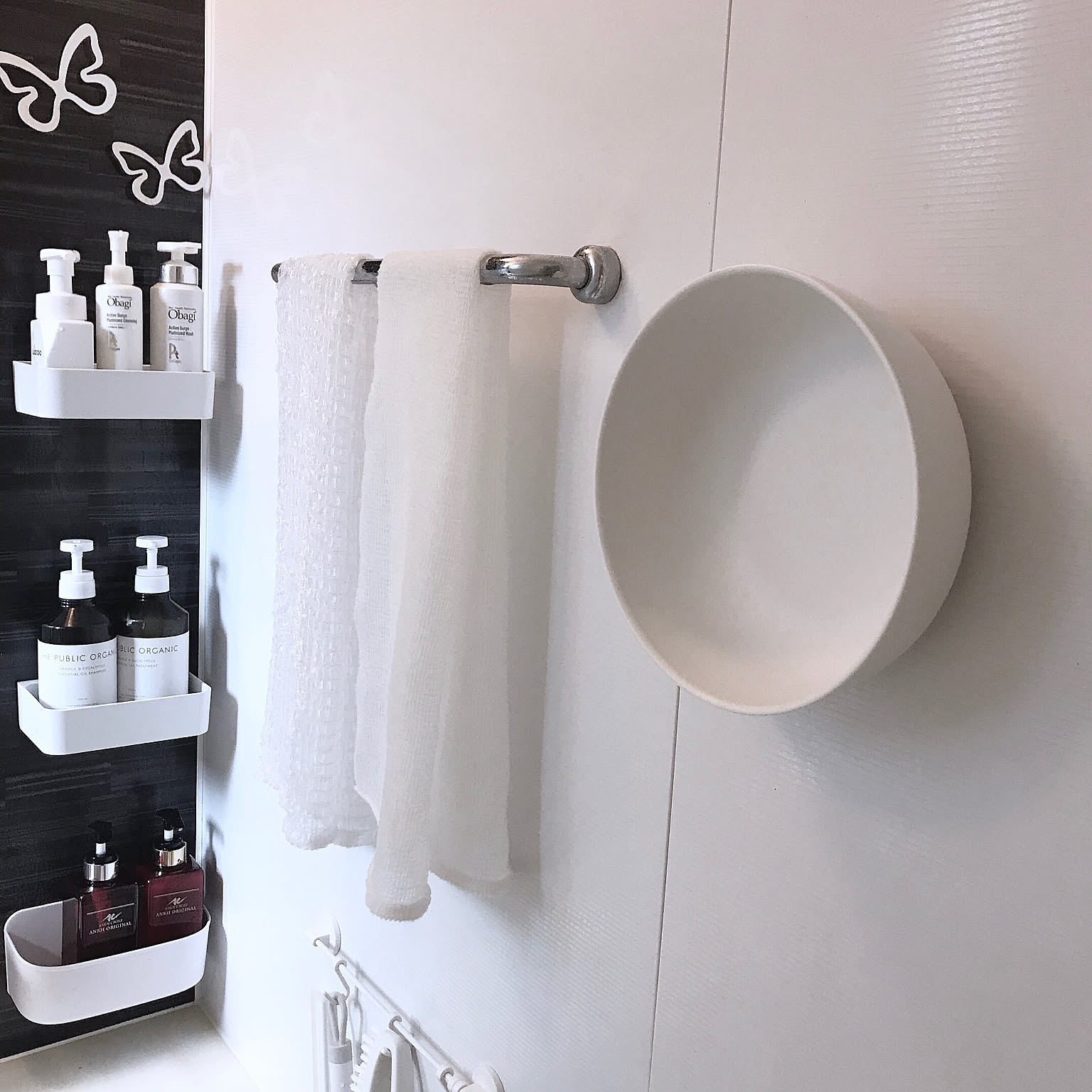
Rinse soap off both pieces after use and clean the feet and underside regularly. Storing them off the floor helps them dry; it does not make them maintenance-free.
For rentals, use removable storage carefully
When magnets do not work and drilling is prohibited, use existing rails, tension poles, suction products, or removable adhesive holders rated for wet areas. The safest choice depends on the wall finish, humidity, item weight, and lease rules.
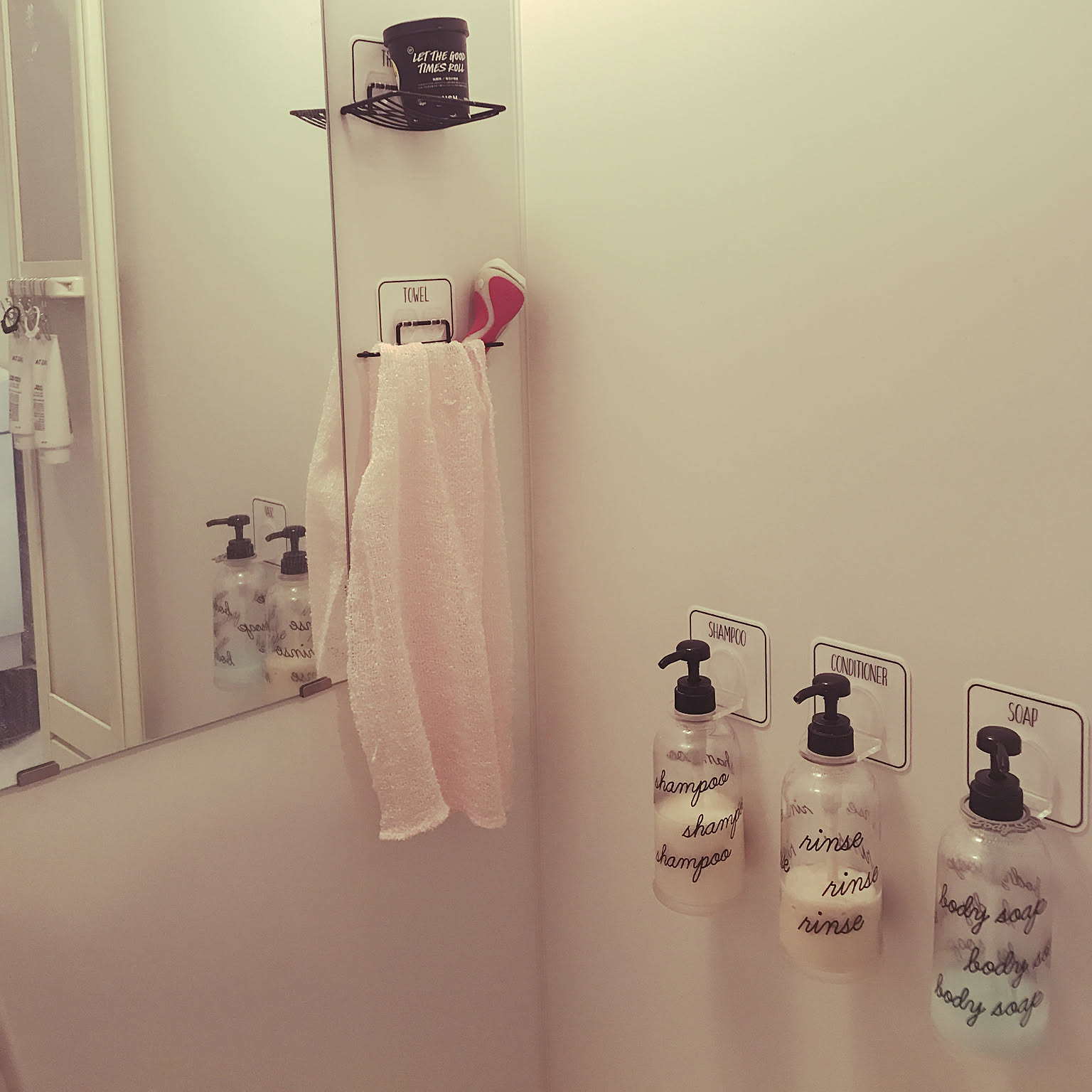
Let cleaning tools dry separately
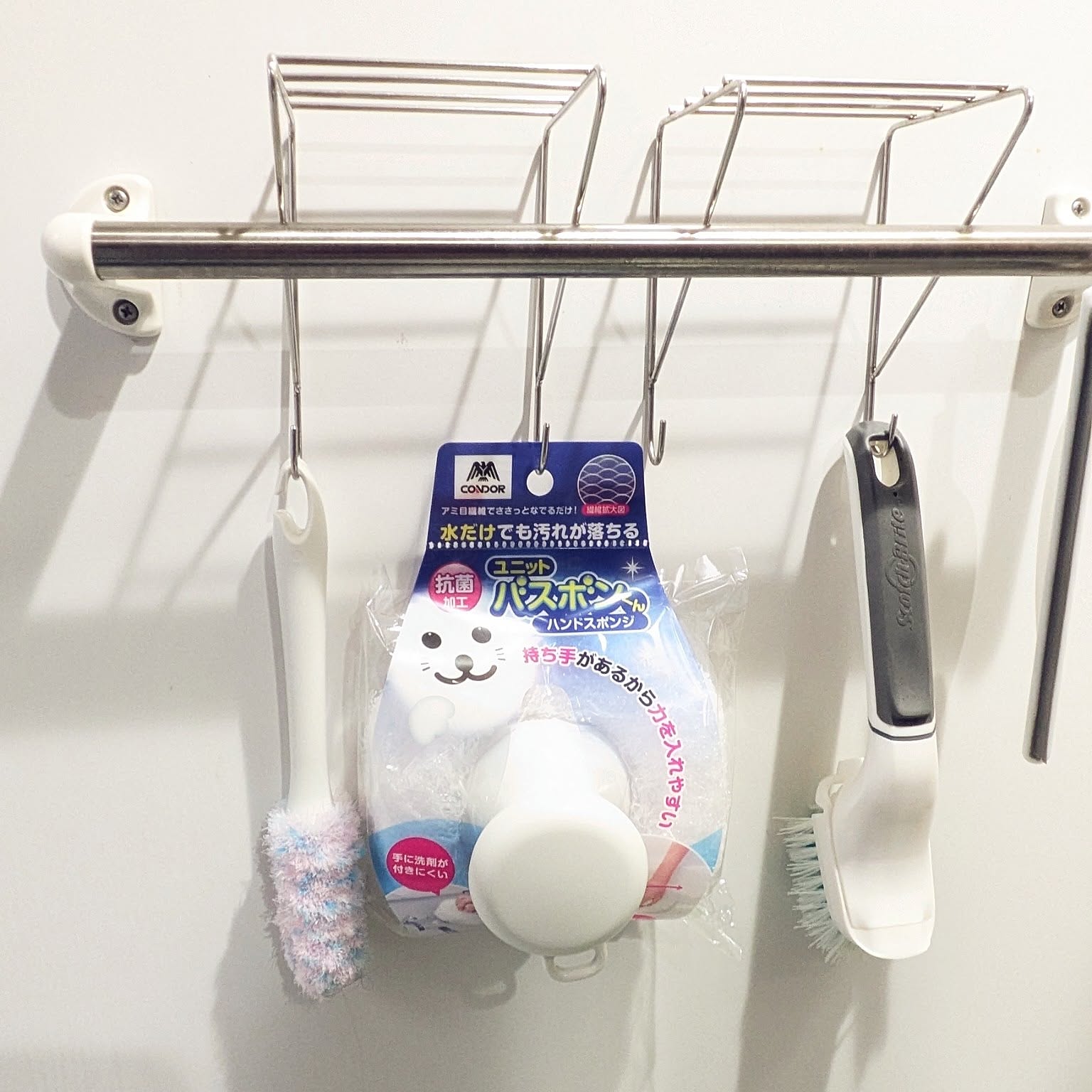
Brushes, sponges, and squeegees should not sit wet together in a closed bin. Separate hooks make each tool easier to see, rinse, and replace before the next cleaning session.
Place the squeegee where it can be reached immediately after a shower. A storage setup only improves drying when the household can use it without moving several other items first.
Separate daily toiletries from the cleaning zone
Daily bottles belong near the shower controls. Cleaning tools can live on a second wall or rail, where they stay visible without crowding the products used during every shower.
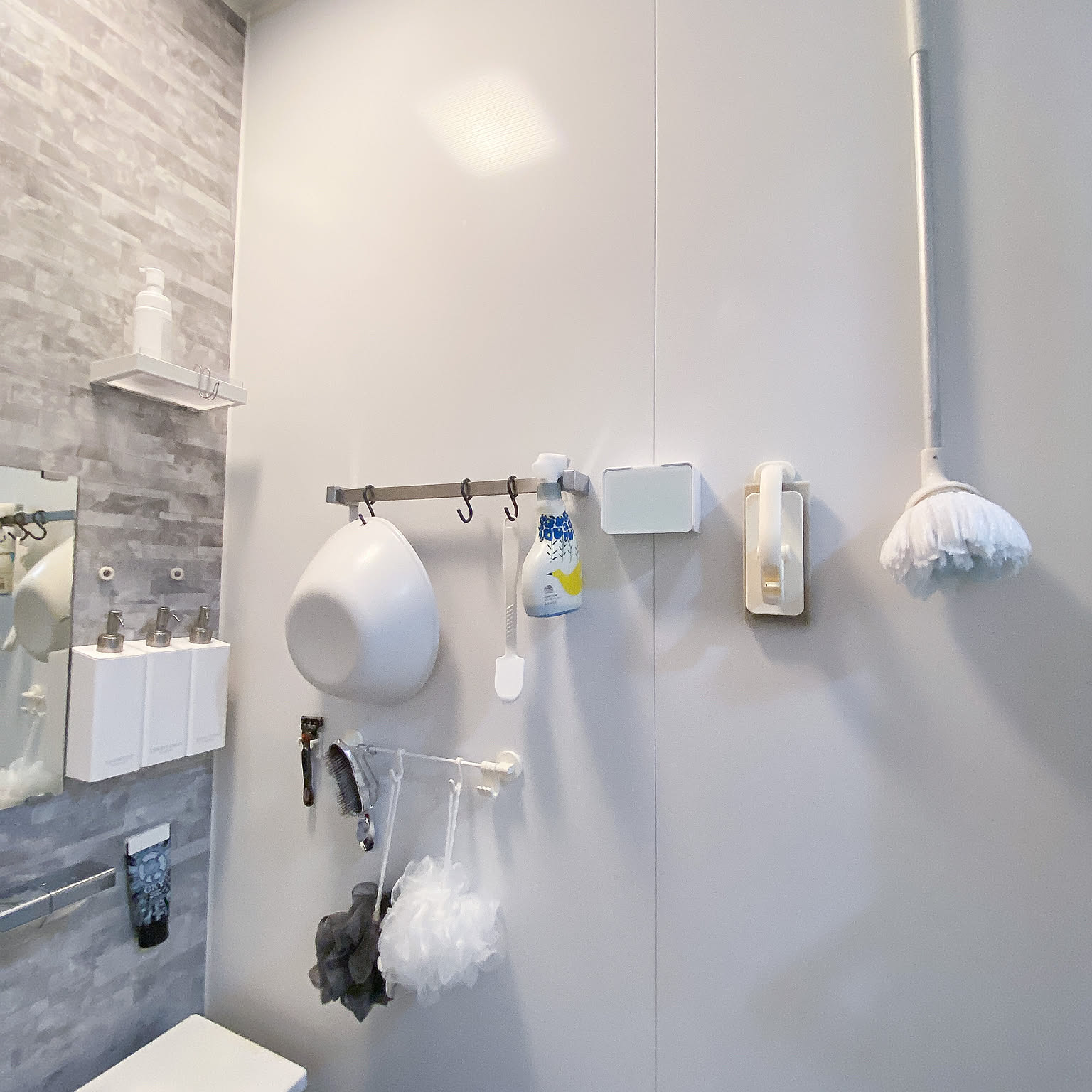
This boundary also makes it easier to limit inventory. If the cleaning wall is full, remove duplicates before adding another hook. Keep bleach, strong chemicals, and anything unsafe for children in an appropriate secure location rather than copying an open display.
Move backup stock out of the wet room
Refill packs and unopened toiletries do not need shower-side access. Store them in a dry vanity, closet, laundry cabinet, or labeled bin outside the bathroom, then bring in one replacement when the current product runs out.
This reduces visual clutter and prevents packaging from staying damp. It also makes it obvious when the household already has enough stock.
Final test: can the bathroom dry and reset?
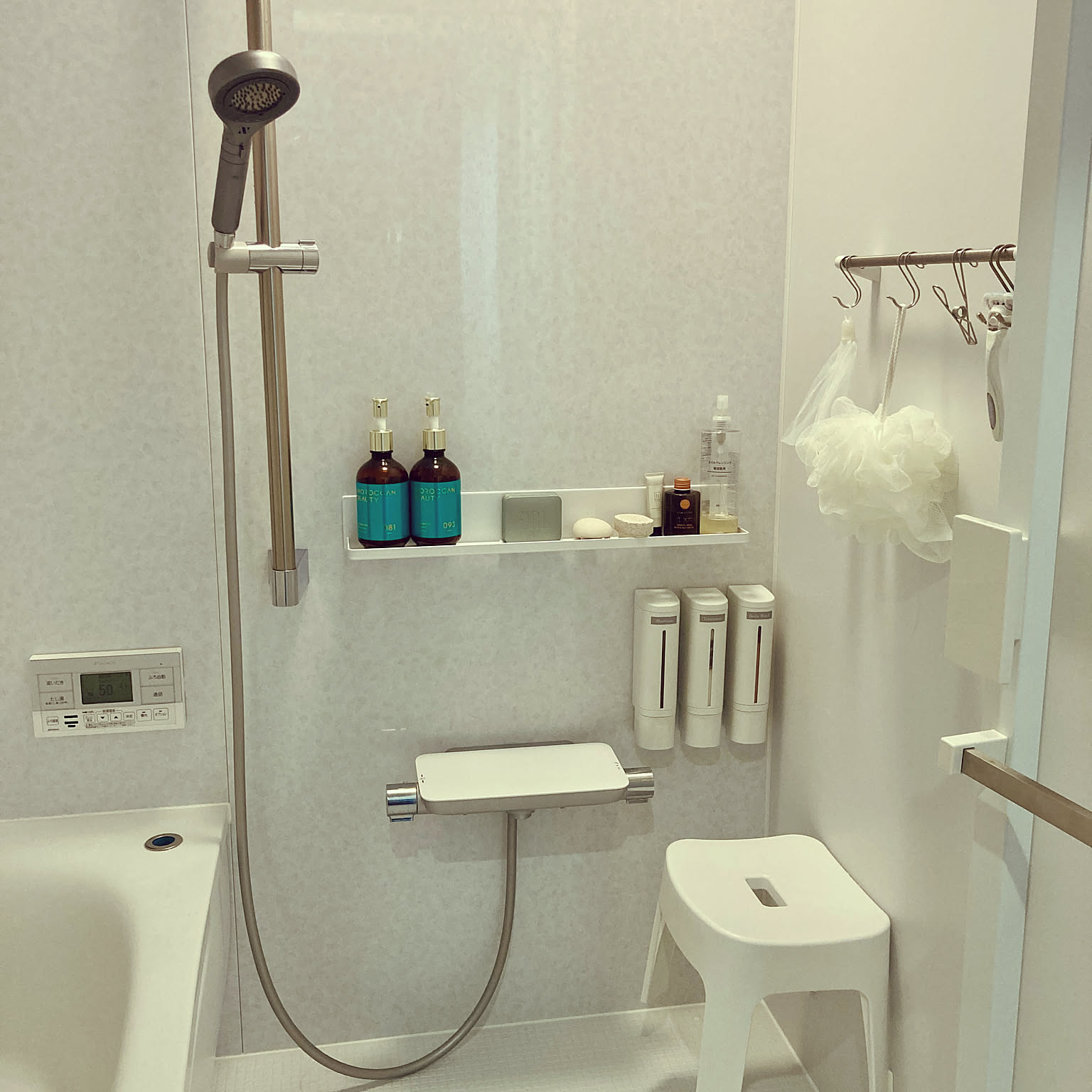
A useful small-bathroom setup should pass three tests: the floor can be rinsed without moving bottles, daily items are reachable without stretching over the tub, and wet tools have air around them after use.
If the room still feels crowded, do not add storage immediately. Remove backup stock, combine duplicate products, and reduce the number of items that need a permanent place in the wet room.
Frequently asked questions
Do all Japanese bathroom walls hold magnets?
What bathroom storage works for renters without drilling?
How does bathroom storage reduce mold and slime?
Should backup toiletries stay inside a small bathroom?
What is the first storage change to make in a very small bathroom?
by Japanese Home Goods Editorial
RoomClip usage context, manufacturer specifications, and US-market availability are reviewed by the Japanese Home Goods editorial team. We do not claim hands-on testing unless an article explicitly says so.
Related Articles

How Japanese Homes Really Use Yamazaki: A 38,000-Photo Data Study
We analyzed 38,038 item-tagged photos from RoomClip, Japan's largest home-photo community, to see where real Japanese homes actually put Yamazaki organizers — and which of those products make sense in a U.S. home.

Japanese Entryway Organization Ideas for Small Apartments
Plan a small entryway with the trays, shelves, and storage you already own. Test the door swing, fit shoes to your shelves, and check rental rules before buying more.

Japanese Kitchen Organization Ideas: Keep Small Counters Ready to Cook
Arrange the kitchen tools you already own around prep, cooking, washing, and putting things away. Test the layout first, then measure before adding a Tower dish rack or slim cart.